
Robotics is moving from research labs into real-world industrial environments faster than many expected.
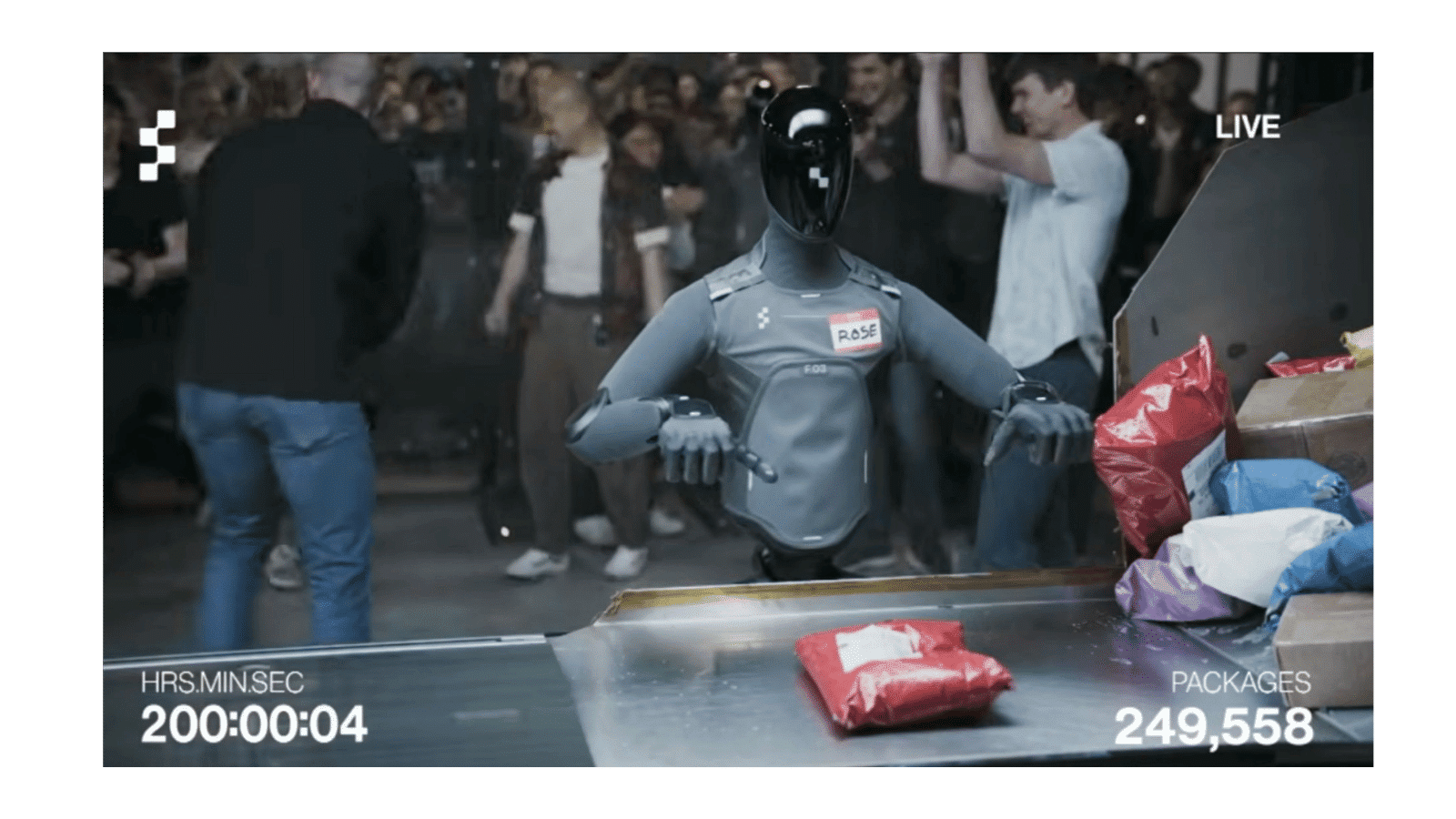
Recently, robotics company Figure AI completed a 200-hour continuous autonomous operation using its Figure 03 humanoid robots. During the livestreamed demonstration, the robots processed 250,000 packages with no catastrophic hardware failures or system-halting crashes.
For robotics and automation industries, this is an important milestone. It shows how AI-powered robotics systems are beginning to handle long-duration, repetitive physical work with increasing reliability.
Humanoid Robots Are Becoming More Capable
The demonstration involved three Figure 03 humanoid robots operating around the clock in a logistics-style environment. The robots used onboard cameras, AI reasoning systems, and autonomous navigation to:
- Navigate independently around the workspace
- Detect barcodes
- Pick up packages
- Orient packages correctly
- Place items onto conveyor systems
The robots operated using Figure AI’s Helix-02 system, which combines movement, vision, balance, object handling, and decision-making into a single AI-powered control model.
This matters because traditional industrial robots are often highly specialized. Many can only perform one task inside carefully controlled environments.
Humanoid robotics is pushing toward something different:
Robots that can adapt to dynamic environments, navigate human-centered spaces, and perform multiple types of physical work using AI-based reasoning.
Continuous Autonomous Operation Is a Major Step
One of the most interesting parts of the demonstration was the sustained uptime.
The robots operated for over 200 continuous hours through an autonomous fleet rotation system. When a robot’s battery became low, another unit automatically replaced it while the depleted robot walked itself to a charging station.
This type of system begins to resemble how future factories, warehouses, and logistics centers may eventually operate: continuous robotic labor supported by autonomous charging, maintenance, and task handoffs.
The operation was not completely perfect. Some packages were dropped or incorrectly oriented. However, Figure AI categorized these as task-level handling errors rather than failures of the robotic platform itself.
That distinction is important.
In robotics, reliability is not measured by perfection. It is measured by whether systems can continue operating, recover from errors, and sustain long-duration deployment.
Why This Matters Beyond Warehouses
Stories like this reflect a larger shift happening across industries:
AI is becoming connected to physical systems.
The future of robotics increasingly combines:
- Artificial intelligence
- Computer vision
- Sensor systems
- Autonomous navigation
- Mechanical engineering
- Data processing
- Human-machine interaction
- Real-world problem-solving
Industries such as logistics, agriculture, manufacturing, infrastructure inspection, aviation, healthcare robotics, and smart transportation are all moving toward more AI-assisted automation.
As these systems become more common, demand grows for people who understand how autonomous systems actually work.
Robotics Education Is Expanding Beyond Coding
For students, robotics education learning increasingly includes:
- Sensor integration
- Autonomous navigation
- Computer vision
- AI-assisted robotics
- Systems thinking
- Mechanical troubleshooting
- Data analysis
- Real-world automation concepts
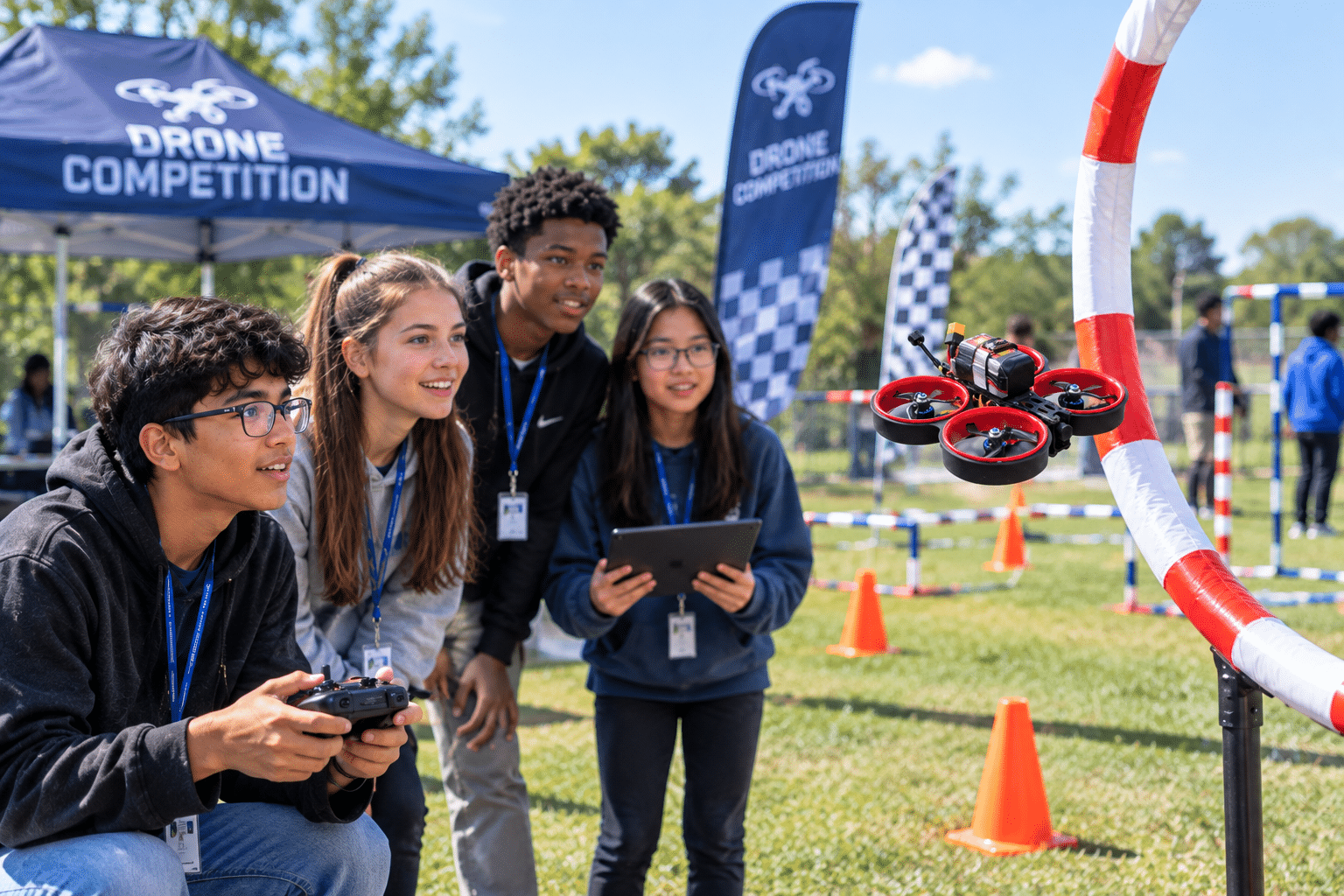
Students are beginning to explore the same types of technologies now appearing inside warehouses, manufacturing facilities, and autonomous systems research labs.
The goal is to help students build adaptable technical problem-solving skills that connect software, hardware, AI, and physical systems together.
The Human Side of Automation Still Matters
Even as humanoid robots improve, these systems still require human oversight, engineering, maintenance, programming, troubleshooting, and operational planning.
The growth of robotics may actually increase demand for workers who can:
- Work alongside AI systems
- Adapt to rapidly changing technologies
- Understand robotics infrastructure
- Troubleshoot physical automation systems
- Manage autonomous workflows
- Combine engineering and software knowledge
As automation expands, human adaptability and technical problem-solving become even more valuable.
Bringing Robotics Learning Into the Classroom
As industries continue adopting AI-powered robotics systems, schools are beginning to explore how robotics, automation, AI, and autonomous systems can fit into STEM and CTE programs.
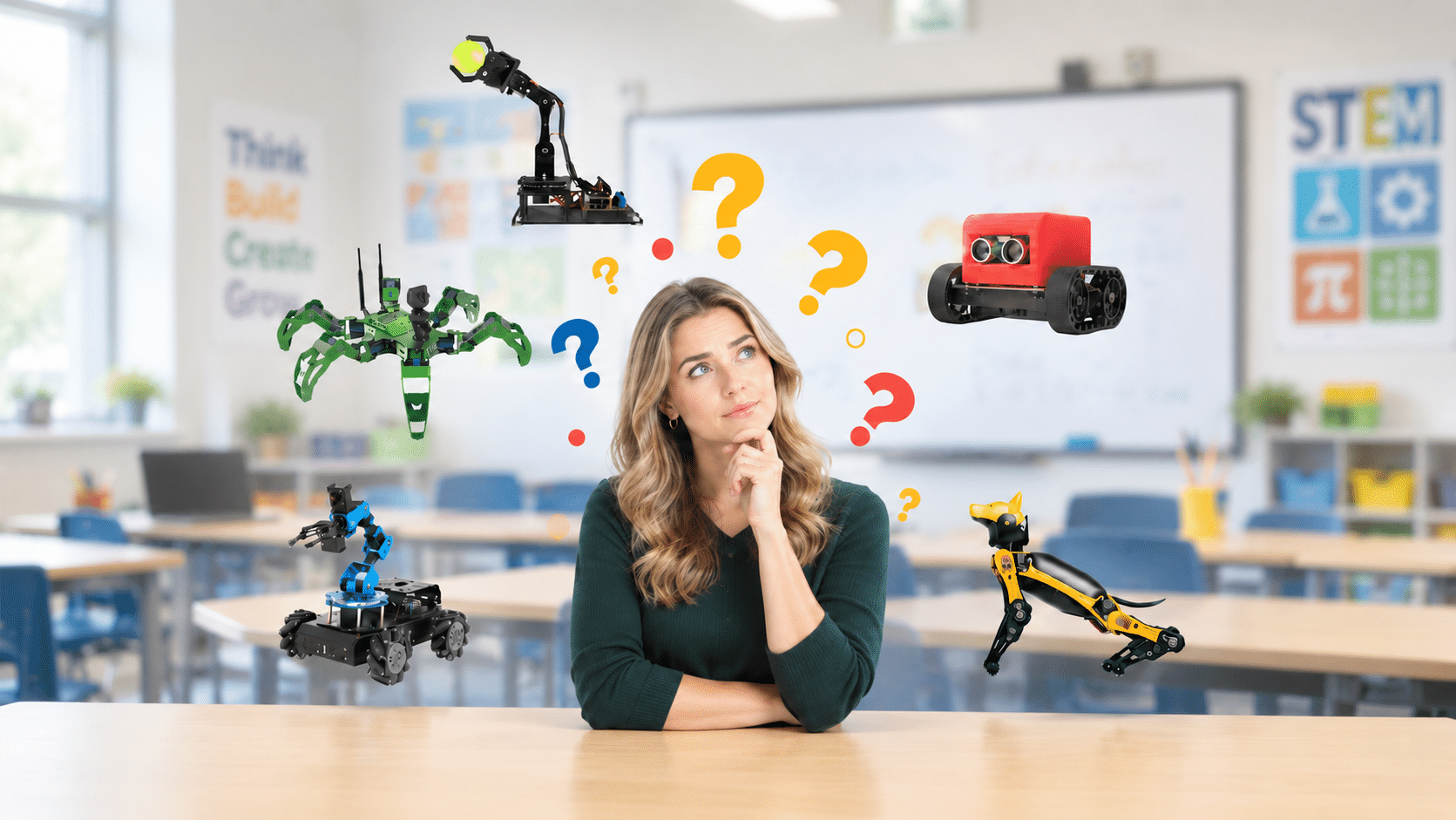
LocoRobo’s K12 Robotics Solutions supports hands-on STEM robotics learning through classroom-ready platforms, curriculum, coding activities, AI integration, and teacher support.
Students can explore STEM and robotics concepts ranging from movement robotics programming and sensor integration to autonomous systems and AI-assisted STEM robot kits.
As stories like Figure AI’s 200-hour humanoid robot demonstration continue to emerge, robotics education is becoming increasingly connected to the technologies shaping modern industries.