

Career exploration is often treated like a scheduling problem. Add a class. Build a pathway. Write a proposal. Find funding. All good ideas but hard to pull off.
Most teachers are not asking, “How do I redesign everything?” They are asking, “What can I realistically introduce without breaking what already works?”
The answer is not a full overhaul. It is one well-designed step.
A single moment.
Big Program Resets Rarely Work
When career exploration is introduced as a large-scale change, friction shows up fast.
Teachers worry about:
- Student readiness
- Time lost to setup
- How to explain outcomes before there are any
- Whether the investment will actually pay off
Those are reasonable concerns. Large resets demand certainty before teachers have proof.
Real momentum comes from starting small, seeing success, and building forward. That is exactly how many educator-led programs actually grow.
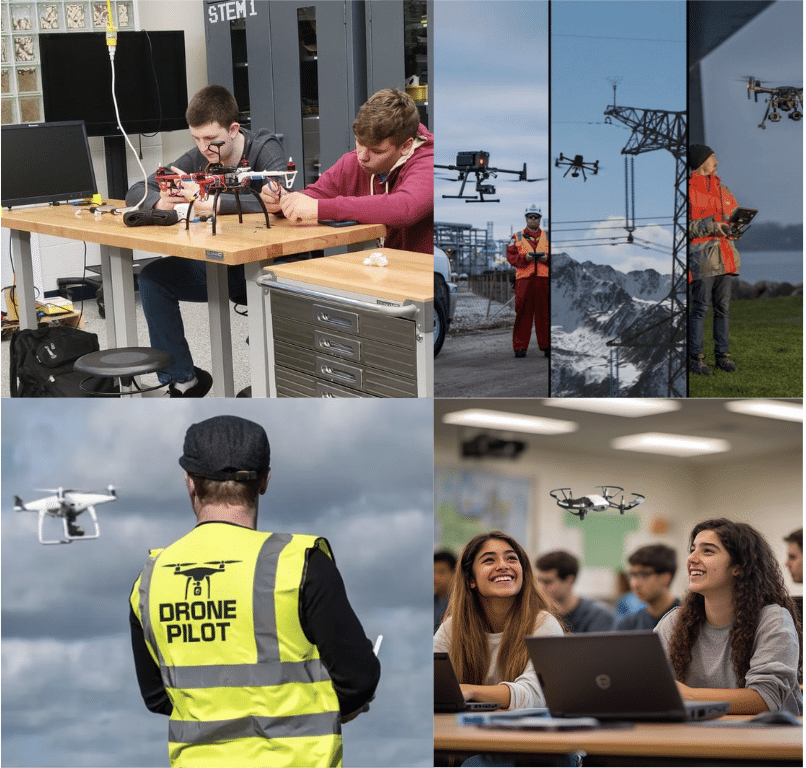
As Eric Beall, our Educator of the Month, who began with a small after-school drone club, put it:
“After completing my first year with the LocoRobo curriculum, students around campus noticed my class building and flying drones, and then my enrollment doubled.”
Eric did not begin with a district-wide rollout or a new course requirement. He started with one program, one group of students, and one set of hands-on learning.
The results created the demand.
The Real Barrier Is not the Curriculum. It is Bandwidth.
Teachers already carry enough. New standards. New tools. New expectations. New logins. And a heroic effort to remember student names by week two.
STEM career exploration usually fails because it is framed as “one more thing.” One more course to plan. One more prep. One more thing to defend.
That framing ignores how learning actually sticks.
Career Awareness Grows Step by Step
Students do not need exposure to every career pathway at once. They need moments that connect learning to the real world.
That can start with:
- A robotics unit inside an existing CS or STEM curriculum
- A drone curriculum tied to data collection or mapping
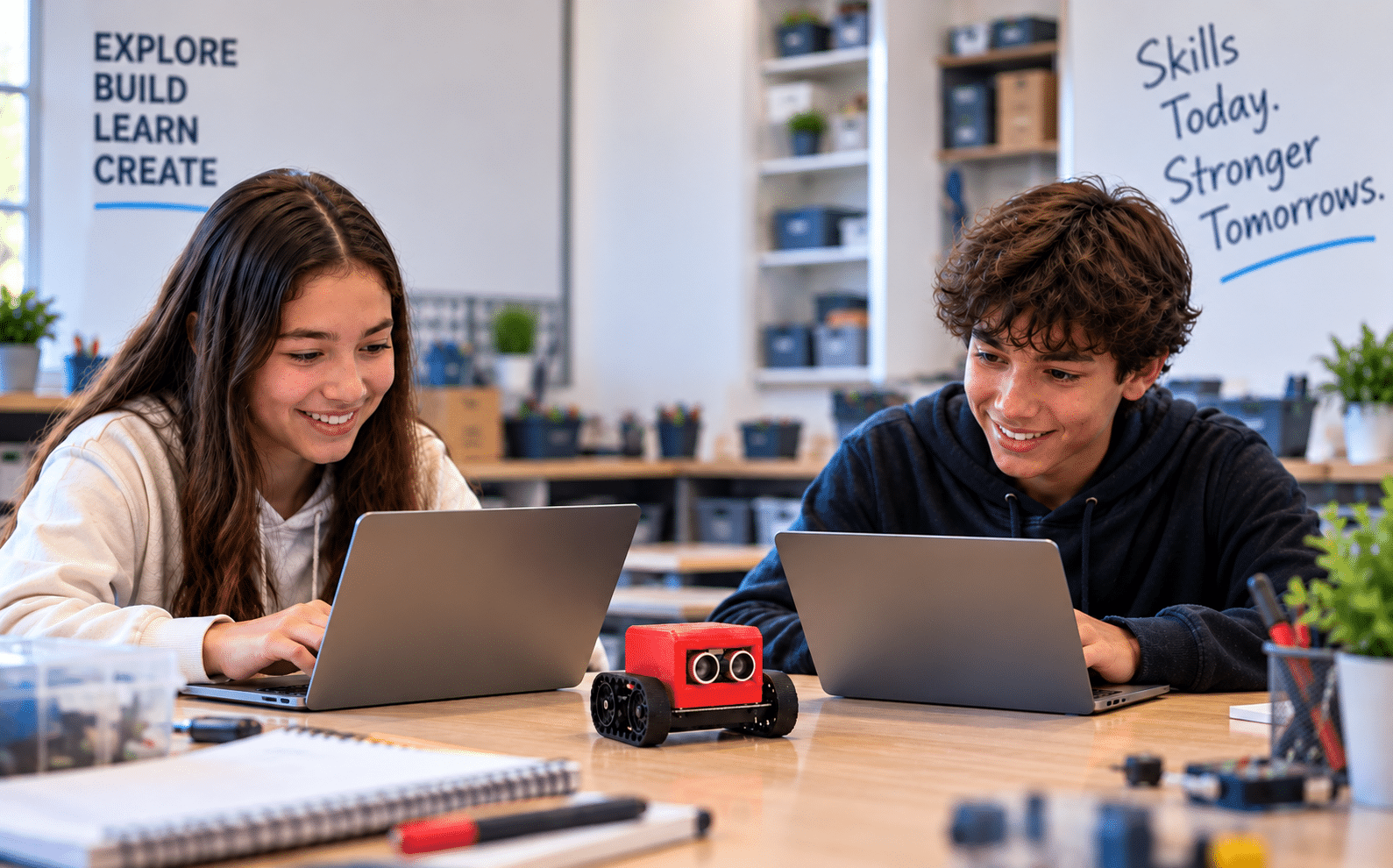
- A short project where code controls movement instead of a screen
One moment leads to another.
A robotics activity sparks interest in automation.
A drone education lesson introduces aviation, data, or engineering.
A follow-up project connects teamwork and problem-solving to real roles.
Career exploration grows naturally when learning stays grounded in experience.
Why Hands-On Systems Make Small Starts Stick
Hands-on learning works because results are visible.
When students code a robot and see it move or program a drone and navigate an obstacle, the learning feels real. When learning feels real, career questions follow naturally.
Students start asking:
- “What job uses these skills?”
- “You mean adults get paid to do this?”
- “Can we do something harder next?”
That curiosity needs continuity.
Sustainable Programs Grow
The strongest STEM and CTE programs are rarely launched fully formed. One lesson becomes a unit, then a semester, and finally a pathway.
Teachers lead that growth when the right tools, structure, and flexibility support them.
Where LocoRobo Fits
At LocoRobo, we design our STEM programs for exactly this kind of growth.
Teachers can start with robotics, drones, or AI inside the classes they already teach. As confidence and interest build, those experiences expand into deeper projects, multi-year pathways, and clearer career connections.
Step-by-step guidance, backed by ongoing support, professional development, and tools designed to fit the way teachers already work.
Because career exploration does not start with rewriting a program. It starts with one moment that works. Request our Career Exploration toolkit to get started.