
In today’s educational landscape, selecting the right STEM tools for your classroom or homeschool can be overwhelming. Many tools promise to enhance skills like logical reasoning, problem-solving, and engineering design, but not all live up to expectations. To ensure you invest in a tool that will truly benefit your students, here are key factors to consider when evaluating new STEM products.
1. Define Your Educational Goals
Before purchasing a STEM tool, define what you aim to achieve. Are you focused on teaching coding, improving problem-solving skills, or encouraging creativity and teamwork? Choose tools that align with your STEM curriculum objectives and foster the specific skills you want to develop in your students. Clear goals will guide you in selecting the most appropriate features for your class.
2. Ensure Compatibility with Your Curriculum
The best STEM tools complement your existing curriculum. Verify that the tool supports subjects like robotics, coding, AI, or cybersecurity. Some tools come with pre-designed lesson plans, while others may require customization. It is essential to assess whether the tool matches your grade levels and standards. Furthermore, check if it enhances learning across disciplines, such as engineering, math, and technology, making it a versatile addition to your curriculum.
3. Scalability and Flexibility
When considering an educational tool, think about its long-term value. A good STEM product should grow with your students, offering room for progression and multiple levels of difficulty. Tools that allow for experimentation and refinement encourage students to engage in iterative learning, a cornerstone of STEM education. Ensure the tool supports continuous learning and can be reprogrammed or adjusted as students advance in their skills.
4. Is the Product Programmable?
Programming is an essential skill in STEM education. When evaluating a product, ask whether it offers programming capabilities. Tools that allow for coding, whether through simple block-based programming or more advanced languages like Python, are invaluable for students. A programmable product evolves with student skills, offering deeper engagement as students learn to apply new concepts. This feature also prepares them for future careers in industries like robotics, software development, and AI.
5. Ease of Use and Teacher Support
The ease of implementation and teacher support are crucial when selecting a STEM tool. Look for web-based platforms that work on any browser, reducing IT setup, and offer built-in training, lesson plans, and ongoing support so teachers can confidently bring them into the classroom.
6. Engages Students in Real-World Tasks and Connects to Careers
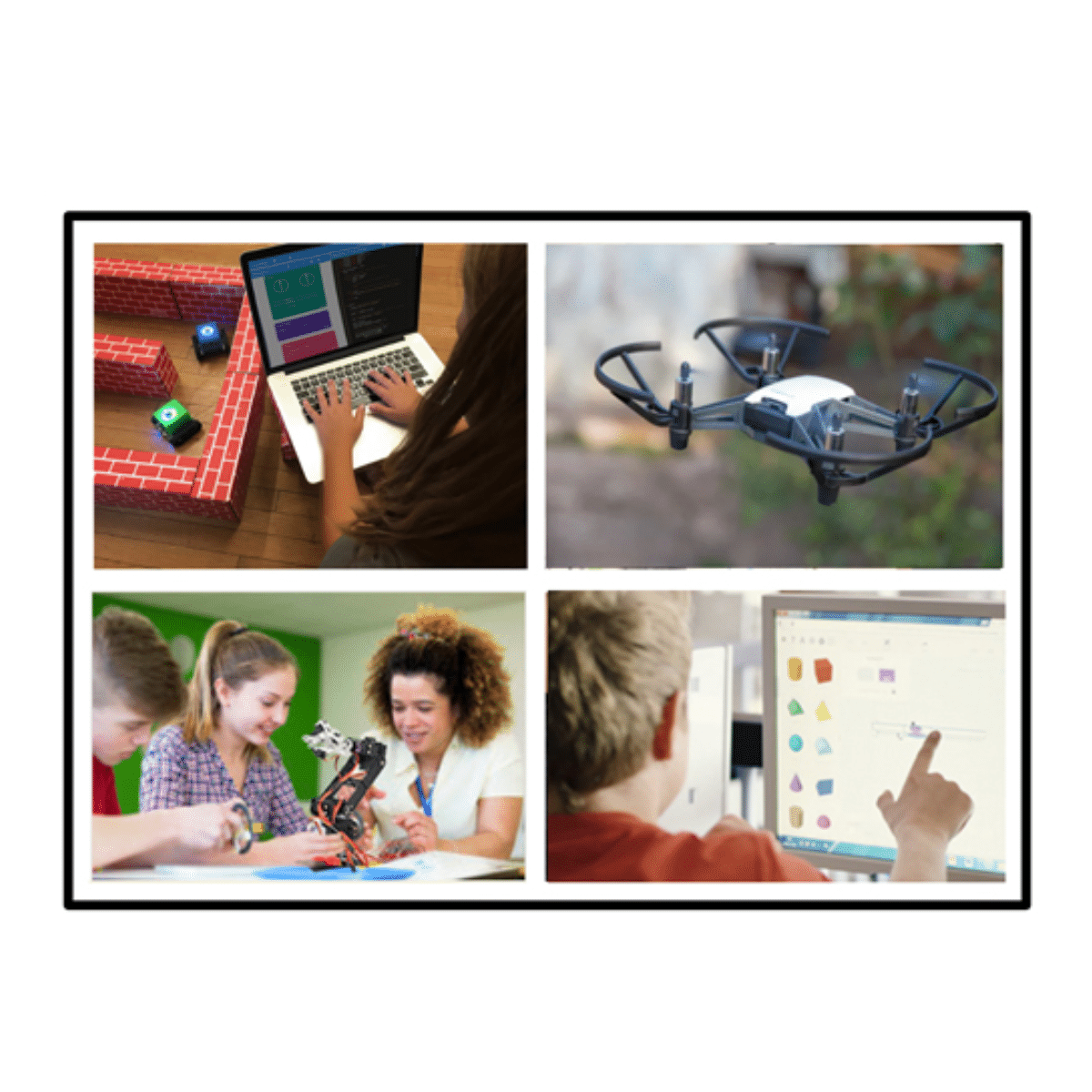
Effective STEM tools engage students in real-world tasks that mimic actual career scenarios. Look for products that offer hands-on learning experiences, such as coding drones or programming robots. Research by Glancy et al. (2014) suggests that the most effective STEM tools are those that motivate students with practical, real-world applications. Connecting classroom learning to careers in engineering, tech, and robotics can inspire students and give them a clear vision of their future career possibilities.
7. Student Engagement and Interaction
The level of student interaction is a key measure of a tool’s effectiveness. Does the tool keep students actively engaged? Hands-on learning, project-based activities, and interactive simulations are more effective than purely theoretical learning. Choose tools that encourage collaboration, problem-solving, and critical thinking, skills vital to success in STEM education.
Choose the Right STEM Tools for Success
When selecting a STEM tool for your classroom, it’s essential to evaluate its ability to meet your educational goals, support your curriculum, and engage students in real-world tasks. A great tool should be scalable, programmable, and offer ample teacher support. By considering these factors, you can ensure that the tools you invest in will enhance your students’ learning experience and prepare them for future careers in STEM fields.
Ready to Equip Your Classroom with the Best STEM Tools?
At LocoRobo, we offer comprehensive, hands-on STEM solutions that support both educators and students. Our programmable drones and robotics kits, AI-powered learning tools, and all-in-one, ready-to-go curriculum are designed to help students thrive. With modular kits, intuitive coding platforms, and expert training resources, we make it easier to integrate into your STEM classroom.
Request a demo today and see how LocoRobo can support your STEM program and prepare your students for the future.