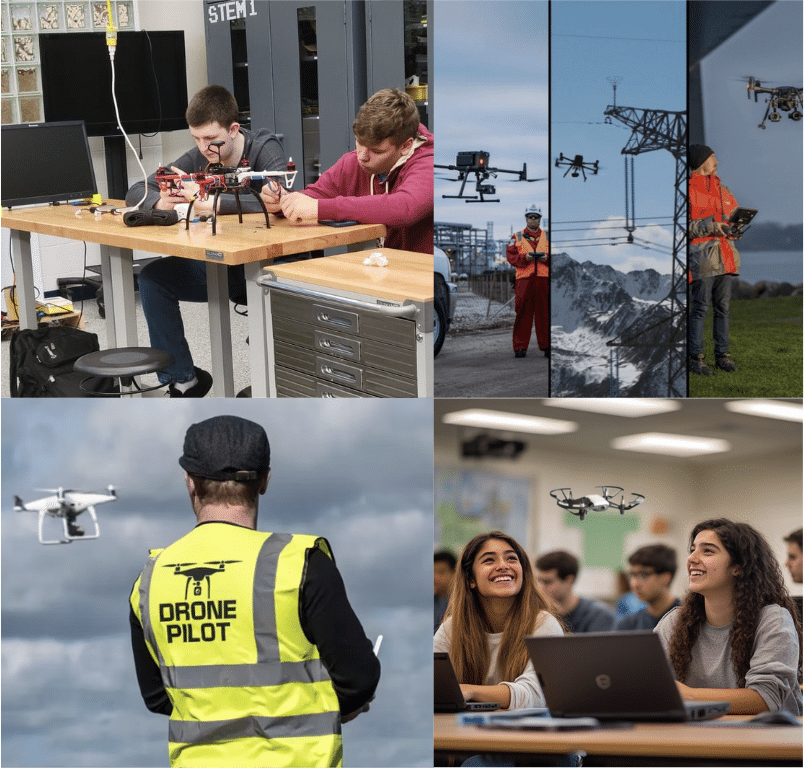
A student who enjoys flying drones might become interested in aviation. Another might discover a talent for repairing hardware, writing code, or interpreting aerial images.
That range of possibilities is what makes drone education valuable for STEM career exploration.
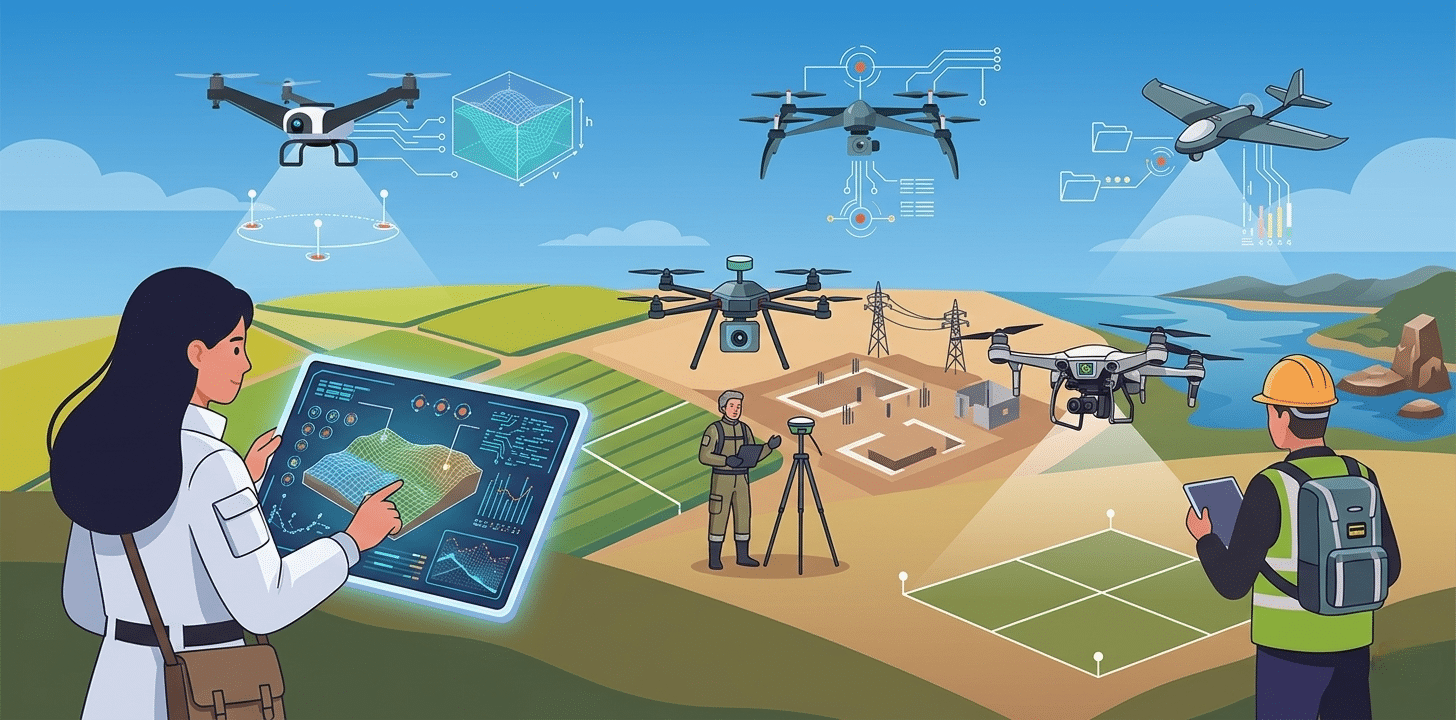
Drone technology supports work in agriculture, public safety, mapping, environmental research, and other fields. The FAA identifies applications including precision agriculture, medicine delivery, and assistance for firefighters. These uses connect drone technology with skills across several career pathways.
For educators, the opportunity is to help students understand the people, skills, and decisions behind each flight.
How Drone Technology Creates Career Opportunities
Every drone operation begins with a task: collect information, inspect an area, document a location, or test a system.
Completing that task requires more than an aircraft. Someone must select the equipment, plan the operation, check the hardware, manage the flight, and make sense of the results.
As organizations adopt drones, these responsibilities can create specialized roles and add new skills to existing occupations.
A student interested in agriculture, for example, could learn how aerial information supports field monitoring. A student interested in computer science could explore software for navigation or image analysis.
Drone Career Paths Students Can Explore
Mapping and Geospatial Technology
Drone mapping connects flight with geography, measurement, and data.
Students interested in these areas can explore careers involving geographic information systems, surveying technology, and environmental monitoring. The central task is turning aerial information into something people can use to understand a location.
A classroom connection might involve planning how to photograph a model landscape, comparing images, or explaining what information a map needs to communicate.
These activities introduce an important professional question: How do we know the information we collected is useful and accurate?
UAV Technician
Students who enjoy building, repairing, and troubleshooting may be interested in the technical side of unmanned aircraft systems.
A UAV technician’s work can involve inspecting components, maintaining equipment, identifying faults, and testing systems.
Drone building projects give students opportunities to investigate how motors, batteries, propellers, wiring, and flight controllers work together.
When a drone behaves unexpectedly, students have a practical reason to ask questions, isolate a problem, and test a solution. Those troubleshooting habits also apply to electronics, robotics, and engineering.
Agriculture and Environmental Science
The FAA identifies precision agriculture as an established drone application, while USGS researchers use drones to monitor landscapes and support scientific investigations.
For students interested in agriculture, biology, or conservation, drones offer a connection between technology and the natural environment.
Teachers can build on that connection through projects in which students compare sample aerial images, identify changes, and explain what additional evidence they would need before drawing a conclusion.
The learning extends beyond collecting pictures. Students practice observation, interpretation, and evidence-based decision-making.
Public Safety and Emergency Response
Drones can help firefighters and public safety teams understand conditions from an aerial perspective. The FAA includes these uses among the ways drones support communities.
This provides a career connection for students interested in public service, emergency management, and technical operations.
A simulated classroom mission could ask students to locate a marked target, communicate its position, and document their findings. The challenge introduces teamwork, clear reporting, and responsible decision-making.
It also helps students understand that the value of a flight depends on whether it helps someone make a better decision.
Engineering, Programming, and Autonomous Systems
Some students will be more interested in how a drone works than in operating it manually.
Drone programming can give those students a reason to investigate motors, sensors, power systems, control systems, and programming. Research into drone-based infrastructure inspection also shows how sensing, navigation, and software work together to address complex tasks.
In the classroom, students might code a drone to flight sequence, troubleshoot inconsistent movement, or evaluate how a design change affects performance.
These experiences introduce ways of thinking used in mechanical engineering, electrical engineering, robotics, and software development. Further education and specialized training help students build toward those careers.
Career Preparation Starts With Purposeful Projects
Students do not need to choose a career before they begin drone education.
Elementary students can start with movement, sequencing, and safe operation. Middle school students can explore design challenges, coding, and teamwork. High school students can investigate more advanced programming, mission planning, data collection, and certification preparation.
At each stage, the project should give students a reason to apply what they are learning.
Where FAA Certification Fits
For eligible high school students interested in drone operations, FAA Part 107 preparation can provide a concrete next step.
First-time applicants for an FAA Remote Pilot Certificate must be at least 16, pass the required aeronautical knowledge examination, and meet the FAA’s other eligibility and application requirements. Test topics include airspace, regulations, weather, emergency procedures, and preflight inspection.
Certification preparation gives students a structured introduction to aviation responsibilities. Career readiness also requires practical experience and knowledge of the field in which they want to work.
A student interested in agricultural applications, for example, benefits from understanding both drone operations and agricultural questions.
Help Students Explore Drone Careers With LocoRobo
LocoRobo’s STEM education drone kits are developed around your students, teaching goals, and available class time.
With drone curriculum, technology, teacher training, and implementation support, LocoRobo helps educators connect student interest in drones with purposeful STEM and CTE learning.
Talk to a STEM Program Specialist about a drone program that fits your school’s goals.