What would it take to live and work on the Moon without shipping every supply from Earth?
The answer involves much more than a spacecraft. Longer lunar missions would need machines that can locate resources, generate power, move equipment, build infrastructure, and communicate across difficult terrain. Resources such as water ice and lunar soil could become useful supplies, provided engineers develop reliable ways to find, extract, process, and use them.
Robotics connects many of these efforts. Before a lunar construction system can build a landing pad or a processing system can produce oxygen, machines need to understand and operate in an unfamiliar environment.
Lunar Rovers: Scouting the Surface and Moving Equipment
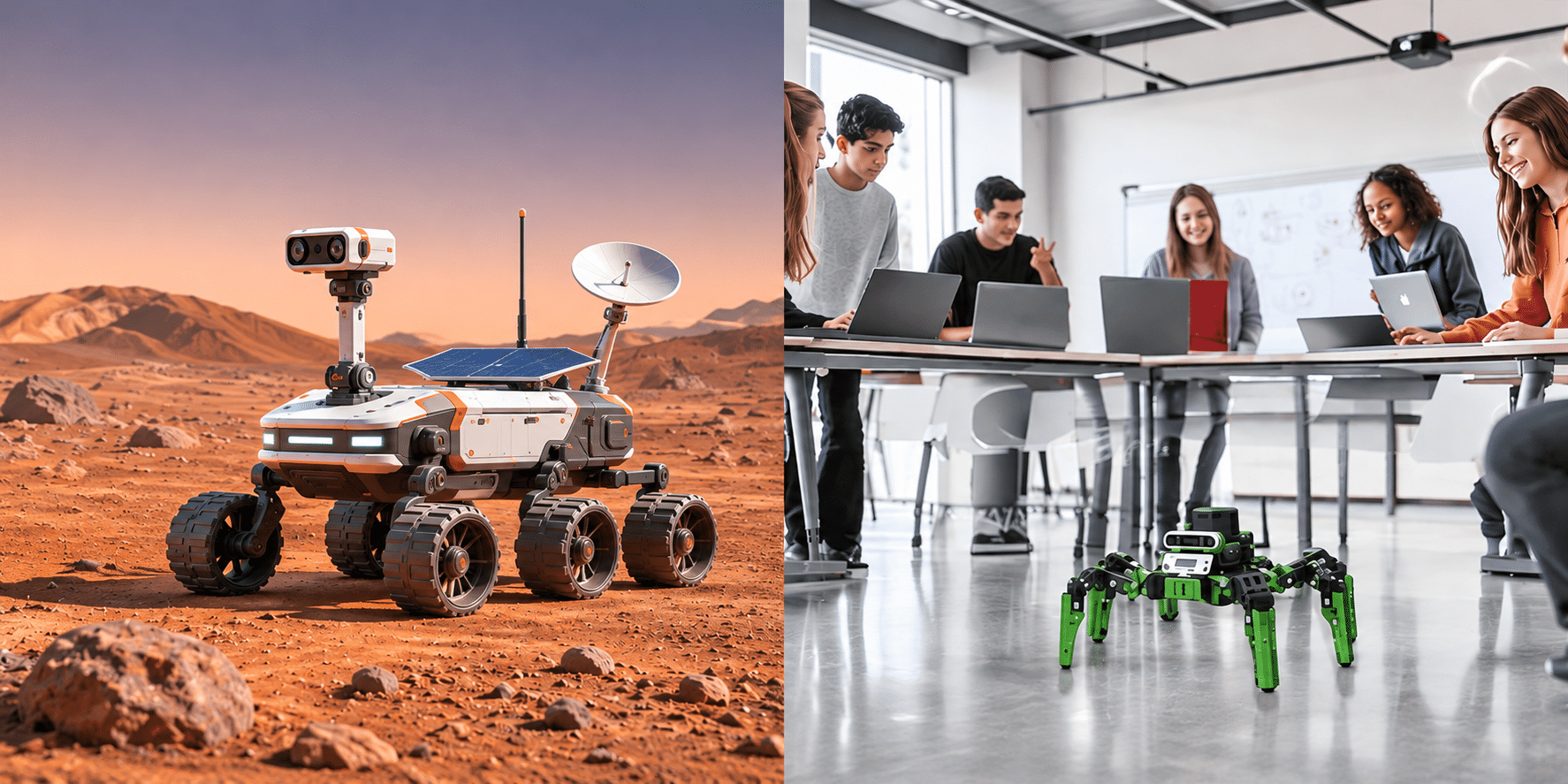
Lunar operations begin with mobility. Equipment must reach its destination, instruments need access to areas of scientific interest, and astronauts need ways to travel beyond their landing site.
The article highlights Astrolab’s FLEX rover architecture and Lunar Outpost’s robotic exploration work as examples of commercial development in this area.
NASA’s October 20, 2026, update provides a closer look at that progress. Astrolab is developing its Crewed Lunar Vehicle 1 using its FLEX architecture, while Lunar Outpost is advancing its Pegasus vehicle. Development activities include evaluating astronaut interactions with vehicle mockups and preparing mobility tests. These vehicles are being developed for future lunar operations.
The broader goal is to make surface transportation useful for several tasks: carrying supplies, inspecting terrain, supporting investigations, and helping prepare for longer missions.
Water Ice: More Than a Source of Drinking Water
Water ice could become an important resource for sustained lunar exploration.
Along with supplying drinking water, it could be processed into hydrogen and oxygen. Those materials could support life-support systems and, with the necessary production and storage infrastructure, rocket propellant.
However, locating ice is only the beginning. Mission planners need to understand its concentration, accessibility, depth, and the energy required to recover it. A deposit may exist without being practical to extract.
NASA’s resource utilization research includes technologies for drilling or excavating water-bearing material, processing it, and transporting and storing the resulting products. Each stage introduces a different engineering challenge.
Prospecting robots could provide the measurements needed to evaluate potential extraction sites. Their findings would help determine where equipment should operate and what processing methods might be suitable.
Lunar Soil: A Potential Material for Building and Oxygen Production
The loose material covering the Moon, known as regolith, could also support lunar operations.
Researchers are investigating how it could be used to produce oxygen and provide material for infrastructure. Potential applications include roads, landing pads, protective barriers, and structures.
Using local material could reduce the amount of construction material transported from Earth. Before that becomes practical, engineers must establish reliable methods for collecting, handling, and processing it.
NASA-supported research is examining regolith’s potential for resource extraction and construction, including technologies that could help build infrastructure on the lunar surface. These capabilities remain under development.
Robotic excavation and material-handling systems would play an important role. They would need to move material accurately while operating around uneven ground, abrasive dust, and other equipment.
Using Resources Where They Are Found
Water extraction and regolith processing are part of an approach called in-situ resource utilization, or ISRU.
The principle is straightforward: use resources available at the destination to support the mission.
For lunar exploration, that could mean producing water, oxygen, or construction materials locally. Mission planners could then reduce reliance on selected supplies launched from Earth.
These operations would require several technologies to function together. Extraction equipment needs power. Processing systems need a steady supply of material. Storage systems must preserve the products until they are needed.
NASA’s lunar surface technology work connects resource utilization with power generation, construction, and autonomous robotic systems. Progress depends on developing these capabilities as parts of a working operation.
A successful extraction experiment would be an important step, but sustained production would require reliable performance across the entire process.
Power: Keeping Lunar Equipment Operating
Dependable power is essential to every proposed lunar operation.
Rovers need energy to travel and run instruments. Excavation equipment needs power to recover material. Communication, processing, and construction systems add further demands.
Solar generation, energy storage, and nuclear power are among the approaches being explored for lunar applications. The appropriate combination would depend on the mission’s location, duration, and operating requirements.
Power availability also affects scheduling. Teams may need to decide when equipment can operate, how much energy to reserve, and which tasks take priority.
A resource deposit is useful only if equipment can reach it and obtain enough power to process it. Energy infrastructure therefore needs to be considered alongside resource discovery and vehicle development.
Autonomous Robotics and AI: Connecting Sensing With Action
Many lunar activities would require robots to perform tasks with varying levels of human supervision.
Potential applications include inspecting equipment, navigating around obstacles, analyzing sensor data, and assisting with excavation or construction.
These tasks require a connection between sensing and action. A robot must gather information about its surroundings, interpret that information, and respond appropriately. It also needs a defined response when conditions exceed its operating limits.
AI could support tasks such as identifying features in images or helping plan routes. Its effectiveness would depend on suitable hardware, reliable data, and testing under relevant conditions.
Coordination adds another challenge. A collection robot, transport vehicle, and processing unit would need to complete their individual tasks in a sequence that keeps the overall operation running.
Communication and Navigation: Connecting Lunar Operations
Robotic equipment needs a way to exchange information.
Rovers must transmit measurements. Operators need updates on equipment status. Vehicles and astronauts need positioning and navigation support.
NASA’s LunaNet framework addresses these needs through standards intended to allow communication and navigation services from different providers to work together. The aim is to support cooperating systems on and around the Moon.
Reliable connections could help teams coordinate activities across multiple locations and maintain contact where direct communication with Earth is difficult.
As lunar operations expand, compatibility between systems will become increasingly important. Equipment developed by different organizations must be able to exchange useful information.
Robotic Construction and Lunar Refueling
The ability to use local resources could eventually support more ambitious infrastructure.
Robotic construction systems could help move material, prepare landing areas, and build protective structures. Manufacturing approaches using regolith could reduce the need to transport some building materials from Earth.
Another possibility is producing and storing propellant from lunar water. Refueling infrastructure could potentially support later exploration missions, but it would depend on much more than discovering ice.
Resource recovery, processing, power generation, transportation, and storage would all need to work at a useful scale. Equipment would also need to remain reliable over extended operations.
These possibilities explain the interest in lunar resource technologies. They also show how much engineering remains between an individual demonstration and a dependable lunar service.
Connecting Lunar Exploration to Robotics Education
Lunar exploration brings together robotics programming, sensing, mechanical design, mapping, and data interpretation. It shows students how individual technical skills contribute to a larger mission.
A robot needs to do more than follow movement commands. It must gather useful information, respond to changing conditions, and complete a task within practical limits.
Students can explore related questions through STEM robotics: How should a robot select a route? What measurements support a decision? When should it stop and request help?
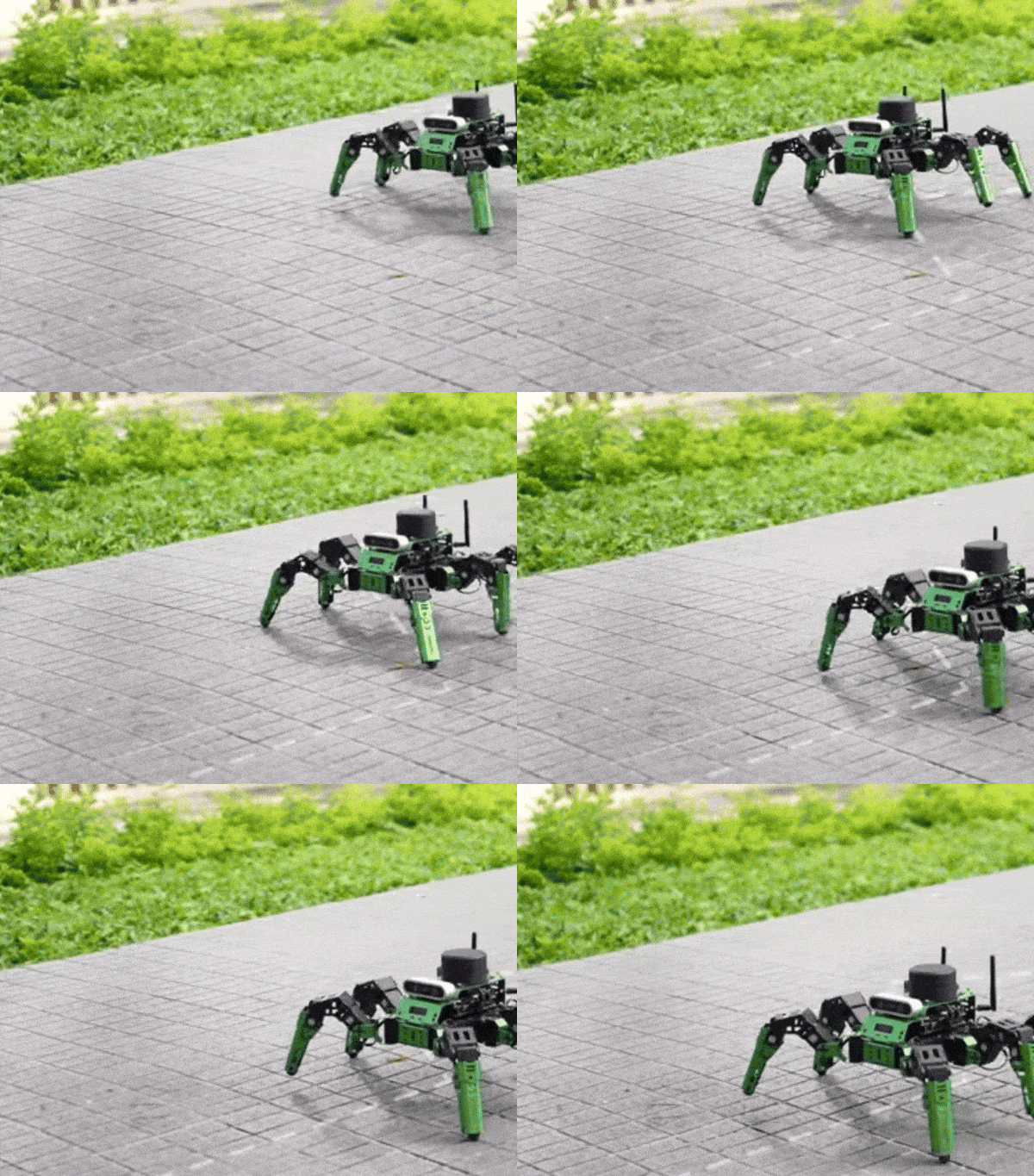
LocoRobo’s K12 robotics education solutions support exploration of these concepts through platforms such as LocoHex: six-legged hexapod robotics. Its LiDAR and depth cameras enable projects involving mapping, navigation, and terrain analysis, while its movement capabilities allow students to investigate balance and motion control.
Using planetary exploration as a project context, students can develop and test robotic systems while connecting robotics and education with real engineering challenges.
Explore LocoHex to discuss how hands-on robotics could fit your school’s STEM, computer science, or CTE program.