
A robot smaller than a paperclip just got a lot faster.
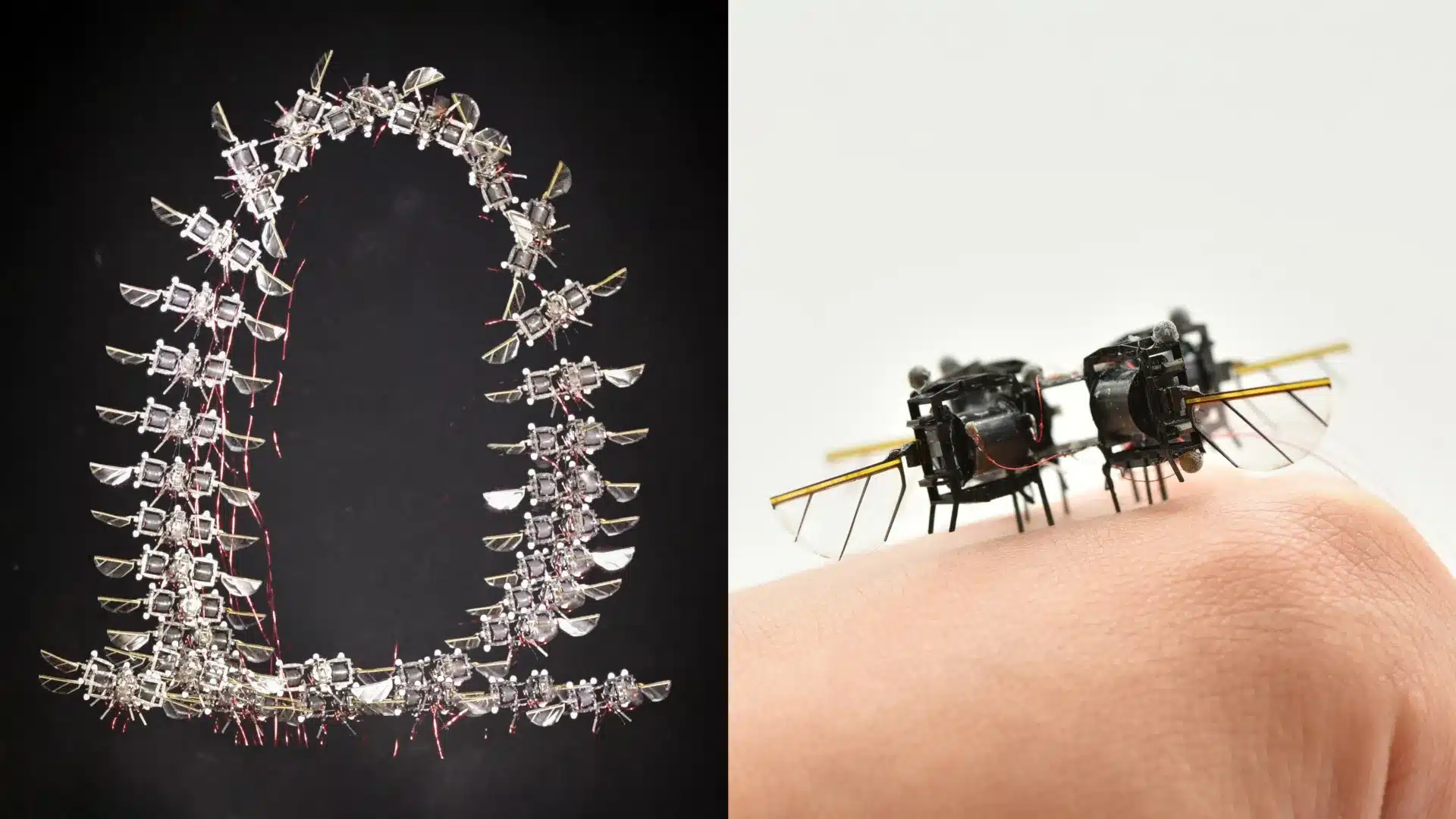
Researchers at MIT have developed an AI-based control system that allows an insect-scale flying robot to move with dramatically greater speed and agility. The microrobot can make rapid turns, perform aggressive aerial maneuvers, and complete 10 consecutive somersaults in just 11 seconds.
The researchers reported a 447% increase in speed and a 255% increase in acceleration compared with their previous results.
But the most interesting part of the research is not the flips. It is what made them possible.
The physical robot had already improved. What was holding it back was its ability to control those movements quickly and accurately. By combining robotics hardware with AI-based control, the researchers were able to get much more out of the machine.
And that relationship between hardware, software, AI, and control is becoming increasingly important across robotics.
Why Make a Robot This Small?
MIT researchers have been developing robotic insects for more than five years.
Their potential advantage is simple: they can go places larger robots cannot.
For example, after an earthquake, a conventional drone may struggle to enter narrow openings in a collapsed building. A tiny flying robot could potentially move through gaps in debris, navigate confined spaces, and eventually carry cameras or sensors to help search for survivors.
But being small creates engineering challenges.
An insect can react almost instantly to changes in its environment. It can accelerate, stop, turn, and correct its flight while dealing with wind and obstacles.
Replicating those abilities in a robot requires more than building small wings.
The robot needs to make extremely fast decisions about how to move.
That is where AI comes in.
AI Became Part of the Robot’s Control System
The MIT robot is roughly the size of a microcassette and weighs less than a paperclip. Its wings are powered by soft artificial muscles that contract rapidly to create extremely fast wingbeats.
The hardware was capable of increasingly agile movement, but the control system needed to keep up.
Previously, researchers manually tuned the controller. That becomes difficult when a robot must execute rapid, complicated maneuvers while constantly correcting small errors.
MIT researchers addressed the problem with a two-step AI-driven control approach.
First, they used a model-predictive controller.
This system uses a mathematical model to predict how the robot will behave and determine the sequence of actions needed to follow a desired flight path. It can plan difficult movements while accounting for physical limits such as the amount of force and torque the robot can generate.
The problem is that this type of planning requires significant computing power.
So the researchers used it to train a faster deep-learning model through imitation learning.
Instead of running the computationally demanding planner during every moment of flight, the AI policy learns from its behavior and can make decisions quickly enough for real-time control.
Think of it as an expert system demonstrating how to perform a difficult maneuver, then training a faster system to reproduce that behavior.
Ten Flips Show Why Control Matters
Doing one flip is difficult.
Doing 10 consecutively is a control problem.
Every small positioning error from one flip can affect the next. If those errors accumulate, the robot eventually loses control.
MIT’s microrobot completed 10 somersaults in 11 seconds while staying within only a few centimeters of its intended flight path. It also demonstrated an insect-inspired movement called a saccade. During this maneuver, the robot rapidly changes its body angle, moves toward a new position, and then pitches in the opposite direction to stop.
These movements demonstrate how AI-based control can help robotic systems react quickly while maintaining accuracy.
Better AI Can Make Existing Robotics Hardware More Capable
There is another important lesson in MIT’s research.
Improving a robot does not always mean replacing the robot.
Sometimes the biggest improvement comes from changing the intelligence controlling it.
MIT’s researchers had already made significant advances to the microrobot’s hardware. The new control architecture allowed them to use those capabilities more effectively.
The hardware created new possibilities for the software, while advances in the software allowed researchers to push the hardware further.
That same relationship appears throughout modern robotics.
Sensors provide information about the environment. Software interprets that information. AI models can help identify patterns or determine actions. Control systems convert decisions into physical movement. A robot increasingly becomes a system in which mechanical engineering, electronics, AI, programming, sensing, and control work together.
From Flying Insects to Autonomous Systems
MIT’s researchers eventually want these microrobots to operate more independently.
One goal is to add onboard cameras and sensors so the robots can navigate without relying on external motion-capture systems.
Researchers are also interested in whether multiple microrobots could eventually coordinate their movements and avoid collisions.
That introduces another set of engineering challenges.
How does a robot determine where it is?
How does it plan a route?
How does it interpret sensor information?
How can multiple autonomous machines operate in the same space?
How does it respond when the environment changes?
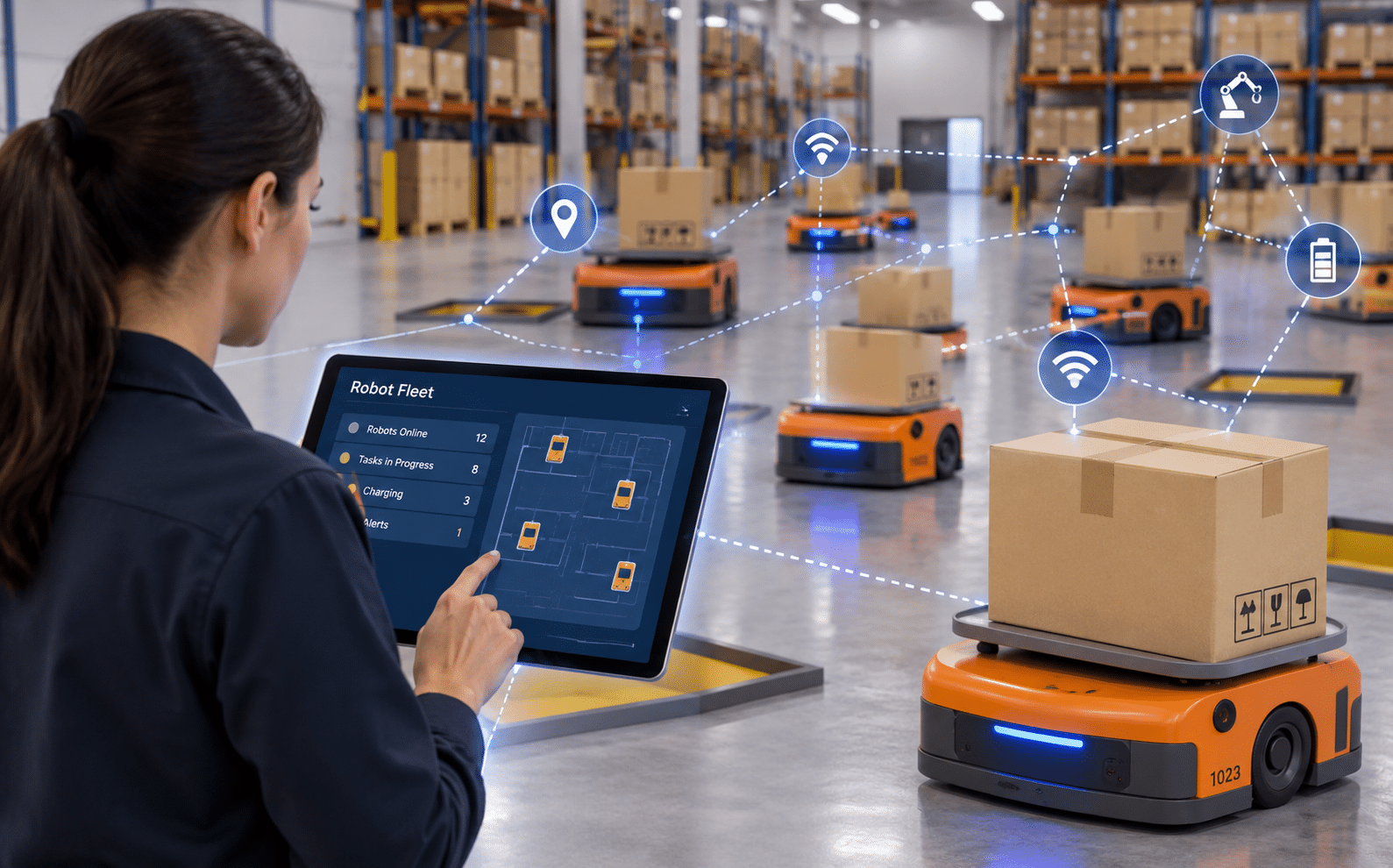
These are not isolated questions. They are central to autonomous robotics, self-driving systems, drones, warehouse automation, robotic exploration, and many other engineering areas.
What This Means for Robotics and AI Education
Students entering technology and engineering fields will increasingly encounter systems where robotics and AI overlap. `
Learning to program a robot is an important starting point, but advanced robotics goes much further.
Students may need to understand how sensors generate data, how autonomous systems navigate, how algorithms make decisions, and how software affects the behavior of physical machines.
MIT’s flying microrobot provides a powerful example.
Its dramatic performance improvement did not come from AI operating separately from robotics. It came from researchers understanding both the physical machine and the intelligence needed to control it.
That is an important distinction for robotics education.
Students benefit from opportunities to see code leave the screen and affect a physical system. They can write a program, observe what the robot actually does, analyze the difference between the expected and actual result, and adjust their approach.
As systems become more autonomous, that feedback loop becomes even more valuable.
Bringing Robotics and AI Into the Classroom
Research projects like MIT’s insect-scale robot represent highly advanced engineering, but many of the concepts behind them can begin much earlier in STEM programs.
Students can start with foundational robotics and programming before progressing into Python, sensors, AI vision, autonomous navigation, ROS, SLAM, and more advanced robotics concepts.
LocoRobo provides K12 robotics and AI education solutions designed to support that progression.
Students can work with legged, wheeled, and autonomous robotic platforms while developing skills in programming, sensing, robotics, AI, navigation, and engineering problem-solving. For more advanced programs, LocoRobo systems support areas such as ROS, SLAM, autonomous navigation, AI vision, edge computing, and robotic manipulation.
Because the robots may change.
The applications may change.
But understanding how software, AI, sensors, and physical systems work together is becoming a fundamental part of AI and robotics education.