
The age of Artificial Intelligence has reached the classroom, where students are understanding how AI works and where it leads. Forward-thinking educators are finding the answer by weaving AI into STEM pathways, creating learning experiences that go beyond theory and into real-world application. From elementary classrooms to high school labs, schools are discovering innovative ways to make AI education accessible, engaging, and deeply relevant to students’ futures.
Why AI Belongs in K-12 STEM Education
The integration of AI into STEM education is about equipping students with the skills they will need to thrive in tomorrow’s workforce. According to recent projections, AI-related jobs are among the fastest-growing career paths, spanning fields from finance and healthcare to engineering and creative industries.
But AI literacy goes beyond career preparation. When students learn about artificial intelligence, they develop:
- Critical thinking skills as they analyze how AI systems make decisions
- Problem-solving abilities by applying AI tools to real-world challenges
- Ethical reasoning through discussions about bias, privacy, and responsible AI use
- Computational thinking that strengthens their overall STEM foundation
By introducing AI concepts early and building on them throughout K-12, schools are creating pathways that prepare students to shape AI’s future development responsibly.
Hands-On Learning: From Algorithms to Real-World Applications
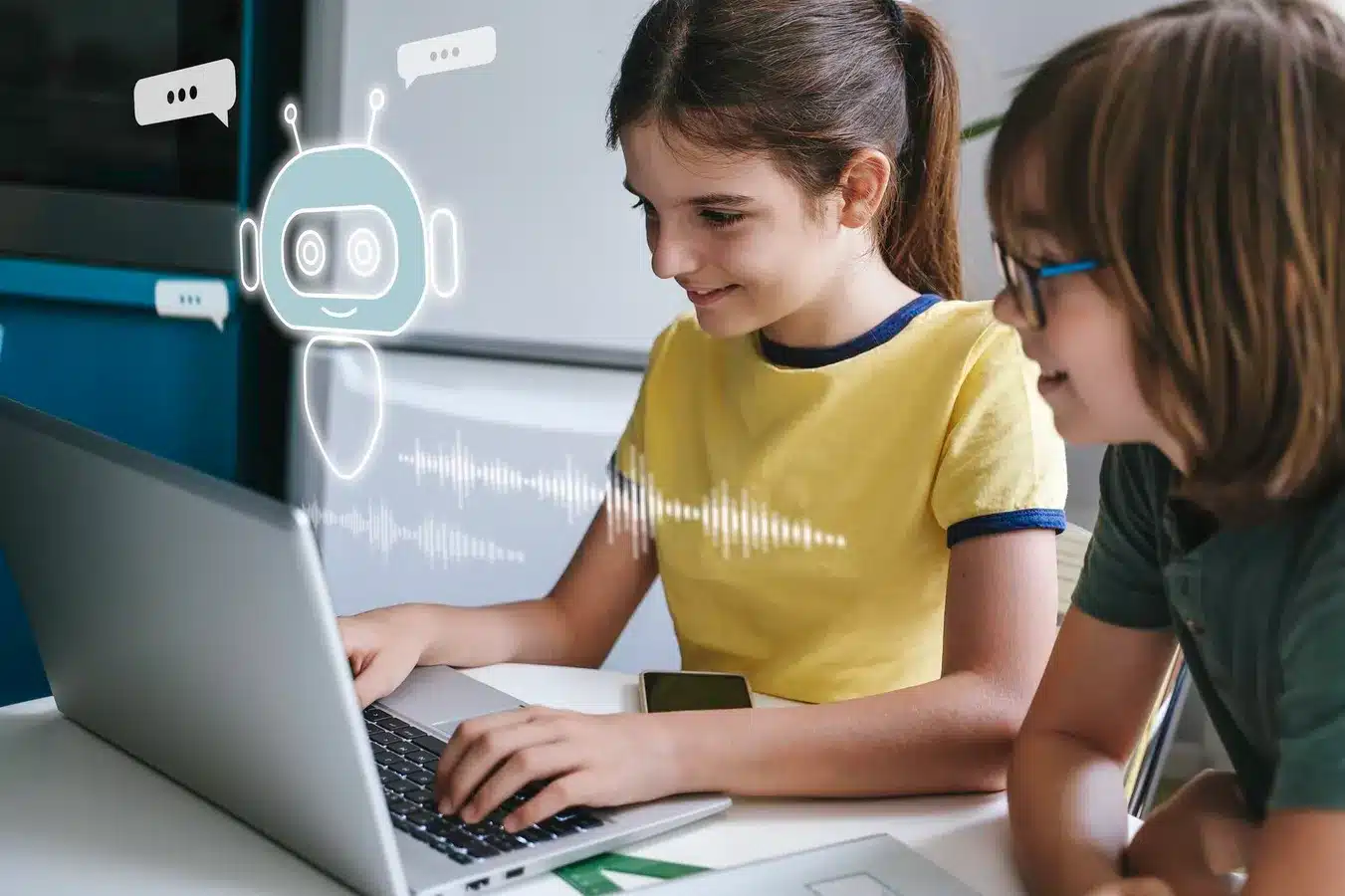
Project-based learning remains central to effective AI education. Schools are using hands-on learning projects where students train simple models, build chatbots, or explore computer vision to understand how algorithms interpret data.
How Schools Are Integrating AI Across Grade Levels
Elementary: Sparking Curiosity Through Exploration
In elementary classrooms, AI education starts with wonder. Teachers introduce young learners to AI through familiar examples, voice assistants, recommendation systems, and smart devices they encounter daily. Through hands-on activities and interactive projects, students begin to understand the basics of how machines learn and make decisions.
At this level, the goal is building AI awareness and computational thinking. These experiences lay the groundwork for more advanced learning while making STEM feel accessible and exciting.
Middle School: Building Foundational AI Literacy
As students progress to middle school, AI in education becomes more structured and concept-driven. Schools are introducing dedicated AI units that explore:
- The difference between rule-based systems and machine learning
- How AI is used across industries, from autonomous vehicles to medical diagnosis
- Hands-on experimentation with AI tools and platforms
- Ethical considerations around AI bias and decision-making
This is where students begin to see AI not as magic, but as a set of technologies they can understand, question, and eventually create with. Project-based learning becomes central, with students applying AI concepts to solve problems that matter to them and their communities.
High School: Preparing for AI-Driven Careers
At the high school level, AI education becomes increasingly sophisticated and career-focused. Schools are offering courses that mirror real-world AI applications:
Advanced AI Concepts: Students dive into neural networks, computer vision, natural language processing, and generative AI, the same technologies driving innovation in industry.
Programming with AI Assistance: Courses that teach Python programming alongside AI-powered coding tools help students develop the technical skills needed for software development and AI engineering careers.
Prompt Engineering: As generative AI transforms the workplace, schools are teaching students how to effectively communicate with and leverage AI systems, a skill that’s becoming essential across all professions.
Industry Certifications: Some schools are even offering pathways to recognized AI certifications, giving students credentials that enhance their college applications and early career prospects.
Empower Students With AI-Powered Learning
LocoRobo’s AI in Education ecosystem delivers hands-on projects, real-world AI applications, and future-ready STEM skills, helping educators seamlessly integrate AI innovation into K–12 classrooms.
LocoRobo makes AI education accessible, engaging, and relevant through intuitive, standards-aligned courses designed for all grade levels. From AI Foundations in elementary school to Intro to AI Concepts, Prompt Engineering, and LocoAI for advanced learners, LocoRobo supports a complete AI pathway that builds technical fluency and ethical awareness.
Teachers gain access to interactive lessons, live training, and full teacher support, ensuring AI learning is achievable in every classroom.
Request a Demo to see how LocoRobo can help your school integrate AI across your STEM pathways.