

Hands-On Learning That Sparks Curiosity
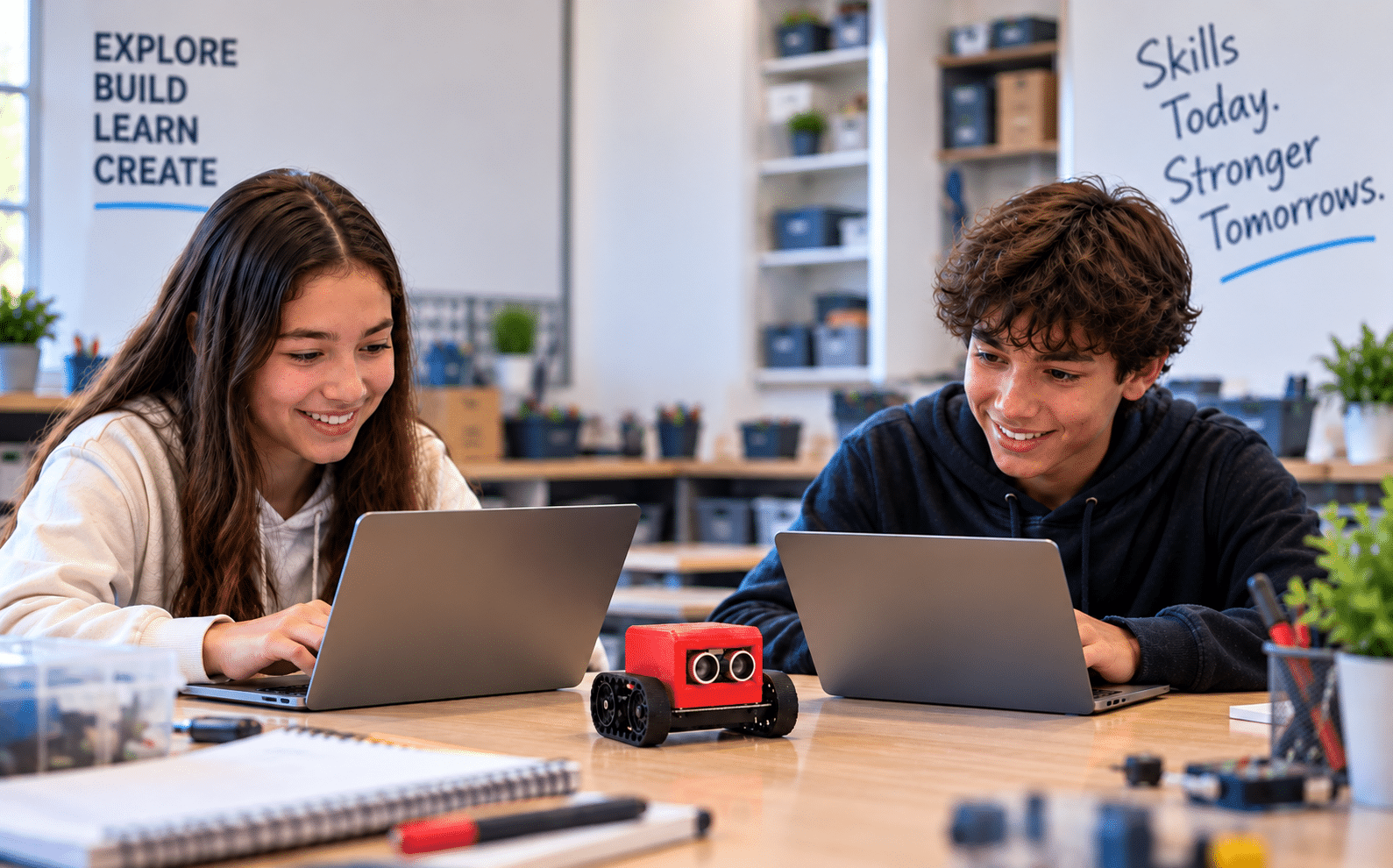
Robotics brings abstract STEM concepts to life. Instead of merely reading about physics, coding, or engineering principles, students get to build, program, and interact with robots. This hands-on approach makes learning tangible and exciting, sparking curiosity and creativity. When students see their code move a robot or solve a real-world problem, they experience the “aha!” moment that fuels a lifelong love for learning.Interdisciplinary Learning
Robotics is inherently interdisciplinary. It combines elements of:- Science: Understanding how sensors, motors, and materials work.
- Technology: coding a robot and using software to control robots.
- Engineering: Designing algorithms and optimizing robotic functions.
- Mathematics: Calculating distances, angles, and speeds for precise movements.
Why Robotics is an Essential STEM Learning Tool
- Bridging Theory and Practice – Robotics enables students to see the real-world applications of STEM theories, making abstract concepts more comprehensible and tangible.
- Encouraging Problem-Solving and Critical Thinking – Robotics challenges students to troubleshoot errors, think critically, and develop innovative solutions. These problem-solving skills are transferable to virtually any career.
- Fostering Collaboration and Teamwork – Robotics often involves teamwork, much like real-world engineering projects. These experiences teach essential soft skills like adaptability, leadership, and conflict resolution.
- Makes Failure Fun – One of the most powerful aspects of robotics is that it reframes failure as a learning opportunity. When a robot doesn’t work as expected, students are encouraged to troubleshoot, experiment, and iterate.
- Real-World Applications – From robotic surgery to self-driving cars and space exploration, robotics is at the forefront of innovation.
Robotics in STEM Education: A Learning Continuum
Elementary Education: Laying the Foundation
At the elementary level, robotics introduces students to fundamental STEM concepts through interactive play and guided exploration. Key benefits include:- Inquiry-based learning that fosters curiosity and exploration.
- Hands-on activities that introduce basics like block coding and engineering principles.
- Applying foundational math concepts such as sequencing, pattern recognition, and problem-solving in robotics challenges.
- Collaborative projects that encourage teamwork and communication.
Middle School: Advancing STEM Rigor
As students progress, robotics education becomes more complex, challenging them to develop deeper critical thinking and analytical skills. Middle school robotics programs often include:- Mathematics applications in technology and engineering.
- Scientific experiments that enhance analytical and problem-solving abilities.
- Coding and robotics projects that encourage creativity and logical thinking.
High School: Preparing for STEM Careers
In high school, robotic technology in the classroom becomes more specialized, offering students opportunities for in-depth exploration and hands-on learning. Key aspects include:- College-level STEM courses such as AP Mathematics, Computer Science, and Physics.
- Extracurricular competitions like robotics leagues and science fairs.
- Internships and mentorship programs provide real-world exposure.
The Future of Robotics in STEM Learning
By integrating robotics into STEM learning, educators can equip students with the knowledge and skills needed to succeed in a rapidly evolving technological world. Whether students pursue careers in robotics, engineering, artificial intelligence, or any other STEM-related field, their exposure to robotics education will provide them with a solid foundation for success. Robotics is undeniably the ultimate STEM learning tool. It offers students an immersive, hands-on experience that bridges theoretical knowledge with real-world applications. At LocoRobo, we help students in fostering problem-solving, creativity, and collaboration, robotics, and prepare students for the careers of tomorrow while making the STEM curriculum engaging and dynamic. After all, the robots of tomorrow will be built by the students of today.Frequently Asked Questions
Why is robotics important in STEM education?
Robotics is important in STEM education because it connects theory to real-world application. Students can see how coding, physics, and engineering concepts work together by building and programming robots. This hands-on approach helps develop critical thinking, problem-solving, and collaboration skills.
How does robotics support hands-on learning in classrooms?
Robotics allows students to actively build, test, and refine their ideas instead of passively learning concepts. When students program a robot and see immediate results, they better understand how systems work. This type of learning also encourages experimentation and helps students stay engaged.
What STEM skills do students develop through robotics?
Students develop a wide range of STEM skills through robotics, including coding, engineering design, mathematical reasoning, and data analysis. They also build soft skills like teamwork, communication, and persistence by working through challenges and debugging their projects.
How does robotics education progress from elementary to high school?
elementary school. In middle school, students begin applying math and logic to more complex challenges. By high school, they work on advanced robotics projects, programming, and real-world applications that connect to STEM career pathways.
How does LocoRobo support robotics programs in schools?
LocoRobo provides a complete system that includes robotics platforms, structured curriculum, and teacher support. This allows schools to implement robotics programs across grade levels without needing to build lessons from scratch. Educators can explore how these solutions support hands-on STEM learning here.