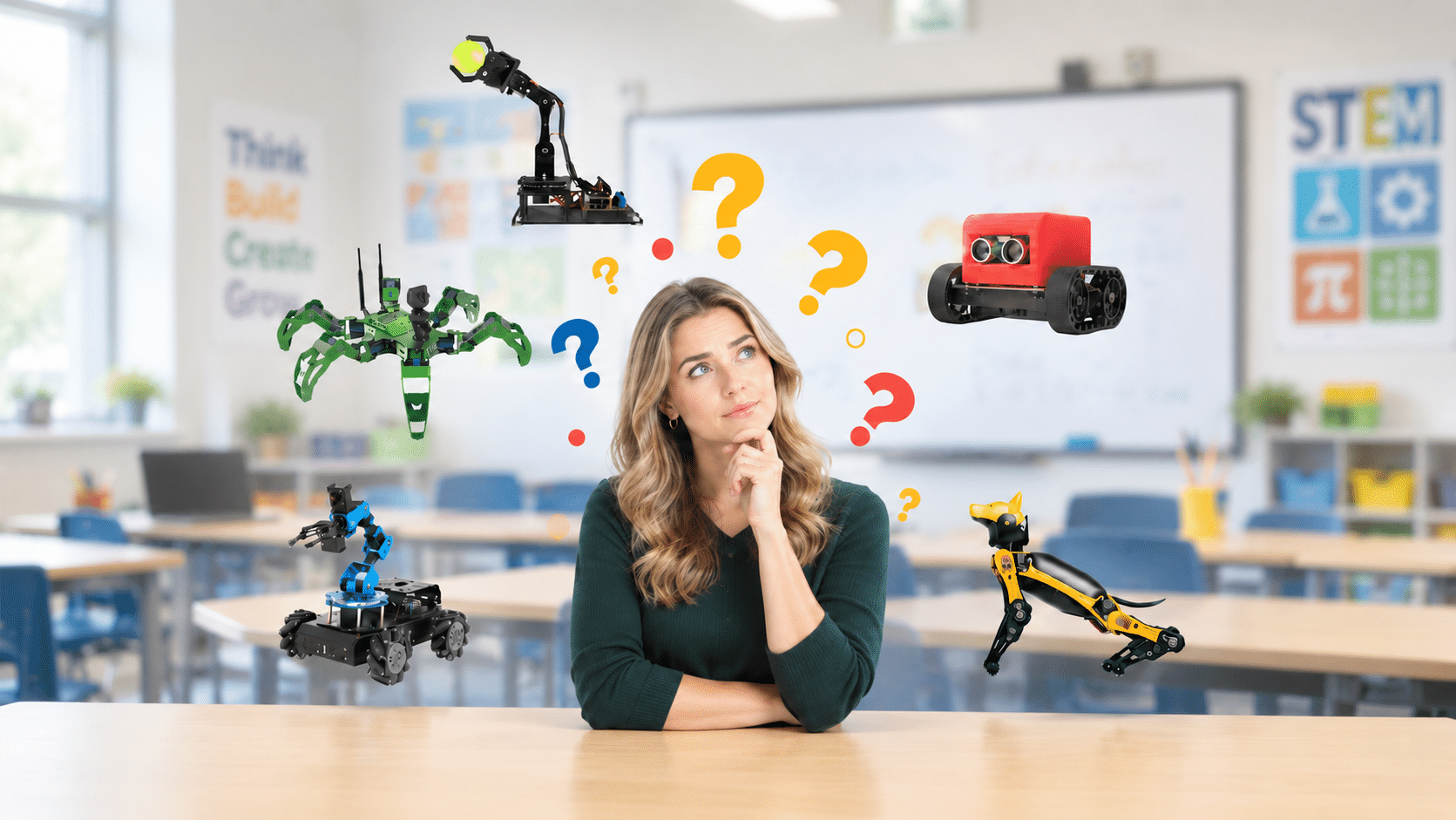

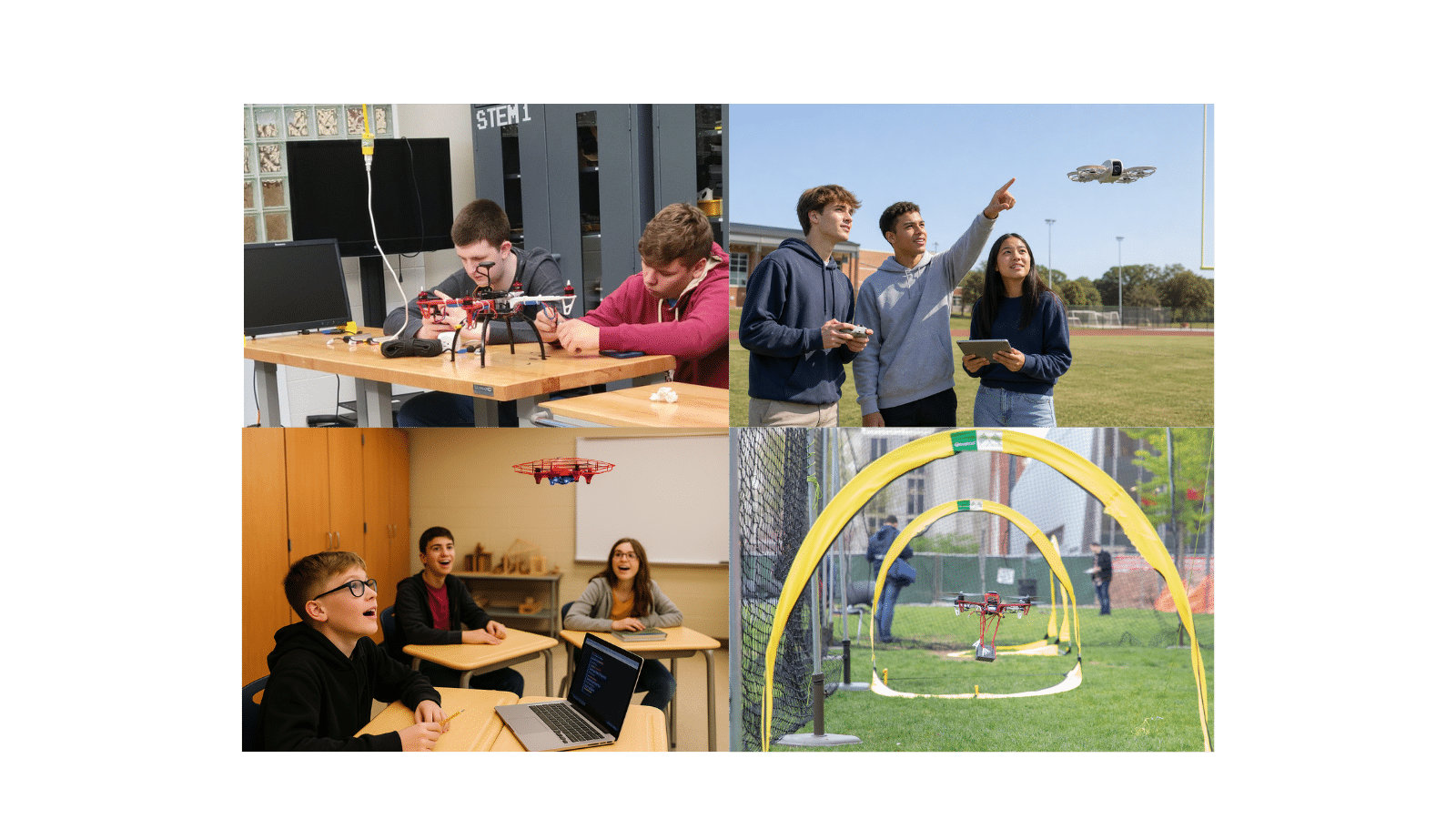
Bringing drones into a STEM classroom is rarely the hard part. The bigger challenge is finding a drone program that actually fits your students, classroom structure, and learning goals.
A good drone choice is about finding a system that fits your students, your schedule, and the way learning happens in your classroom.
Start With Your Learning Goals
Different goals require different types of drones:
- Flight fundamentals → Stable, beginner-friendly drones with simple controls
- Coding and computer science → Programmable drones that support block or Python-based coding
- Competitions and engagement → Drones built for racing, FPV, or challenge-based learning
- CTE and career pathways → Drones aligned with mapping, inspection, or FAA certification concepts
If the drone kits do not align with your outcomes, it will feel like an add-on instead of part of the program.
Match the Drone to Your Grade Level
Not every drone works for every classroom.
- Elementary and middle school: Look for safe, durable drones with simplified controls, block coding, and guided activities
- Middle to high school: Add text-based coding, autonomy, and structured challenges
- High school and CTE programs: Focus on certifications, advanced sensors, real-world applications, and AI.
Choosing a drone that is too advanced slows learning. Too simple, and students lose interest quickly.
Prioritize Safety and Classroom Readiness
An educational drone kit needs to work within school constraints.
Look for:
- Propeller guards and stable flight controls
- Indoor flight capability
- Easy setup and quick resets between classes
- Clear safety guidelines and structured activities
If it takes too long to get started or troubleshoot, it cuts into learning time.
Look Beyond the Hardware
One of the biggest mistakes schools make is choosing a drone based only on hardware.
The real question is: what supports the drone?
- Is there a structured curriculum, or are you building lessons from scratch?
- Is there software for coding and simulation?
- Are there assessments, projects, and progression across grade levels?
- Is there training or support for teachers?
A strong ecosystem makes the difference between a one-time activity and a program that runs year after year.
Consider How the Program Will Grow
Many drone programs start small and then stall.
Think about progression early:
- Can students move from basic flight → coding → real-world applications?
- Is there a path into competitions, certifications, or CTE programs?
- Can the same system scale across multiple grade levels?
A clear pathway helps students stay engaged and helps teachers avoid rebuilding the program each year.
Think About Classroom Logistics
Even the right drone can fail if it does not fit your classroom reality.
Ask:
- How many drones do you need for your class size?
- How long does setup and teardown take?
- Can students work in teams effectively?
The best programs are the ones that fit into a normal class period without friction.
Bringing It All Together
The right drone for your classroom is the one that:
- Matches your learning goals
- Works within your classroom constraints
- Fits your students’ level
- Comes with the support needed to actually run the program
When those pieces align, drones move from being a one-time activity to a consistent part of how students learn.
Your Trusted Partner in K–12 Drone Education
Building a successful drone program for schools takes more than hardware alone. Schools need a drone curriculum, classroom-ready tools, teacher support, and a pathway students can grow with over time.
LocoRobo brings these pieces together into a structured drones-for-education ecosystem designed for K–12 STEM, computer science, and CTE classrooms. From introductory flight skills to coding, competitions, and career-connected learning, our solutions help schools create programs that are easier to implement and sustain.
With standards-aligned curriculum, school-friendly software, hands-on learning experiences, and ongoing support, teachers can focus less on piecing programs together and more on guiding student learning.
Explore LocoRobo’s Drone Solutions.
Frequently Asked Questions
What is the best drone for STEM education?
The best drone for STEM education depends on your classroom goals and grade level. Some schools need beginner-friendly drones for flight basics, while others need programmable drones for coding, AI, or career-connected learning. LocoRobo’s drone ecosystem supports K–12 classrooms with differentiated pathways for elementary, middle, and high school programs.
How do schools use drones in STEM and CTE classrooms?
Schools use drones to teach coding, engineering, physics, data collection, mapping, teamwork, and problem-solving. In CTE programs, drones can also introduce students to aviation, FAA concepts, autonomous systems, and real-world drone applications. LocoRobo combines drone hardware, curriculum, and classroom support to help schools build structured STEM and CTE pathways.
What should schools look for in an educational drone program?
Schools should look beyond the drone hardware itself. A strong drone education program should include curriculum, coding software, teacher training, safety guidance, and progression across grade levels. LocoRobo provides classroom-ready drone solutions with standards-aligned curriculum and ongoing support designed specifically for K–12 education.
Can drones be used across multiple grade levels?
Yes. Many schools start with introductory flight activities in elementary or middle school and expand into coding, autonomy, competitions, and career pathways in high school. LocoRobo’s drone solutions are designed to scale across grade bands, helping schools create long-term STEM and CTE programs instead of isolated activities.