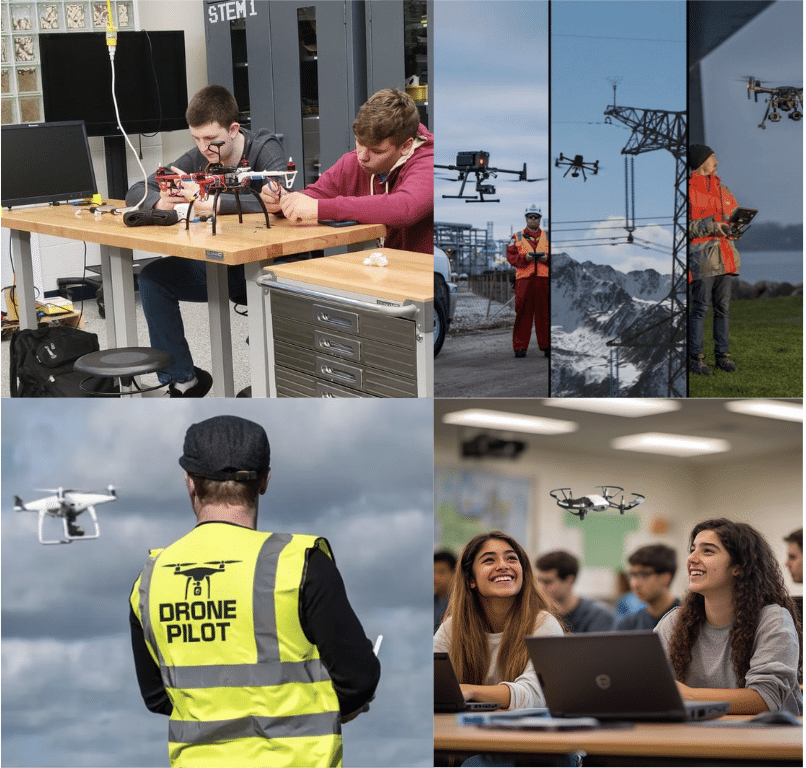

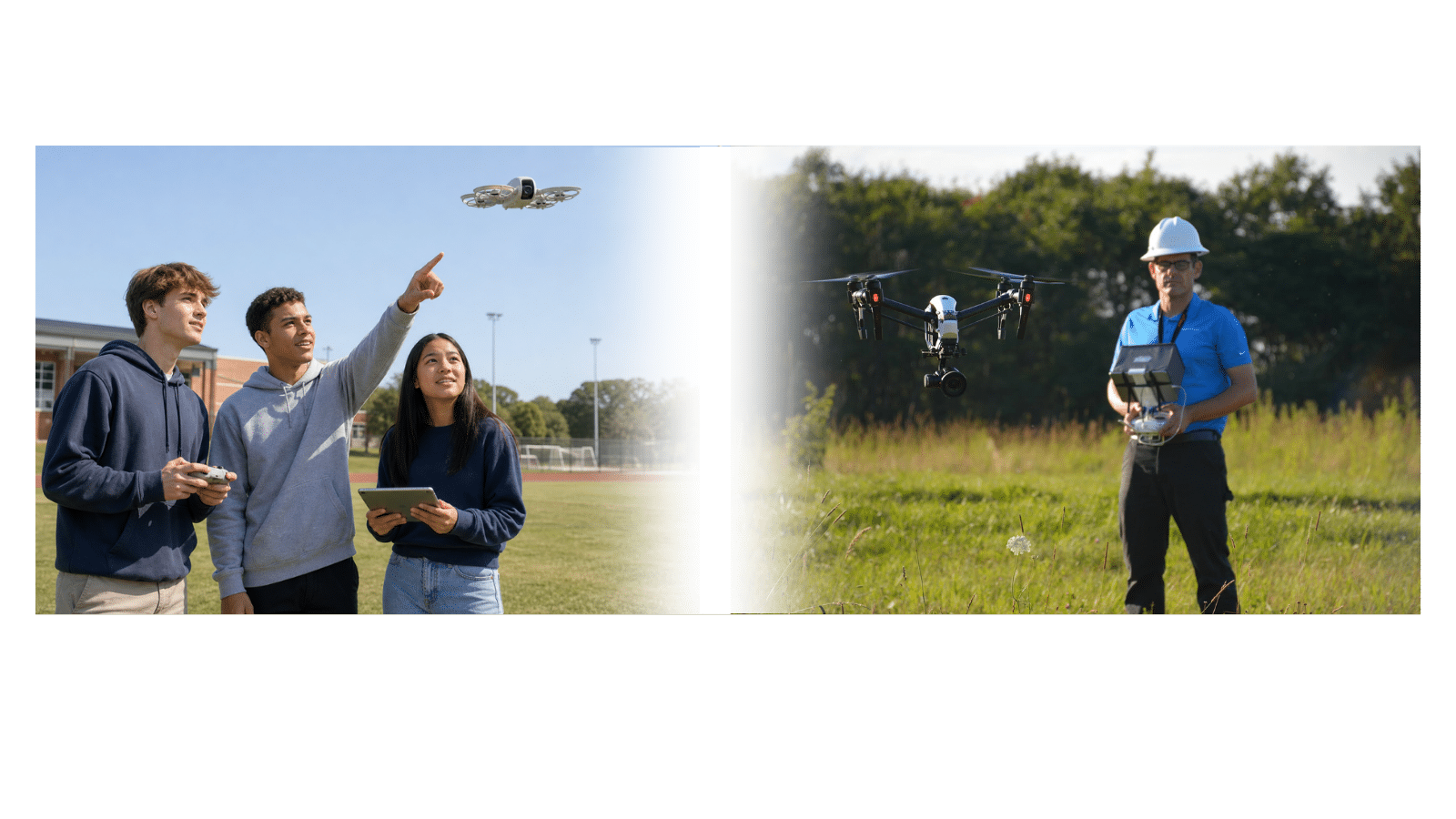
Drone education has rapidly become one of the most engaging ways to teach STEM, computer science, engineering, and Career and Technical Education (CTE). What once seemed like futuristic technology is now an accessible classroom tool that helps students develop technical knowledge while solving authentic, real-world challenges.
Rather than simply learning how to fly a drone, students explore programming a drone, engineering design, data collection, automation, artificial intelligence, and aviation. They work collaboratively, think critically, and apply classroom concepts through hands-on experiences that make learning more meaningful.
As industries increasingly rely on drones for agriculture, inspection, public safety, logistics, filmmaking, environmental science, and infrastructure management, schools are recognizing the importance of introducing students to these technologies early.
What Is Drone Education?
Drone education is the use of unmanned aerial vehicles (UAVs) as instructional tools to teach students concepts across multiple subjects through hands-on learning.
Unlike traditional aviation courses that focus primarily on flight, modern drone education combines several disciplines into one engaging learning experience, including:
- STEM
- Computer Science
- Engineering
- Physical Science
- Robotics
- Artificial Intelligence
- Geographic Information Systems (GIS)
- Career and Technical Education (CTE)
- Aviation
Students learn how drones work, how to program autonomous missions, how onboard sensors collect data, how drones solve industry problems, and how aviation regulations promote safe operation.
Because drones naturally combine hardware, software, engineering, and real-world applications, they create opportunities for authentic project-based learning across grade levels.
Why Are Schools Introducing Drone Education?
Today’s classrooms are shifting from passive instruction toward experiential learning. Students retain more knowledge when they actively build, test, iterate, and solve problems.
Drone education supports this shift by turning abstract STEM concepts into interactive classroom experiences.
Students observe how thrust, lift, gravity, and drag affect flight, instead of just reading about physics.
Instead of writing isolated coding exercises, they program drones to complete autonomous missions.
They create aerial maps using drone imagery, instead of studying maps in a textbook.
This hands-on approach keeps students engaged while helping teachers connect multiple academic subjects through a single technology platform.
For many schools, drones also serve as an entry point into career-connected learning by exposing students to rapidly growing industries.
What Subjects Can Drone Education Support?
One of the biggest advantages of educational drone kits is their versatility.
STEM
Students investigate engineering principles, physics, design thinking, sensors, automation, and problem solving through interactive flight activities and engineering challenges.
Computer Science
Students progress from simple programming concepts to autonomous drone missions using block-based coding before advancing to Python programming.
Topics include:
- Sequencing
- Loops
- Variables
- Conditional logic
- Functions
- Algorithms
- Autonomous navigation
Engineering
Students analyze how drones are designed, understand mechanical systems, explore propulsion, payloads, and sensor integration, and learn iterative design through engineering challenges.
Mathematics
Drone missions reinforce:
- Measurement
- Angles
- Geometry
- Coordinate systems
- Speed
- Distance
- Data analysis
Science
Students investigate:
- Flight physics
- Environmental monitoring
- Weather
- Remote sensing
- Mapping
- Energy systems
Career and Technical Education
Drone education naturally aligns with CTE pathways including:
- Aviation
- Engineering
- Information Technology
- Robotics
- Agriculture
- Public Safety
- Advanced Manufacturing
- Construction
- Surveying
What Skills Do Students Develop?
Drone education helps students build both technical knowledge and workplace-ready skills.
Technical skills include:
- Drone flight operations
- Programming autonomous drones
- Flight planning
- Sensor technology
- Data collection
- Engineering design
- Mapping
- Aerial imaging
- FAA safety principles
- Troubleshooting
Equally important are the durable skills students develop throughout every lesson:
- Critical thinking
- Collaboration
- Communication
- Creativity
- Problem solving
- Decision making
- Adaptability
- Leadership
These transferable skills prepare students for success regardless of the career path they ultimately pursue.
Drone Education Across Grade Levels
An effective drone program grows alongside students.
Elementary School
Younger students begin with foundational concepts through safe, guided flight experiences.
Learning often includes:
-
- Basic flight controls
- Drone safety
- STEM career exploration
- Spatial awareness
- Simple coding
- Team challenges
The emphasis is on curiosity, confidence, and introducing technology through engaging activities.
Middle School
Students begin exploring how drones are programmed and used to solve real-world problems.
Lessons often introduce:
- Autonomous flight
- Block-based coding
- Python programming
- Engineering challenges
- Data collection
- Sensors
- Mapping basics
- Collaborative projects
Students move beyond piloting and begin understanding the systems behind drone technology.
High School
High school drone curriculum prepare students for college and career pathways through advanced technical learning.
Students may explore:
- AI-assisted drone applications
- Commercial drone operations
- Photogrammetry
- Geographic mapping
- FAA regulations
- Career certifications
- Industry projects
Many schools also integrate drone in education into engineering, computer science, cybersecurity, and aviation programs.
Real-World Applications Students Explore
One reason drone curriculum for schools resonates with students is that they can immediately connect classroom learning to real careers.
Students discover how drones are used in:
- Agriculture and crop monitoring
- Infrastructure inspection
- Construction
- Surveying and mapping
- Wildlife conservation
- Emergency response
- Search and rescue
- Environmental research
- Film and media production
- Package delivery
- Utility inspections
These examples help students understand how classroom STEM concepts translate into meaningful careers.
Beyond Flying: Drone Coding and Automation
Modern drone education extends far beyond manual flight.
Students learn to write code that enables drones to:
- Follow flight paths
- Collect data
- Respond to sensors
- Complete autonomous missions
- Navigate obstacles
- Execute repeatable tasks
Programming drones gives students a deeper understanding of robotics, computational thinking, automation, and artificial intelligence while reinforcing core computer science concepts through visible, engaging results.
Safety Is a Core Part of Drone Education
Responsible drone operation is a fundamental component of every quality drone program.
Students learn:
- Indoor and outdoor flight safety
- Pre-flight inspections
- Responsible piloting
- Spotter responsibilities
- Airspace basics
- FAA awareness
- Ethical drone use
- Risk management
Developing these habits early helps students become responsible technology users while preparing them for advanced aviation learning.
Competitions Bring Learning to Life
Drone competitions motivate students by giving them authentic goals and opportunities to apply what they’ve learned.
Students may participate in challenges involving:
- Precision piloting
- FPV racing
- Autonomous navigation
- Engineering design
- Innovation challenges
- Team strategy
Competitions encourage collaboration, perseverance, and creative problem-solving while making STEM learning even more engaging.
Preparing Students for Future Careers
The commercial drone industry continues to expand across nearly every sector of the economy.
Organizations increasingly rely on drone technology for safer inspections, faster data collection, improved decision-making, and autonomous operations.
As demand grows, employers are seeking professionals with experience in:
- Aviation
- Robotics
- AI
- Data analysis
- Engineering
- Geographic mapping
- Software development
- Cybersecurity
Introducing these concepts in K-12 education helps students build awareness of emerging career opportunities long before they graduate.
How LocoRobo Supports Drone Education
LocoRobo provides a complete K-12 drone education ecosystem that helps schools launch, grow, and sustain engaging drone programs.
Rather than offering only drone hardware, LocoRobo combines drone technology, curriculum, software, educator training, and implementation support into flexible learning pathways designed for classrooms of today.
Whether you are introducing elementary students to their first flight experience or preparing high school learners for FAA certification and STEM careers, LocoRobo provides the complete instructional ecosystem to support every stage of the journey.