

Evidence-Based Benefits for Student Learning
Walk into any modern workplace, a hospital, a logistics hub, a manufacturing floor, an AI lab, and you will find robotics at the center of the action. Yet for millions of K-12 students, the closest they have come to a robot is a movie screen. That gap matters. As the global robotics market accelerates, schools that integrate robotics in education now are teaching students programming and how to think. The good news? The science backs this up completely.
Multiple studies show measurable academic and behavioral benefits when robotics is integrated into STEM education.
1. The Numbers Don’t Lie: Robotics Improves STEM Achievement
In 2024, researchers published a landmark multilevel meta-analysis in the International Journal of STEM Education, “Students benefited from robot-assisted STEM education, which mainly promoted their learning performances and attitudes… [confirming] that educational robotics had great potential to reshape STEM education.”
In one review analyzing robotics interventions across multiple studies, researchers reported a moderate but statistically significant positive effect on learning outcomes, including conceptual understanding and student engagement.
A wide-ranging 2025 meta-analysis in Humanities and Social Sciences Communications (Nature) further found that robot-based education enhances learners’ reasoning skills, spatial visualization and programming competency while helping students connect classroom learning to real-world STEM applications.
2. Robotics Makes Abstract Concepts Concrete
One of the most persistent challenges in STEM in the classroom is the disconnect between what students see on a whiteboard and what it means in the real world. Robots close that gap.
A systematic review of computational thinking research (PMC, 2023) found that educational robotics is especially powerful for younger learners because it provides physical, interactive learning with immediate feedback, critical for students who may lack the reading, writing, or fine-motor skills to succeed with on-screen coding tools alone.
When a student writes a loop that makes a robot spin and sees it happen in front of them, they understand loops and own the concept.
Research indicates robotics activities help students develop:
- Problem-solving ability: Students iteratively debug and redesign, building resilient analytical thinking
- Teamwork and communication: Group robotics tasks require clear role division and shared decision-making
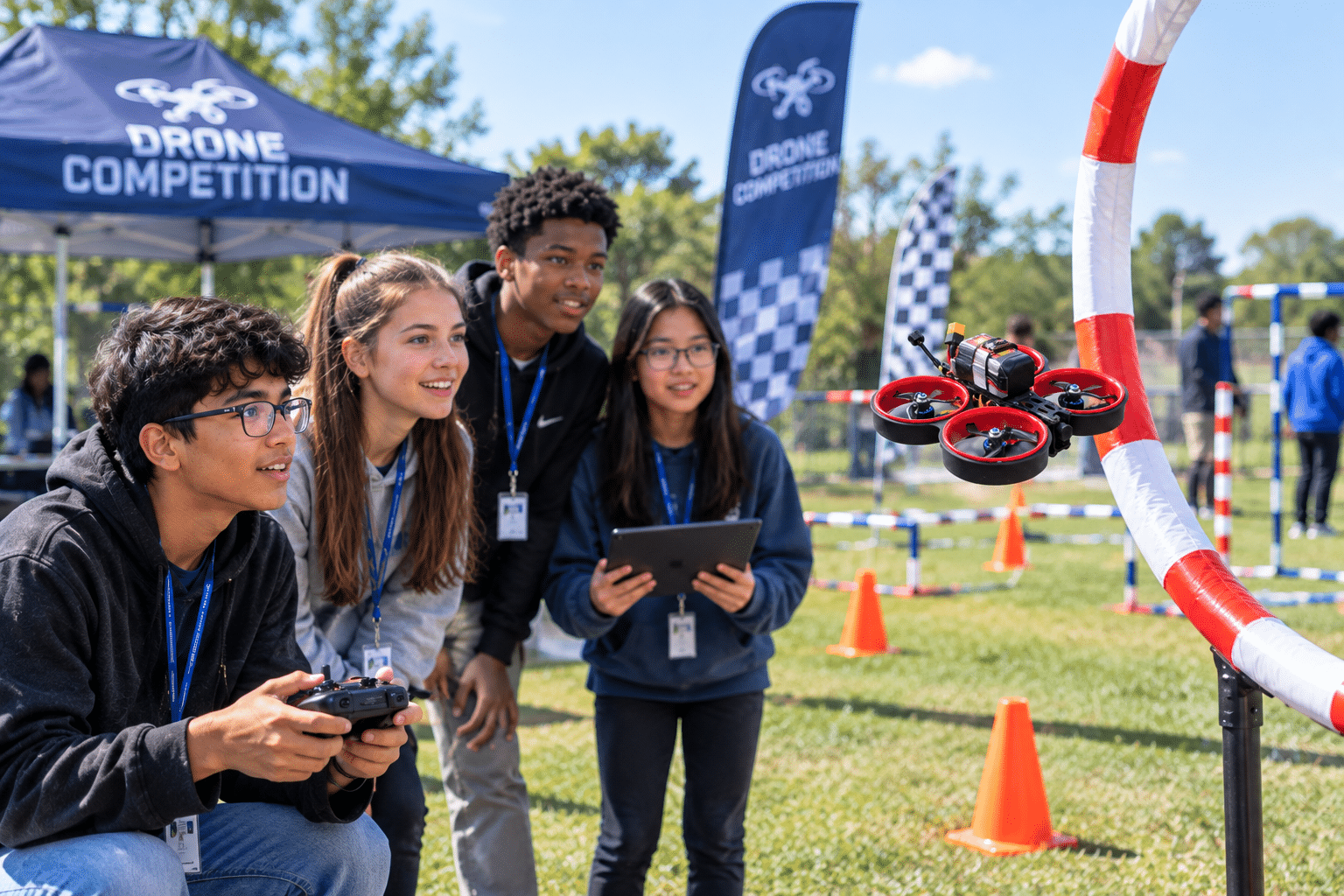
- Confidence and presentation skills: Robotics exhibitions and competitions build poise and public communication
- Scientific creativity: Open-ended challenges encourage novel solutions with no single right answer
- Writing and reading integration: Documentation, research, and reflection tasks develop cross-disciplinary literacy
3. Robotics Increases Student Engagement in STEM Subjects
Several studies highlight the motivational benefits of robotics in the classroom.
Educational robotics creates an interactive learning environment where students design and test solutions rather than passively receiving information. This active participation improves engagement and helps students maintain interest in STEM topics.
Research reviews consistently report that robotics activities can increase students’ attitudes toward STEM learning, encouraging deeper participation in science and technology subjects.
When students see their code controlling a real system, abstract concepts become meaningful and easier to understand.
4. Robotics Supports Inclusive and Collaborative Learning
Robotics programs can also support inclusive learning environments.
A study evaluating robotics programs for students with disabilities found that participants reported higher engagement, confidence, and meaningful participation with classmates during robotics activities.
Because robotics projects often involve teamwork, students naturally collaborate on hardware design, programming, and troubleshooting. This structure encourages communication, shared problem-solving, and peer learning.
5. Robotics Builds Pathways to Real-World Careers
The global robotics and automation market is projected to exceed $500 billion by 2030. The industries of the future, healthcare, logistics, advanced manufacturing, and AI, all run on robotics fluency.
Research consistently shows that students who engage with robotics programs develop stronger aspirations for STEM careers and are better prepared to pursue them. Studies have documented robotics influencing college choice, major selection, and long-term career trajectory, especially for students who had no prior STEM identity.
Robotics for STEM is the industry tool of tomorrow. Students who code a wheeled robot to navigate a maze are learning the same foundational principles behind autonomous vehicles, drone delivery systems, and surgical robots.
Bringing Evidence-Based Robotics Learning to the Classroom
The research is clear: robotics can improve engagement, strengthen problem-solving skills, and support deeper STEM learning.
For schools looking to introduce robotics into their programs, having structured curriculum and reliable platforms is critical.
LocoRobo’s k12 robotics solutions allow students to explore sensors, motion systems, and autonomous behavior through hands-on projects and structured lessons.
Combined with standards-aligned robotics curriculum and educator support, these systems help schools bring research-backed robotics learning into everyday STEM instruction.
Explore LocoRobo’s robotics solutions to bring hands-on robotics learning into your STEM classroom.