

Warehouse sustainability conversations often focus on transportation fleets, packaging materials, and energy-efficient facilities. Yet one important contributor to supply chain emissions frequently goes unnoticed: inventory management.
A recent MIT Supply Chain Management capstone project found that AI-powered inventory systems using autonomous indoor drones can significantly reduce greenhouse gas emissions while improving operational efficiency. The research suggests that better inventory visibility is not just good for business. It can also become an important tool for building more sustainable supply chains.
Warehouses Are Becoming Smarter
Traditional inventory counting is often labor-intensive and inefficient.
Employees manually conduct cycle counts, forklifts move repeatedly through warehouse aisles, and inventory inaccuracies can lead to excess stock, product write-offs, and unnecessary transportation throughout the supply chain.
These inefficiencies create hidden environmental costs.
To address this challenge, researchers partnered with Verity, a provider of AI-powered inventory management systems, and a global logistics company to evaluate the environmental impact of autonomous indoor drone technology within a U.S.-based fulfillment center.
Their goal was simple:
Determine whether AI-driven inventory automation could improve sustainability outcomes across warehouse operations.
How AI-Powered Inventory Management Works
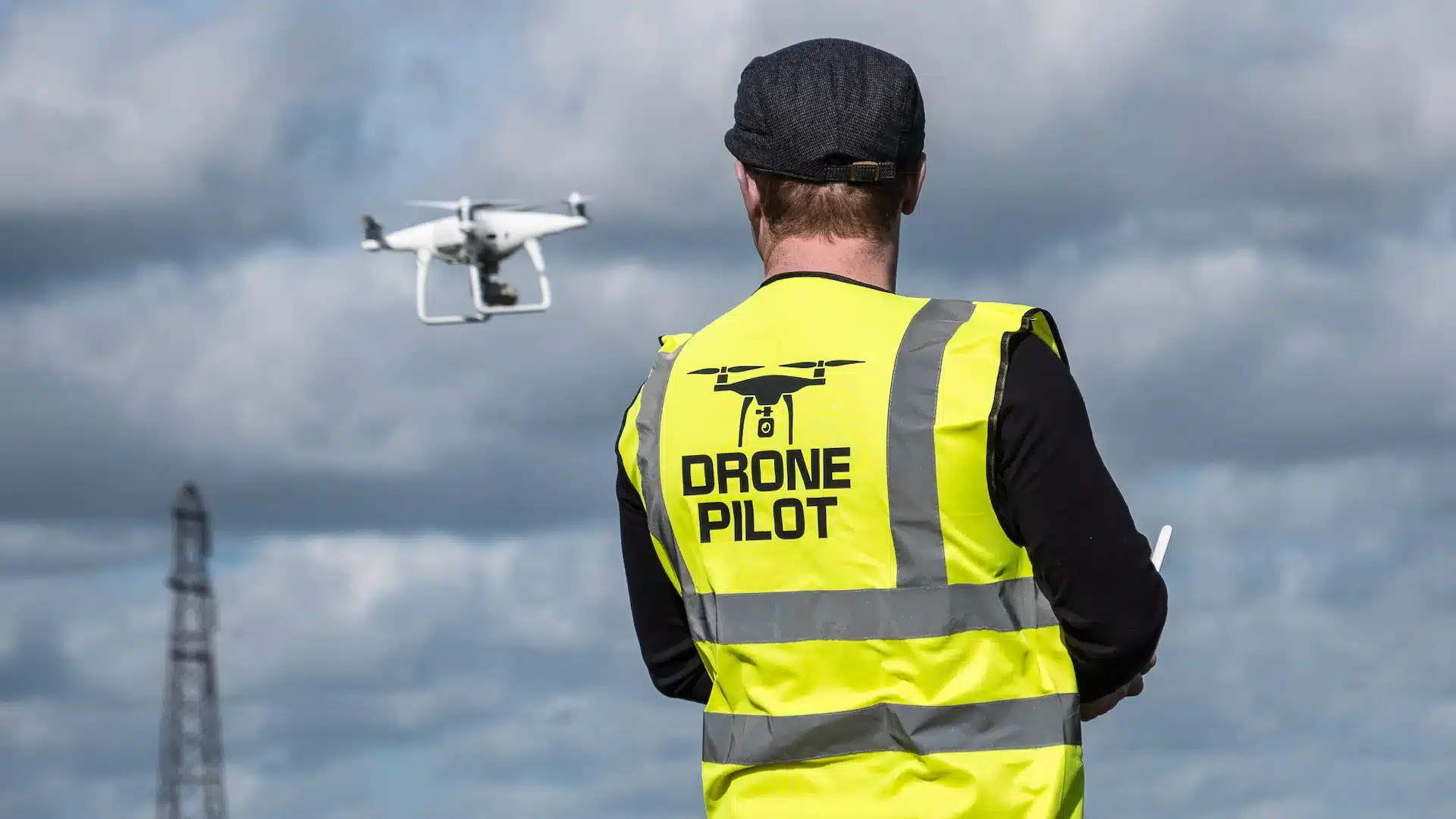
Unlike manual inventory checks performed periodically, autonomous indoor drones continuously scan warehouse shelves and storage locations.
Using onboard sensors, computer vision, and AI-powered analytics, these systems can:
- Conduct frequent inventory counts without disrupting operations
- Detect inventory discrepancies in real time
- Reduce unnecessary product movement
- Improve stock accuracy
- Minimize reliance on manual equipment
- Provide managers with actionable inventory insights
Rather than replacing people entirely, these systems automate repetitive tasks while allowing employees to focus on higher-value decision-making activities.
Measuring the Environmental Impact
The MIT research team developed a mathematical model using real operational data collected before and after drone deployment.
The study combined activity-based emissions modeling with lifecycle assessment techniques to estimate changes in greenhouse gas emissions across:
Scope 1 Emissions
Direct emissions produced by company operations.
Scope 2 Emissions
Indirect emissions resulting from purchased energy use.
Scope 3 Emissions
Indirect emissions generated throughout the value chain, including inventory waste, equipment manufacturing, and employee commuting.
Researchers examined several operational factors, including:
- Forklift energy consumption
- Employee commuting distances
- Inventory write-offs
- Staffing levels
- Drone charging requirements
- Equipment manufacturing impacts
When direct operational data was unavailable, the team supplemented findings using structured interviews, industry benchmarks, and peer-reviewed research.
Three Drivers of Emissions Reduction
The study identified three major ways drone automation contributed to sustainability improvements.
1. Improved Inventory Accuracy
Frequent autonomous scanning reduced inventory discrepancies.
More accurate inventory meant fewer write-offs caused by lost, misplaced, or expired products.
Reducing inventory waste decreases unnecessary manufacturing, transportation, and disposal activities throughout the supply chain.
2. Labor Efficiency Gains
Automation reduced the amount of labor required for routine inventory counting.
This translated into lower employee commuting emissions associated with inventory management activities.
Importantly, the findings position employees in more analytical and supervisory roles rather than repetitive counting tasks.
3. Reduced Equipment Usage
Warehouses relying on manual cycle counts often require forklifts to repeatedly access inventory locations.
With autonomous drones performing these inspections, forklift usage declined substantially.
Lower forklift utilization reduced:
- Operational energy consumption
- Maintenance requirements
- Lifecycle emissions associated with equipment production
The Results: Significant Emissions Reductions
Researchers evaluated three levels of drone deployment coverage.
Scenario 1: 64% Drone Coverage
At current deployment levels, greenhouse gas emissions decreased by approximately 49.5% compared to traditional manual inventory processes.
Scenario 2: 90% Drone Coverage
Increasing drone coverage to 90% resulted in an additional 33% reduction in emissions relative to the 64% deployment baseline.
Scenario 3: 100% Coverage
Full deployment produced smaller incremental improvements, suggesting that most sustainability benefits are achieved before complete automation.
The findings reveal an important lesson:
Organizations do not necessarily need perfect automation to realize meaningful environmental gains.
Strategic implementation often delivers the greatest return.
Automation Is Becoming a Sustainability Strategy
Warehouse automation has traditionally been associated with productivity and labor efficiency.
This research expands that conversation.
AI-powered automation can also support corporate sustainability goals by improving resource utilization, reducing waste, and lowering emissions across complex supply chains.
As companies face increasing pressure to improve environmental performance, technologies that simultaneously improve efficiency and sustainability are likely to become even more valuable.
What This Means for Education
The technologies reshaping warehouses today are the same technologies students will encounter in future careers.
Modern supply chains increasingly depend on professionals who understand how to work alongside intelligent systems.
Students entering engineering, logistics, manufacturing, computer science, and business fields will benefit from experiences that expose them to:
- Artificial intelligence
- Computer vision
- Autonomous systems
- Robotics
- Data analysis
- Sensor technologies
- Human-machine collaboration
- Real-world problem-solving
Preparing students for these environments requires opportunities to interact with the technologies transforming the industry.
Preparing Students for an AI-Powered Future with LocoRobo
At LocoRobo, we help educators bring emerging technology into the classroom through hands-on learning experiences designed for today’s students and tomorrow’s workforce.
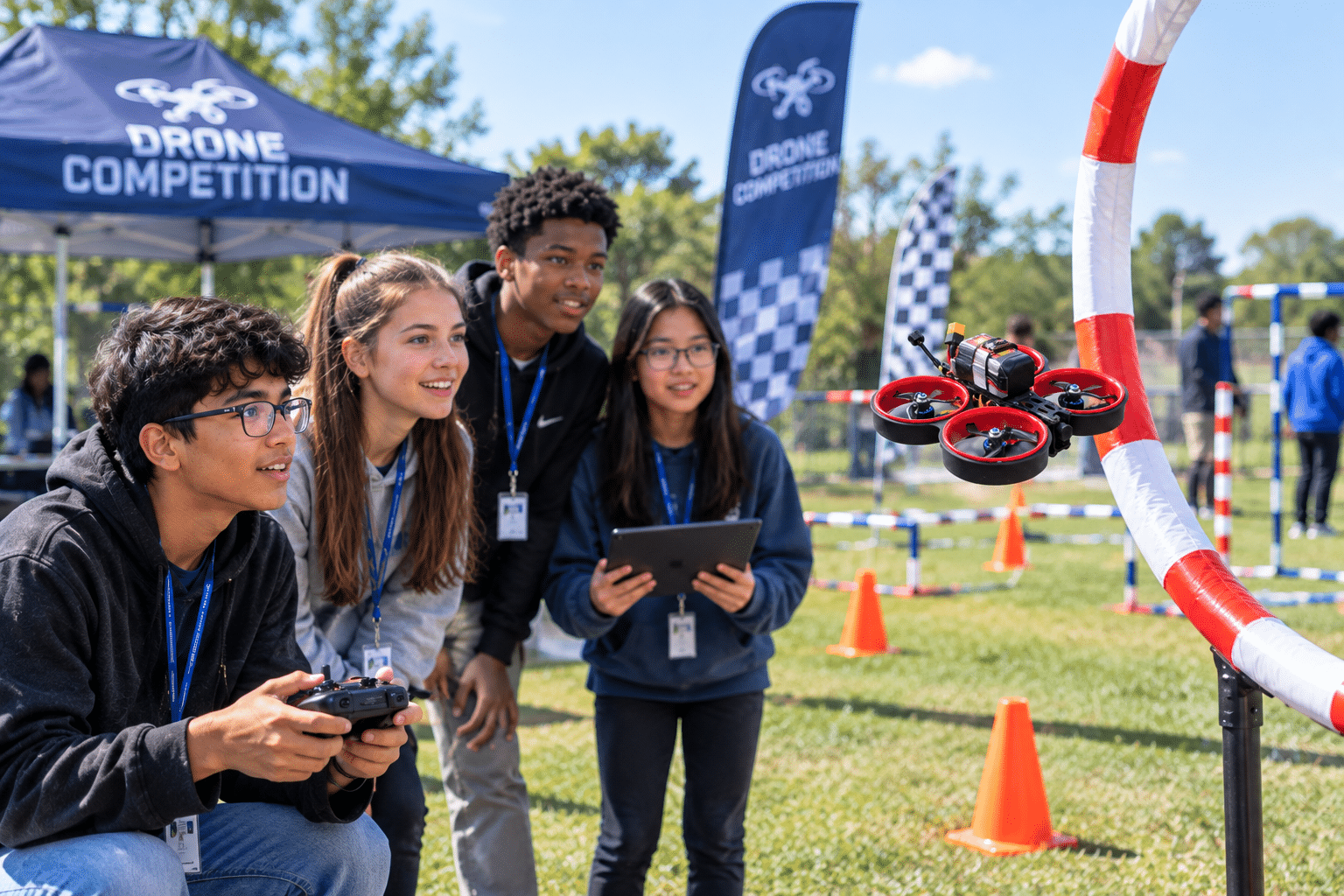
AI-powered warehouses rely on autonomous systems that combine drones, sensors, computer vision, and data-driven decision-making. Students pursuing careers in engineering, logistics, manufacturing, aviation, and technology will increasingly encounter these tools in the workplace.
Students can explore concepts such as:
- Autonomous drone operations
- Sensor technologies and data collection
- Computer vision applications
- Artificial intelligence and machine learning
- Flight planning and navigation
- Data analysis and decision-making
- Systems thinking and problem-solving
By using drones to solve authentic challenges, students gain a deeper understanding of how AI is reshaping industries beyond aviation, including supply chain management and warehouse operations.
LocoRobo gives students hands-on experience with the same concepts powering modern autonomous systems. Through programmable drones, sensor integration, and AI-related learning experiences, educators can help students explore how drones in education mirror the technologies used across industries, from agriculture and infrastructure inspection to the AI-powered warehouses shaping today’s supply chains.