
CTE is expanding across Ohio.
More districts are looking at how to introduce CTE career exploration earlier, align CTE programs with workforce needs, and create stronger middle-to-high school progression. At the same time, Ohio’s CTE waiver structure and planning requirements mean districts often need to think several years ahead rather than launching isolated courses.
For many schools, the challenge is building programs that are sustainable, aligned, and realistic to implement.
That is where planning becomes critical.
Ohio Districts Are Under Pressure to Build Clearer Pathways
Ohio’s CTE curriculum requirements increasingly emphasize progression, alignment, and long-term planning.
Districts are expected to think about:
- How middle school courses connect to high school pathways
- How staffing, equipment, and curriculum support long-term growth
- Whether CTE programs reflect regional workforce needs
- How work-based learning and industry alignment are incorporated
- Whether pathways can scale over multiple years
This often requires coordination across administrators, counselors, CTPDs, curriculum teams, and classroom teachers.
Some districts are starting entirely new pathways. Others are trying to expand existing STEM programs, robotics, cybersecurity, drone, AI, or engineering programs into formal CTE offerings.
Both situations require structure.
The Earlier Planning Starts, the Easier Expansion Becomes
One common issue districts run into is trying to build pathways too late in the process.
A district may have:
- A strong robotics club, but no formal progression
- Middle school exposure without continuation into high school
- STEM electives without pathway alignment
- Equipment purchases without CTE curriculum planning
- Interest from students but limited staffing plans
CTE expansion works more effectively when districts map progression early.
That includes:
- CTE Career exploration opportunities in grades 7–8
- Multi-year course sequencing
- Introductory courses that feed into high school pathways
- Teacher training and licensure planning
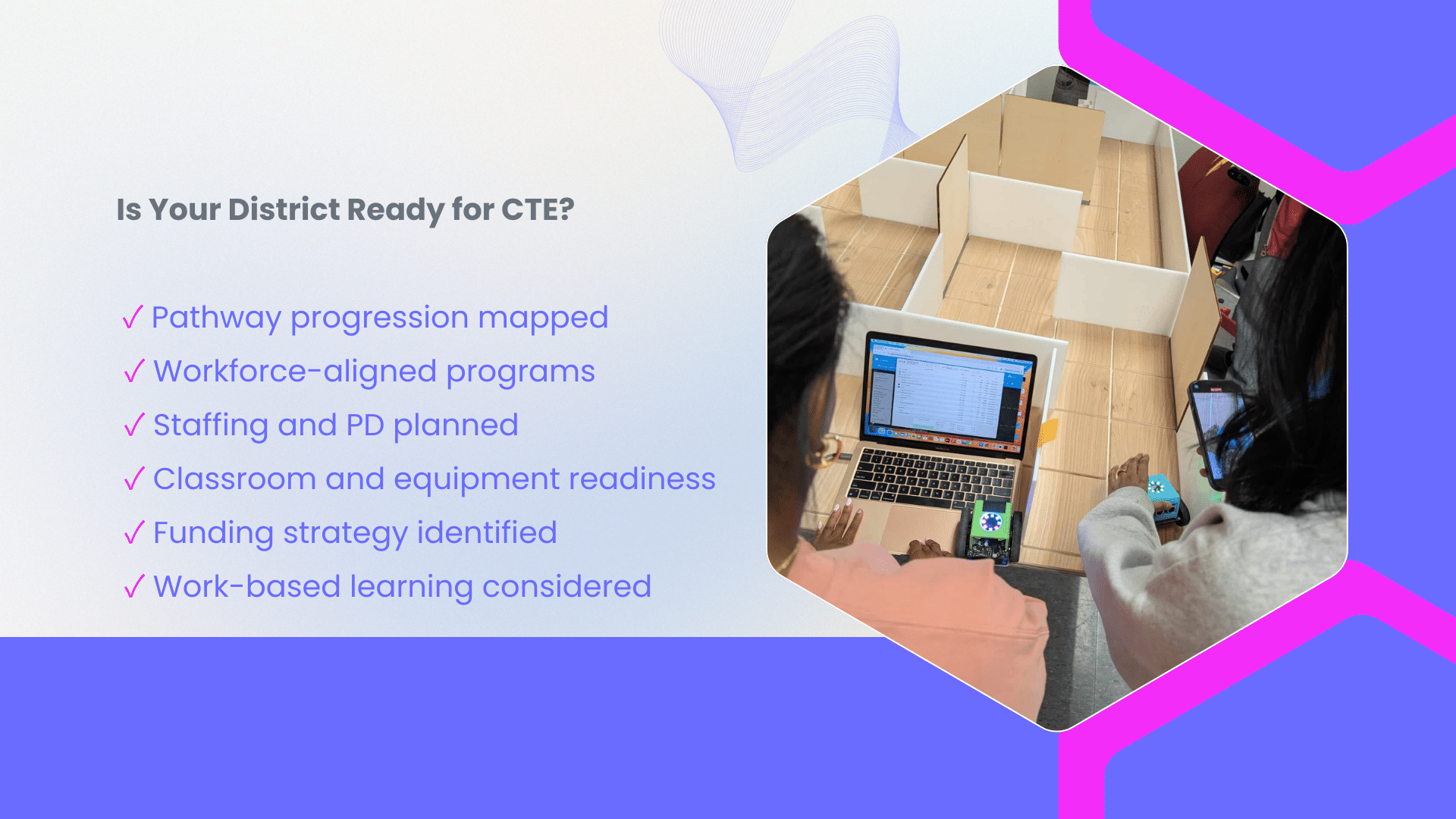
- Equipment and classroom readiness
- Funding alignment through Perkins V and other sources
Districts do not always need to launch everything at once. Many successful programs begin with pilot implementations and scale gradually over time.
Ohio Districts Are Expanding Beyond Traditional CTE Areas
Across Ohio, more schools are exploring pathways connected to:
- Robotics and automation
- Artificial intelligence
- Drones and aviation
- Cybersecurity
- Engineering and autonomous systems
- Computer science and programming
These programs often overlap naturally with STEM and CTE goals because they combine technical skills, hands-on learning, problem-solving, and career exposure.
The key is ensuring these programs are not treated as isolated activities.
Students benefit more when pathways are connected across grade levels and tied to real progression opportunities.
Early Planning Helps Districts Identify Gaps Before Approval Cycles
As districts prepare for future CTE planning cycles, many teams are stepping back to evaluate how well their current programs connect across grade levels, staffing, funding, and workforce alignment.
Questions often come up around:
- Whether middle school offerings connect clearly to high school pathways
- If current programs reflect regional workforce demand
- Whether the classroom space, equipment, and technology needs are realistic
- How staffing, licensure, and professional development will be handled
- How assessment and work-based learning opportunities will be incorporated
- Whether existing STEM or technology programs can scale into formal CTE pathways
These discussions often reveal implementation gaps early, giving districts more time to adjust plans before approval timelines, funding decisions, and rollout schedules become more difficult to manage.
Supporting Ohio Districts Through CTE Planning
LocoRobo works with schools building STEM and CTE pathways across robotics, drones, AI, cybersecurity, engineering, and computer science.
Our approach focuses on helping districts create structured, scalable programs through:
- Standards-aligned curriculum
- Hands-on technology platforms
- Teacher training and professional development
- Multi-year pathway planning
- Classroom-ready implementation support
- Flexible rollout models for districts starting small or expanding existing programs
Programs are designed to support progression across middle and high school while helping educators connect technical learning to career exploration and workforce readiness.
To help districts organize planning conversations, we created the Ohio CTE Waiver 2026 Checklist. Download the checklist to review where your district currently stands and identify areas that may need attention before future planning deadlines.