
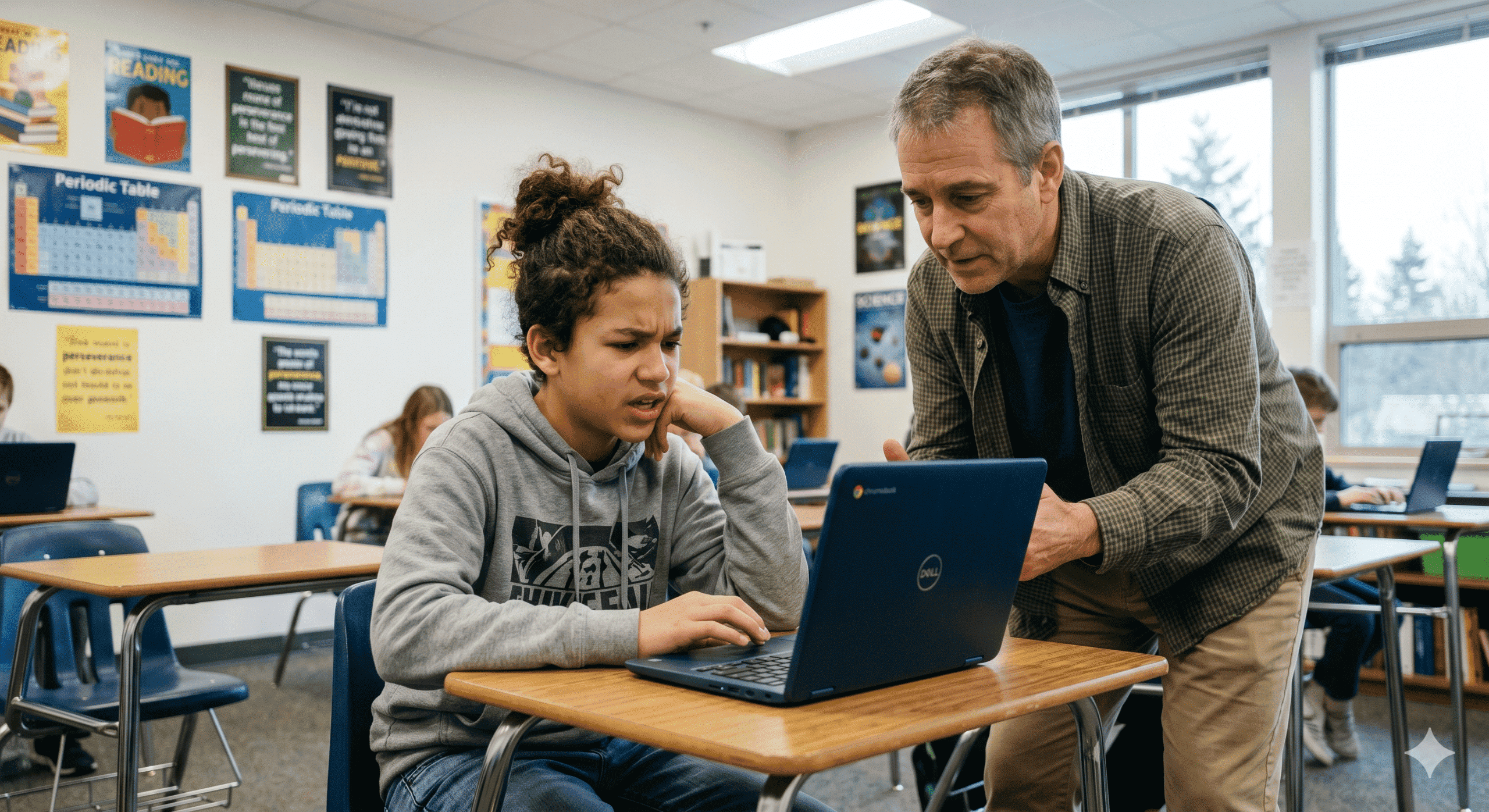
Why Difficulty Plays an Important Role in STEM Learning
STEM education programs require students to test ideas, analyze results, and adjust their approach. Unlike subjects focused mainly on memorization, STEM learning requires experimentation. Students often need to:- Write code that does not work the first time
- Analyze error messages and unexpected results
- Adjust their logic and try again
- Test solutions multiple times before they succeed
Learning Through Trial, Error, and Adjustment
Whether students are programming a robot, coding a drone flight path, or working on an engineering design challenge, they quickly discover that their first solution rarely works perfectly. A drone may drift off course. A robot may stop moving halfway through a program. A sensor might produce unexpected data. Each of these situations pushes students to investigate what happened. They begin asking questions like:- What part of the code caused the issue?
- Did the sensor detect what I expected it to detect?
- Did the program run in the correct order?
A Classroom Perspective
Teachers who work with coding and STEM tools see this process every day. Keri Mustoe, a teacher at Cortez Middle School in Colorado, prepares students for the challenge from the beginning. As part of a classroom that incorporates LocoRobo platforms, she sets clear expectations early. “I tell all my classes that we are going to learn to code, and when we begin, it will sound like Greek to you. But in two weeks or less, you will be speaking Greek back to me,” Keri says. Her message helps students understand that confusion at the beginning is expected. As students begin working through coding challenges, debugging becomes a central part of their learning experience. “Almost 90% of coding is debugging,” she explains. When students struggle to get their programs to work, Keri encourages them to think critically rather than providing the answers outright. “I won’t just give my students the answers because I want them to become critical thinkers. If I give them the answers all the time, they don’t learn to think for themselves,” she says. She guides students to analyze their own work, collaborate with classmates, and test different solutions instead of removing the challenge. Through this process, students build both technical skills and confidence.Why Hands-On STEM Experiences Matter
Hands-on STEM learning naturally creates opportunities for productive struggle. When students work with real systems such as drones, robots, AI, sensors, or engineering prototypes, they immediately see the results of their decisions. A small change in code can alter how a robot moves. Adjusting a variable can change how a drone responds during a flight test. Modifying a design can improve how a mechanical system performs. This immediate feedback encourages students to keep experimenting. Over time, students begin to see mistakes not as setbacks, but as part of the process of discovery.Confidence Comes From Solving Hard Problems
One of the most powerful moments in STEM learning happens when a student finally solves a problem after several attempts. They realize that:- Complex problems can be broken into smaller steps
- Persistence leads to progress
- They are capable of figuring things out
Supporting STEM Learning That Encourages Problem Solving
Teachers like Keri show how valuable productive struggle can be in the classroom. By encouraging students to think through problems rather than immediately providing answers, educators help develop independent thinkers. LocoRobo is designed to support this kind of learning through hands-on coding, robotics, and problem-solving experiences. At LocoRobo, this philosophy shapes how our STEM learning systems are designed. Our solutions combine drones, robotics, AI, and computer science learning tools with structured curriculum that supports experimentation, testing, and real problem solving. Students learn coding, engineering, and autonomous systems while developing the persistence and critical thinking skills that STEM fields require. Explore LocoRobo STEM solutions and see how schools are helping students learn by doing.Frequently Asked Questions
How do drones improve student engagement in the classroom?
Drones improve engagement by turning abstract STEM concepts into hands-on learning experiments. Students can write code, test flight paths, and immediately see the results of their work. This active learning process encourages problem-solving, collaboration, and experimentation, which keeps students more involved than traditional lecture-based instruction.
What do students learn from drones in STEM education?
Drone learning help students explore a wide range of STEM concepts, including programming a drone, physics of flight, data analysis, engineering design, and troubleshooting. Students often learn how to code flight paths, analyze sensor data, and understand concepts like lift, drag, and navigation while working through real-world challenges.
Why are drones effective tools for hands-on STEM learning?
Drones are effective because they provide immediate feedback. When students adjust code or flight parameters, they can instantly see how those changes affect the drone’s movement. This trial-and-error process helps students develop critical thinking, teamwork, and engineering problem-solving skills.
Do teachers need prior drone experience to run a drone classroom program?
Most drone education programs such as LocoRobo’s drone program, are designed so teachers do not need prior drone or coding experience. Structured curriculum, guided lessons, and professional development resources help educators introduce drone activities step by step. Many schools start with beginner-friendly lessons and expand into more advanced coding and engineering projects over time.
How do drone programs connect students to real-world careers?
Drone technology is used in industries such as environmental monitoring, aviation, agriculture, construction, and data analysis. Classroom drone programs introduce students to the same concepts used in these fields, including flight systems, data collection, and automation. This exposure helps students understand how STEM skills apply to real-world careers.