

The FAA has taken a significant step toward making drone delivery a scalable reality in the United States. A newly proposed rule would simplify how companies operate drones beyond the line of sight of their pilots, a change that could accelerate the expansion of drone use in delivery, agriculture, infrastructure inspection, and more.
Breaking Down the Proposed Rule
Until now, companies like Amazon and utilities have needed waivers to fly drones beyond visual line of sight. The proposed FAA rule aims to replace that patchwork system with a clear, standardized approval process.
Under the new framework:
- Drones may fly out of sight at altitudes below 400 feet.
- Operations are limited to drones weighing 1,320 pounds or less (including payload).
- Flights will still be restricted near airports and crowded areas such as stadiums or concerts.
- Aircraft must carry collision-avoidance technology to stay clear of planes and other drones.
Why It Matters
Drone technology has advanced rapidly, and regulations are now beginning to catch up. The FAA’s proposed BVLOS framework provides a clearer path for companies to expand their operations safely and efficiently. With streamlined approvals, industries can more readily explore how drones support delivery, infrastructure, agriculture, and healthcare.
- Delivery: From burritos to prescriptions, drones can reach homes in minutes. Chipotle and Zipline’s “Zipotle” project in Texas demonstrates how food delivery could scale across multiple states.
- Healthcare: Zipline already supplies over 4,000 hospitals globally. U.S. hospitals like Mayo Clinic are exploring similar solutions.
- Infrastructure: Utilities will be able to inspect bridges, pipelines, and power lines at scale.
- Agriculture: Large farms can deploy drones for fertilizer spraying and crop monitoring more efficiently than ever.
Balancing Innovation and Safety
Safety is a key focus of the proposed rule. Out-of-sight flights would remain restricted over large gatherings, and operators would be required to complete background checks. The FAA has also incorporated safeguards such as collision-avoidance technology requirements and coordination with the Department of Homeland Security. These measures are designed to reduce risks such as accidental collisions or unauthorized use while allowing commercial and public applications of drones to expand responsibly.
Industry Response
Leaders across the drone sector welcomed the proposal.
- Michael Robbins, CEO of the Association for Uncrewed Vehicle Systems International, called it “a critical step toward enabling drone operations that will enhance safety, expand commercial services, and strengthen public safety.”
- Yariv Bash, CEO of Flytrex, described the proposal as “a foundational milestone that paves the way for drone delivery to scale across more communities.”
How LocoRobo Prepares Students for Real-World Drone Careers
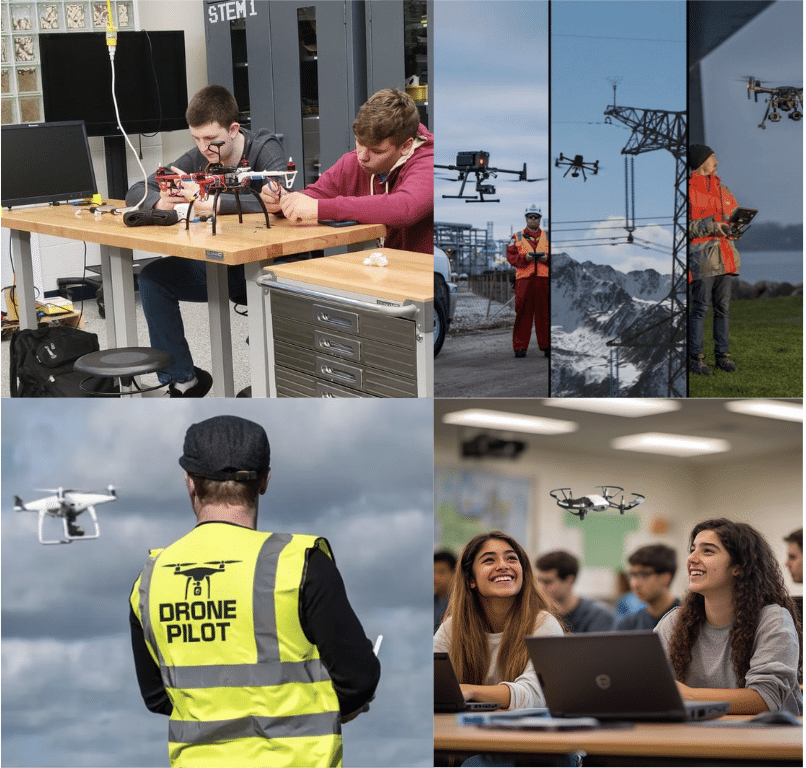
At LocoRobo, we see this as more than just a regulatory update. It’s a real-world example of how policy, technology, and education must work together to build the workforce and infrastructure of tomorrow. As drones become part of everyday life, preparing students to understand, code, and operate them safely will be just as important as the rules that guide their use.
LocoRobo’s drone curriculum gives students hands-on learning experience with the same technologies shaping industries today, from autonomous flight and drone coding to data collection and analysis. Our standards-aligned STEM and CTE curriculum connects classroom learning to real-world applications, mapping directly to career clusters in engineering, IT, and transportation..
By equipping students with in-demand skills and aligning with CTE pathways, we help schools prepare students with real-world skills for STEM career exploration as drones become an essential part of tomorrow’s workforce.