

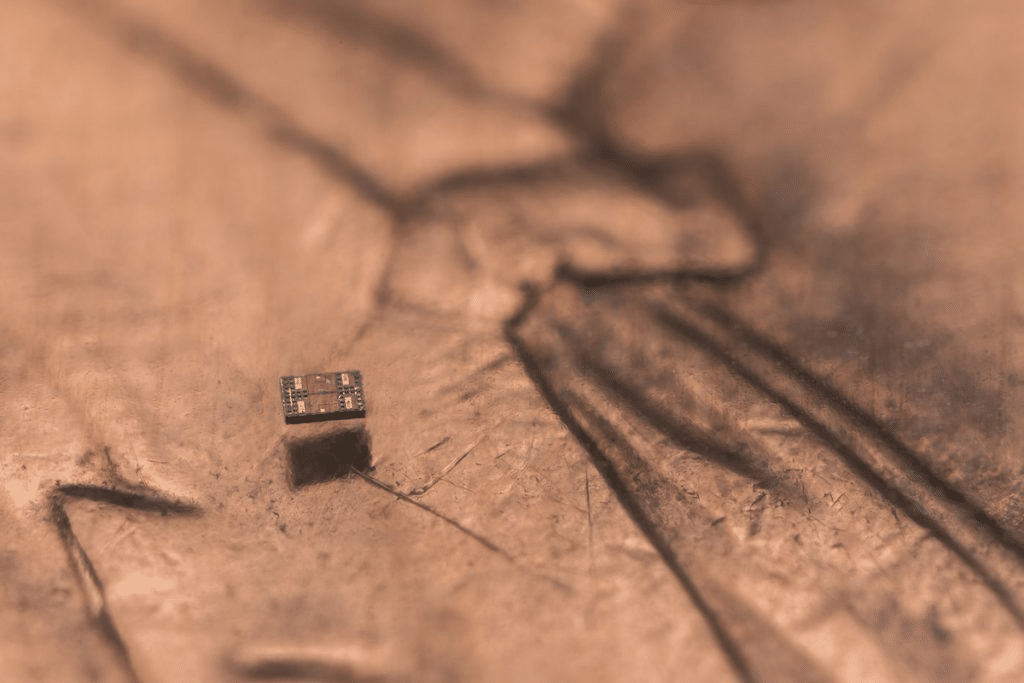
In December 2025, researchers from University of Pennsylvania and University of Michigan announced a breakthrough that pushes robotics into an entirely new size category: the world’s smallest fully programmable, autonomous robots.
Each robot measures roughly 200 by 300 by 50 micrometers, smaller than a grain of salt and barely visible to the naked eye. Yet inside that microscopic footprint is a complete system: propulsion, sensing, power, memory, and a computer capable of running its own program.
For the first time, sub-millimeter robots can sense, decide, and act without external control.
Breaking the Sub-Millimeter Barrier
Electronics have steadily shrunk for decades. Robots have not.
At extremely small scales, physics changes. Surface forces such as drag and viscosity dominate, and gravity and inertia become less important. At the size of a cell, moving through water feels more like moving through tar. The Penn team, led by Marc Miskin, designed a propulsion system that works with microscale physics rather than fighting it.
How These Robots Swim Without Moving Parts
Instead of flexing limbs, the robots generate a small electrical field. That field nudges ions in the surrounding fluid, which in turn push on nearby water molecules. The water around the robot begins to move, effectively carrying the robot forward.
It is a propulsion strategy with no moving parts.
This design offers two major advantages:
- Scalability, because the electrodes can be fabricated using semiconductor processes
- Durability, since there are no tiny mechanical components to break
Powered by light from LEDs, the robots can operate for months. They can move in complex paths and even coordinate in groups, reaching speeds of about one body length per second.
A Complete Computer at Microscopic Scale
True autonomy requires more than motion. It requires computation.
The Michigan team, led by David Blaauw, integrated a processor, sensors, memory, and solar panels directly onto the robot’s chip. The power budget is astonishingly small: about 75 nanowatts, over 100,000 times less than a smartwatch.
To make this work, the team redesigned conventional computing instructions. Multiple control steps were condensed into single specialized instructions, allowing programs to fit inside the robot’s tiny memory.
This is what makes these devices different from earlier microrobots. They are not externally steered, not tethered, and not controlled by magnetic fields.
They run code.
Robots That Sense, Remember, and Communicate
Each robot includes temperature sensors capable of detecting changes within a third of a degree Celsius.
That precision enables:
- Tracking localized temperature variations
- Monitoring cellular environments
- Responding dynamically to environmental changes
To report measurements, the robots perform tiny movement patterns that encode data. Under a microscope, researchers can decode these “wiggles” to extract temperature readings. It is a communication strategy inspired by honey bee dances.
Each robot also has a unique address. Researchers can program them individually using pulses of light, opening the door to distributed microscale systems where different robots perform different roles.
Why This Matters for Industry
This breakthrough signals a shift in how robotics may evolve in the coming decades.
Potential applications include:
- Monitoring cellular health in biomedical research
- Assisting in microscale manufacturing
- Performing distributed sensing inside complex environments
- Constructing microdevices
The fabrication process allows hundreds of robots to be produced simultaneously on a wafer. With costs estimated at roughly one penny per robot, scale becomes realistic.
More importantly, this research shows that robotics is no longer limited by millimeter-scale engineering constraints. Sensing, computation, and propulsion can now coexist at cellular dimensions.
The Next Phase of Robotics Engineering
This development aligns with a larger industry pattern: robotics is becoming more distributed, more specialized, and more tightly integrated with electronics.
The most significant innovations are not always about larger humanoids or dramatic demonstrations. Often, they are about engineering systems that operate reliably within tightly defined physical constraints.
The Penn and Michigan collaboration demonstrates how semiconductor design, ultra-low-power computing, and robotics can converge into a new class of autonomous machines.
And this is only the first generation.
Future iterations may include additional sensors, faster motion, more complex programs, and operation in increasingly challenging environments.
What This Means for Robotics Education
Breakthroughs like this reshape how we think about robotics as a field.
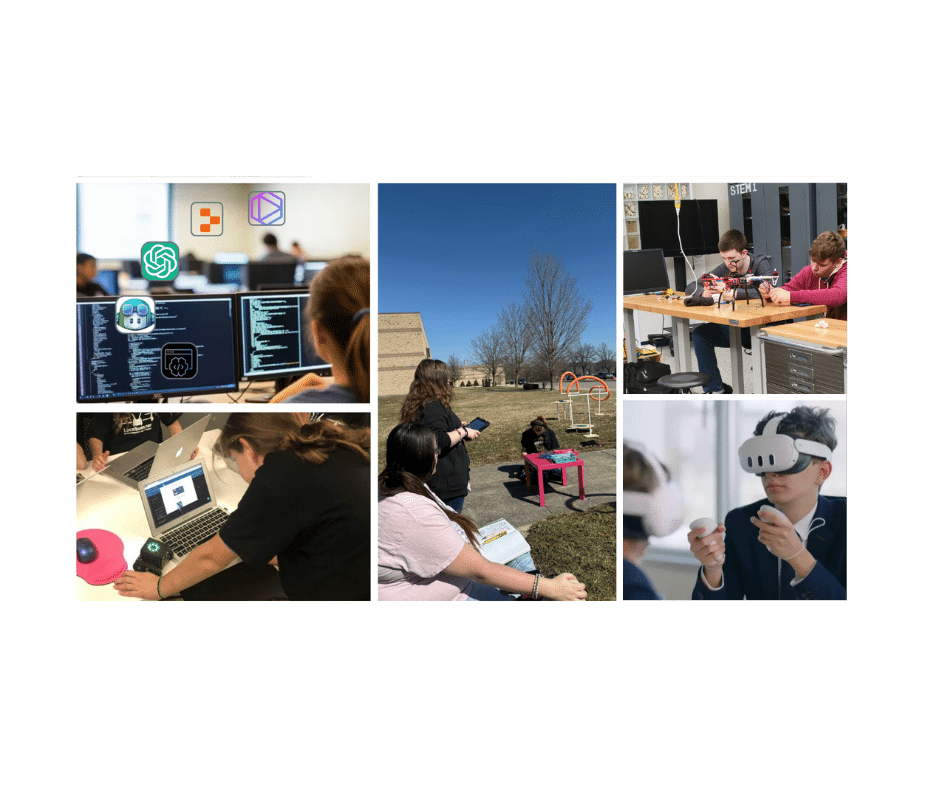
Students entering robotics today are not just learning about motors and mechanics. They are learning about:
- Low-power computing
- Embedded systems
- Physics at different scales
- Sensor integration
- Distributed intelligence
- Semiconductor fabrication
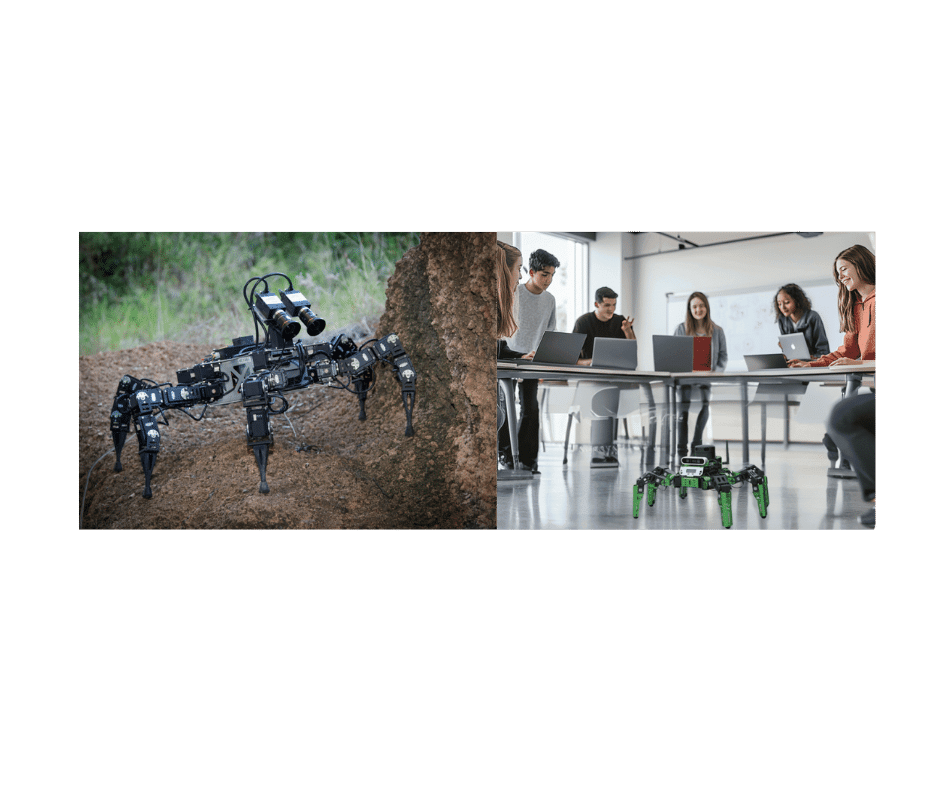
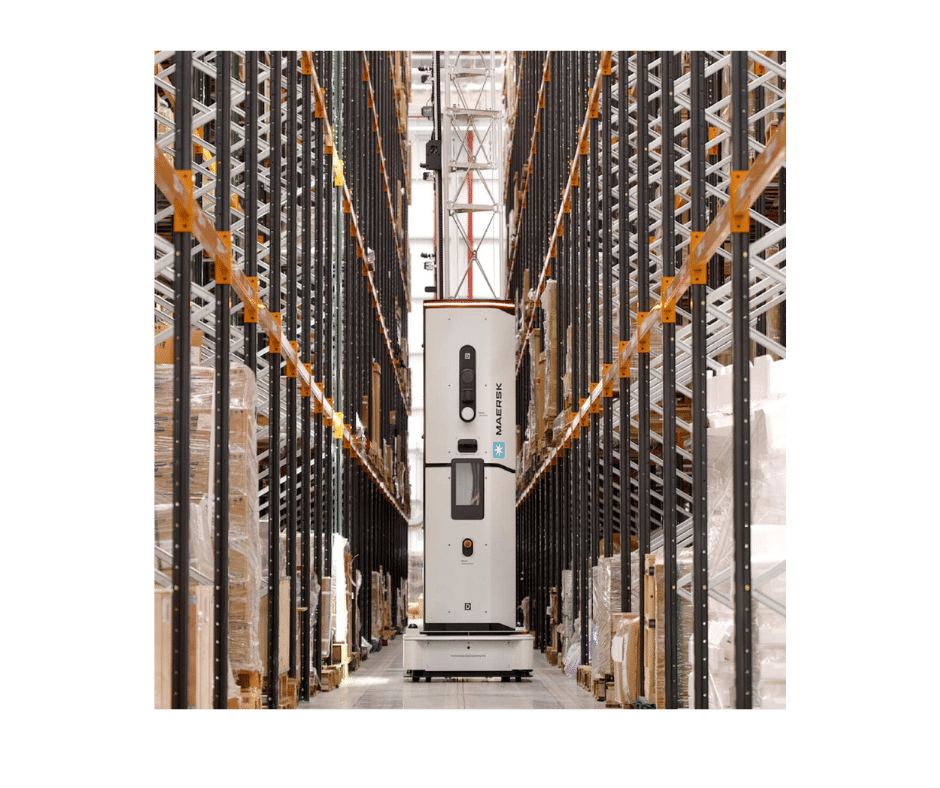
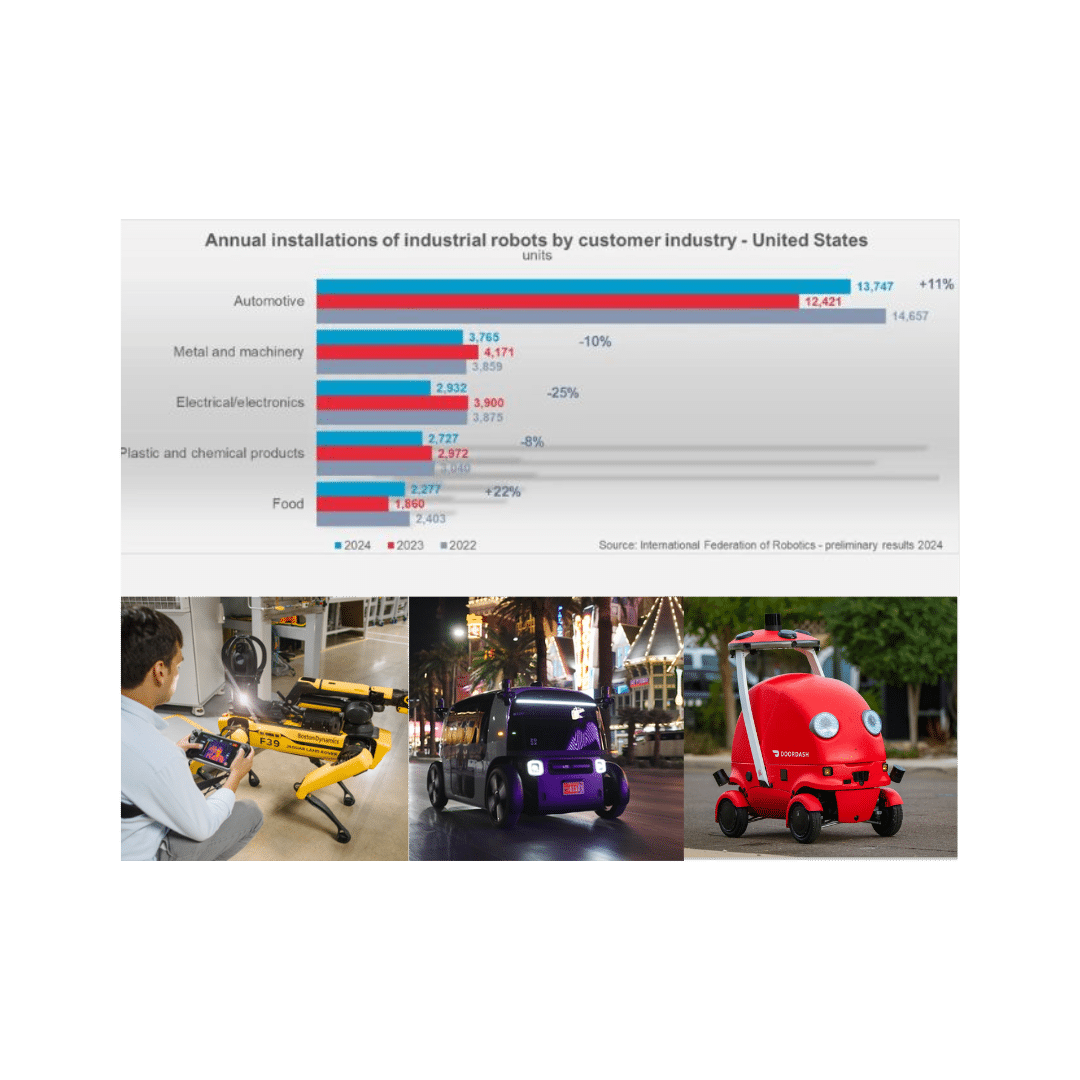
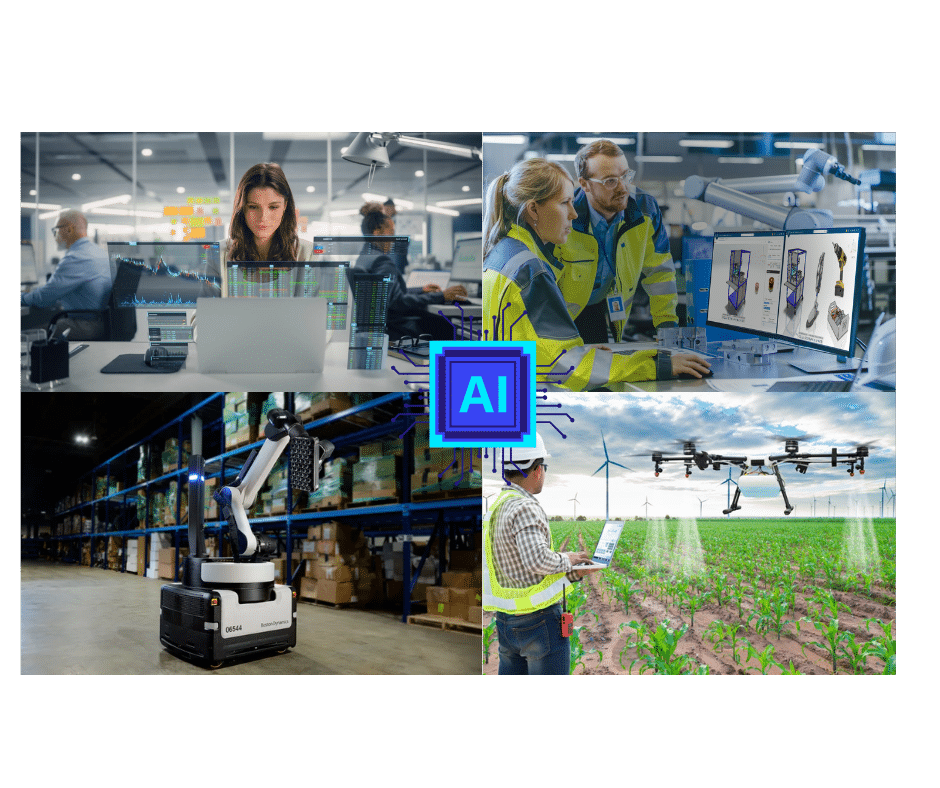
The future of robotics spans from warehouse-scale automation down to microscopic machines smaller than a grain of salt.
Preparing Students for the Expanding Robotics Landscape
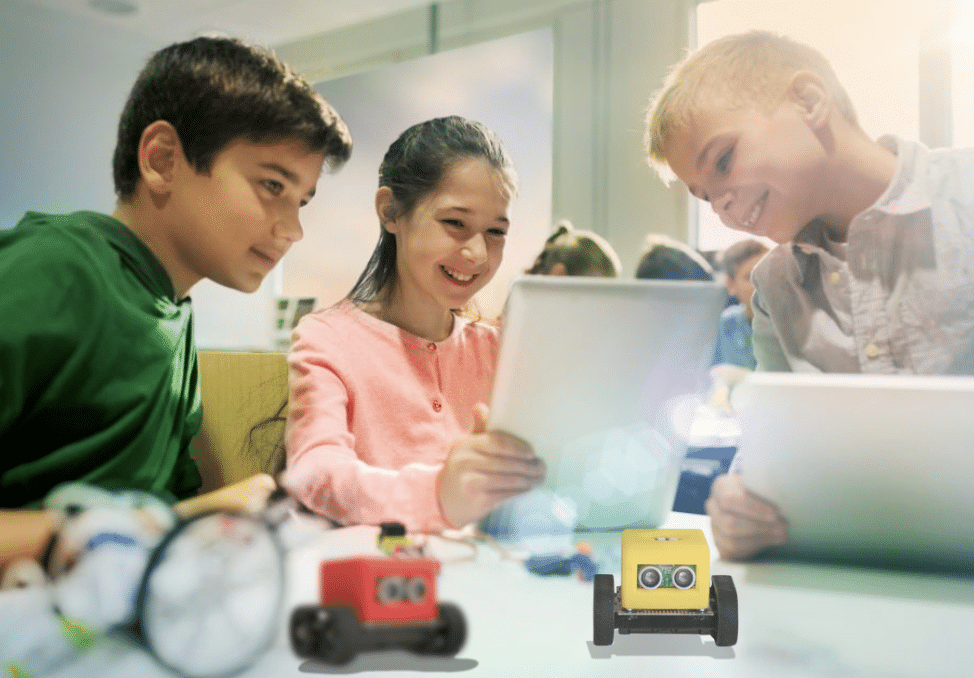
At LocoRobo, we believe robotics STEM education should reflect the direction the industry is heading.
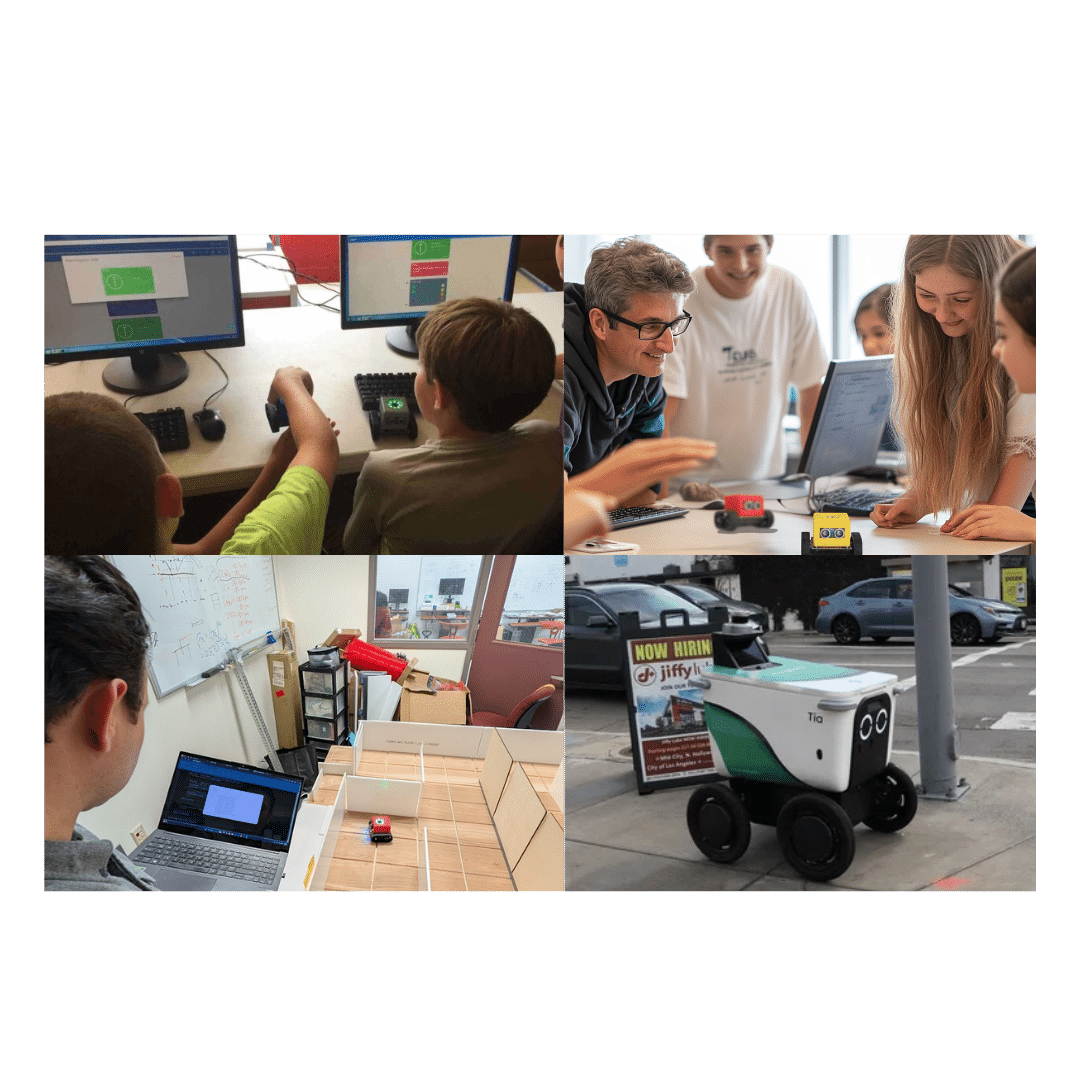
Our STEM robotics kits are designed to help schools build strong foundations in:
- Autonomous navigation
- Programming and computational thinking
- Sensors and perception systems
- Systems integration
- AI and embedded control
From introductory platforms to advanced autonomous robotics systems, LocoRobo’s K12 robotics solutions support educators with structured curriculum, classroom-ready hardware, and implementation guidance.
As robotics continues expanding across industries and scales, students deserve pathways that connect engineering fundamentals to real-world innovation.
Explore how LocoRobo’s robotics solutions can support your STEM and CTE programs.