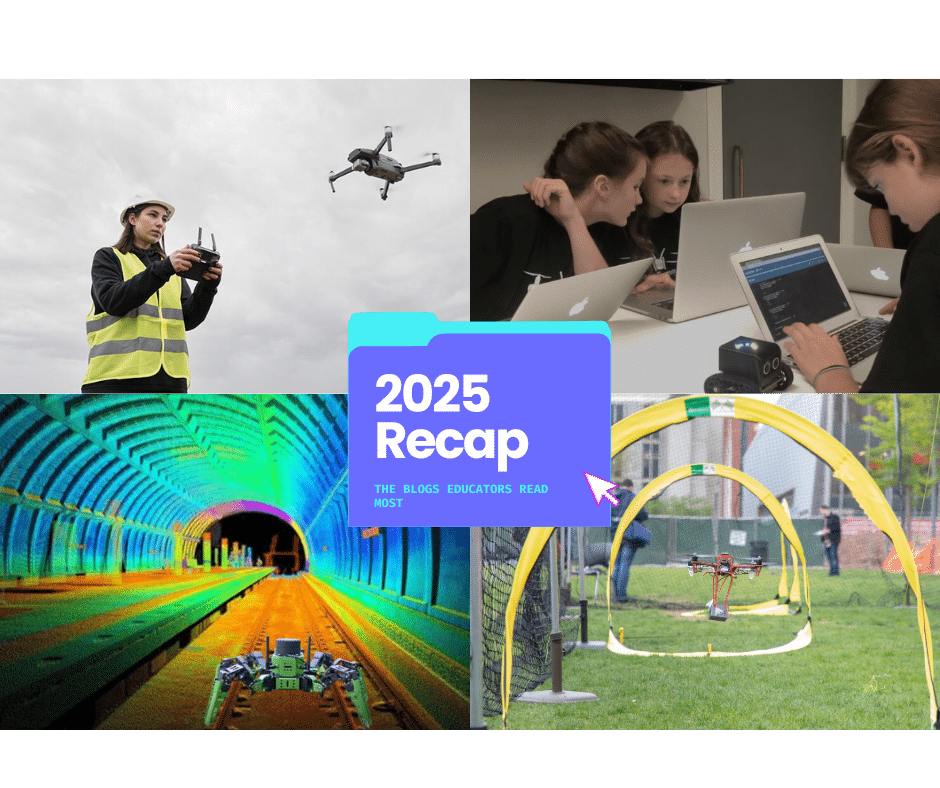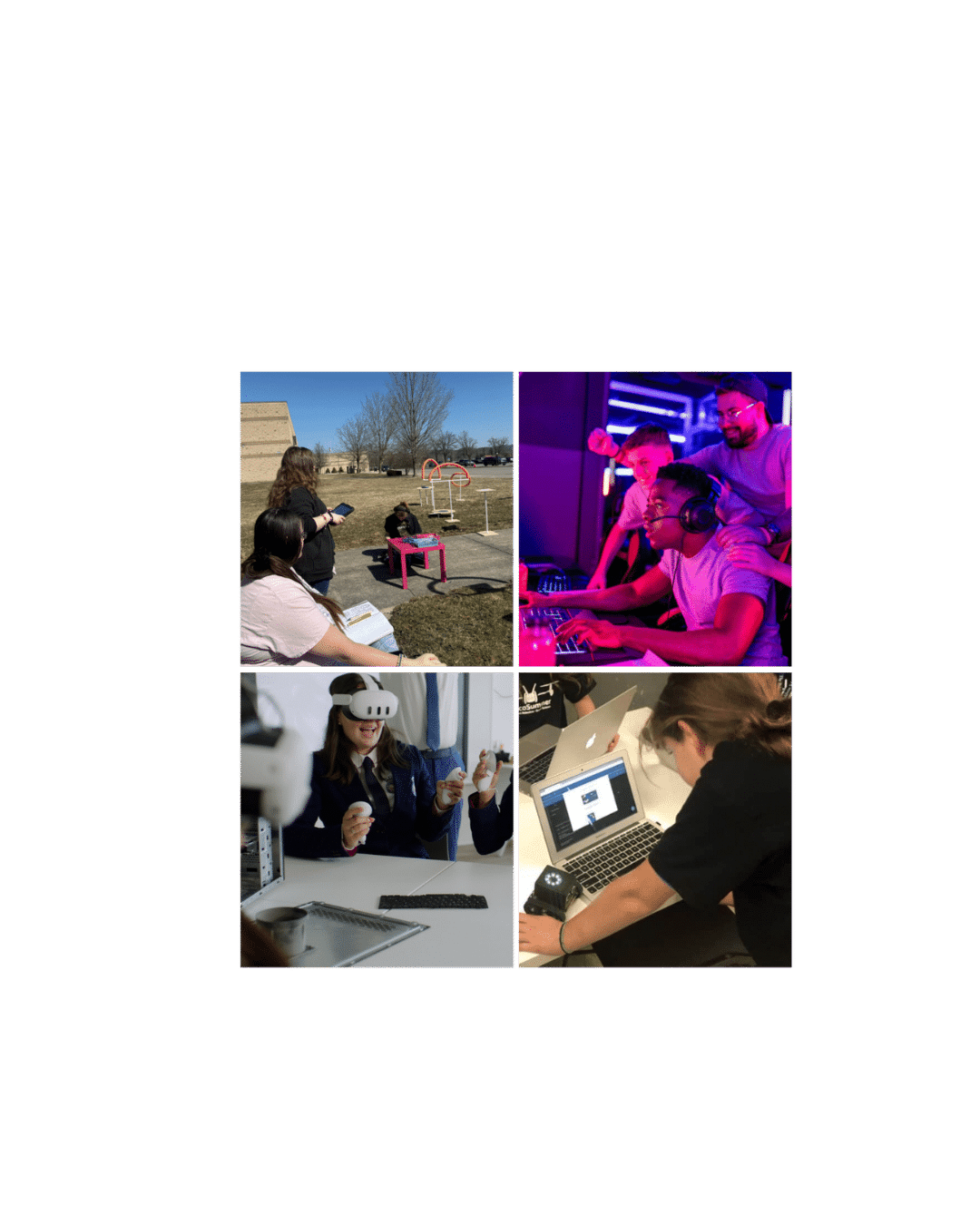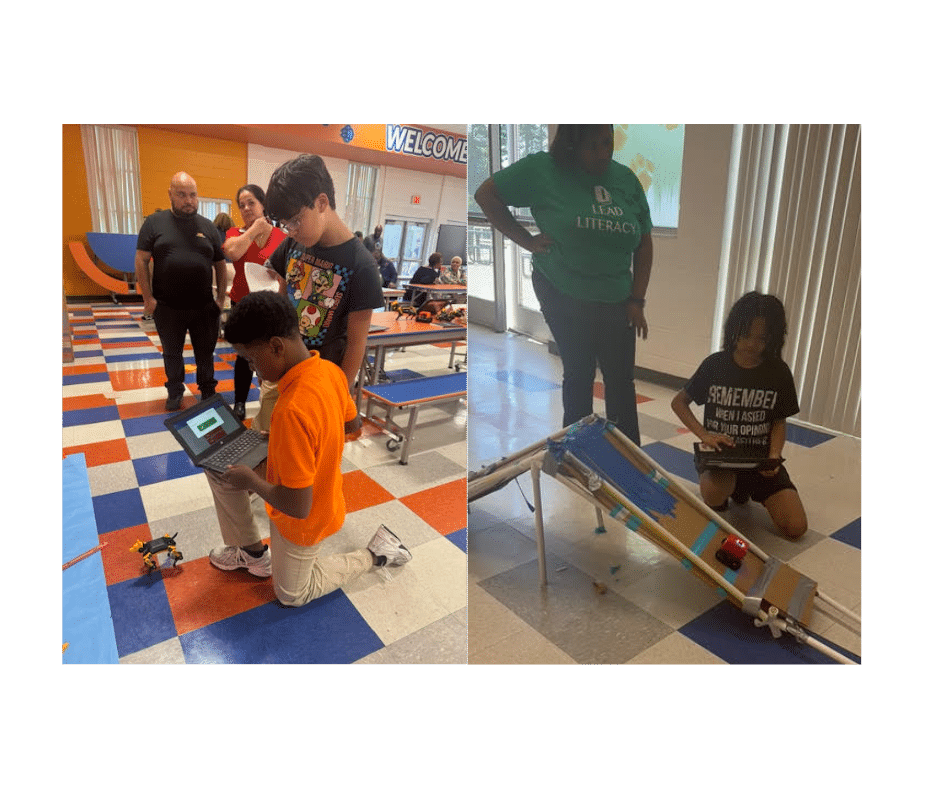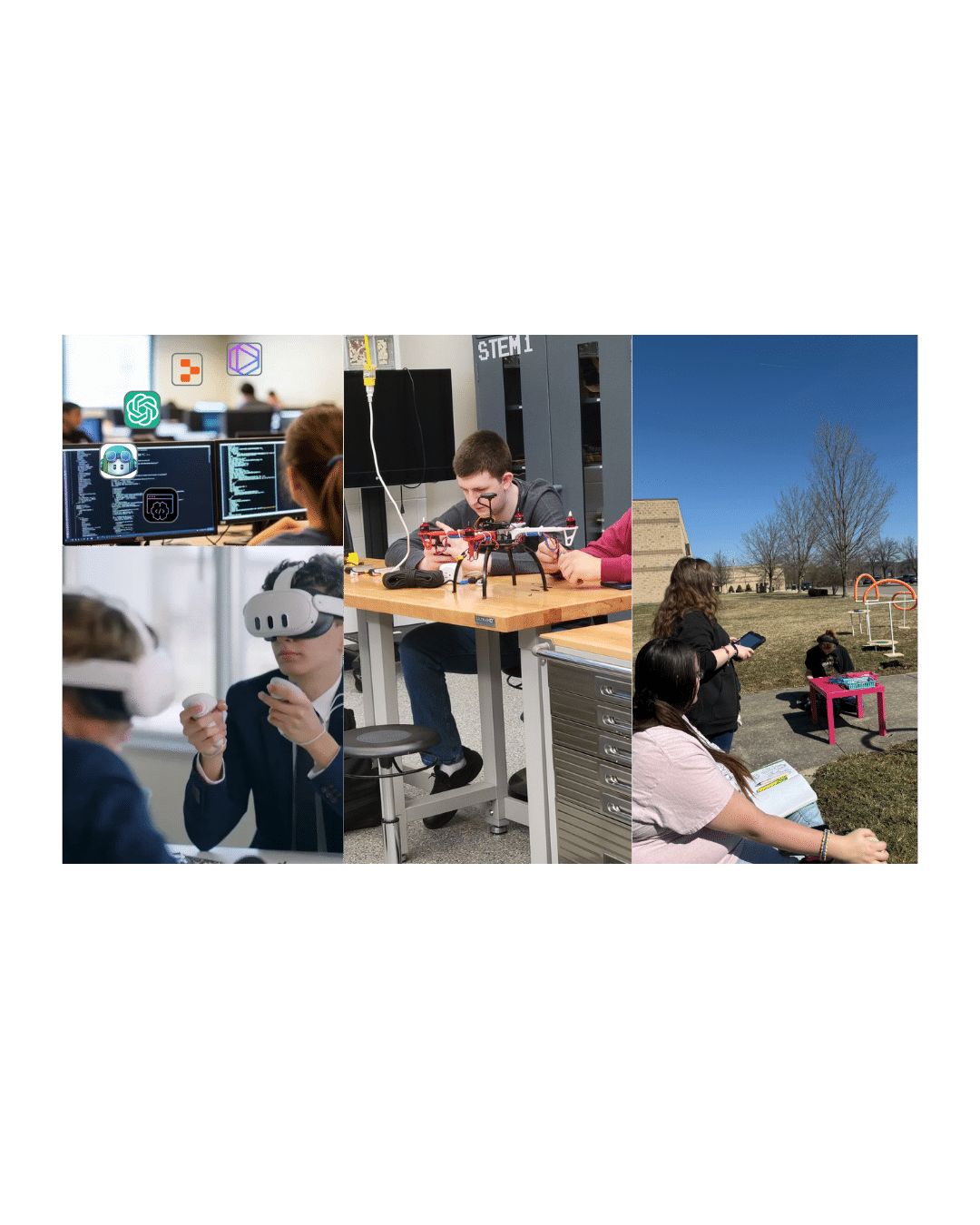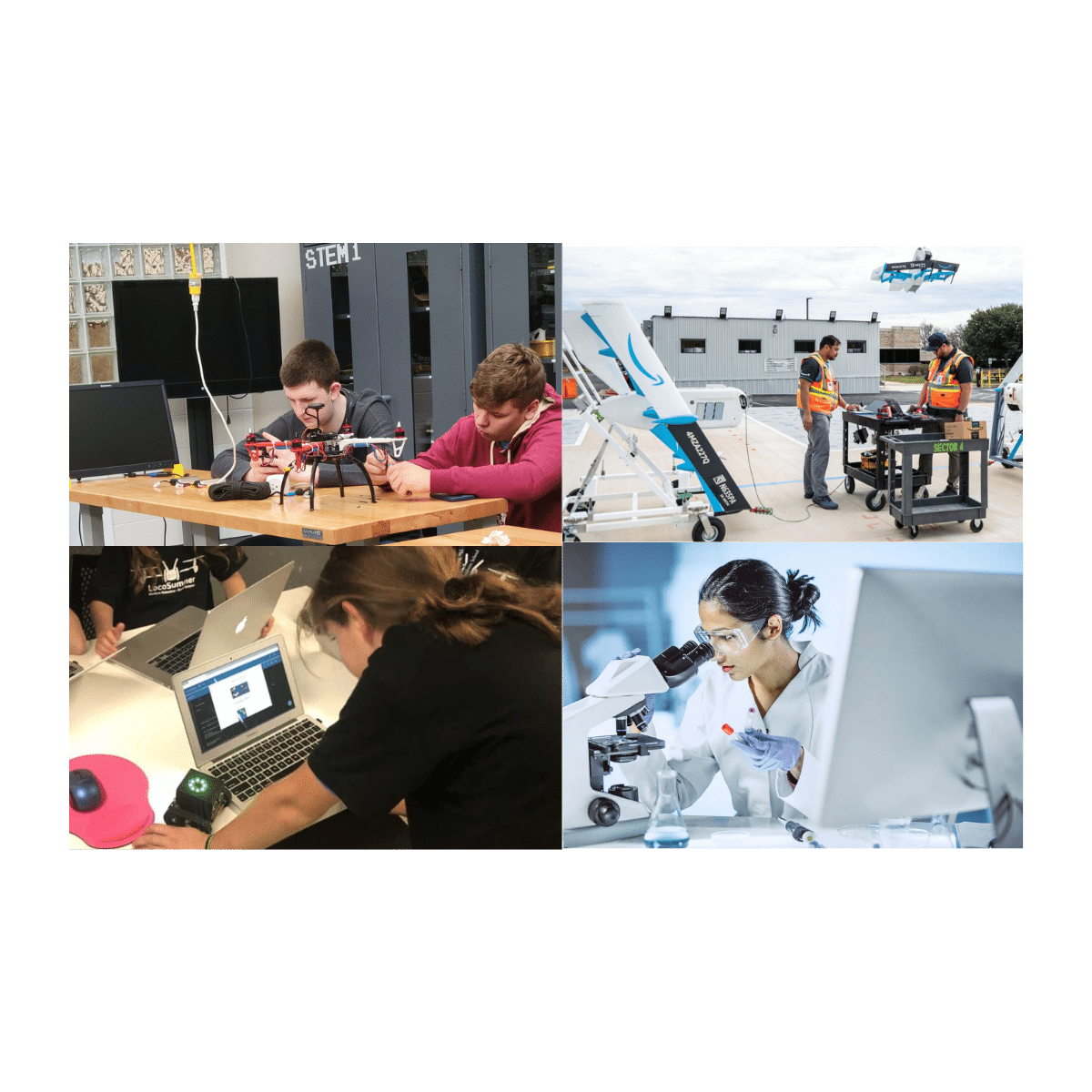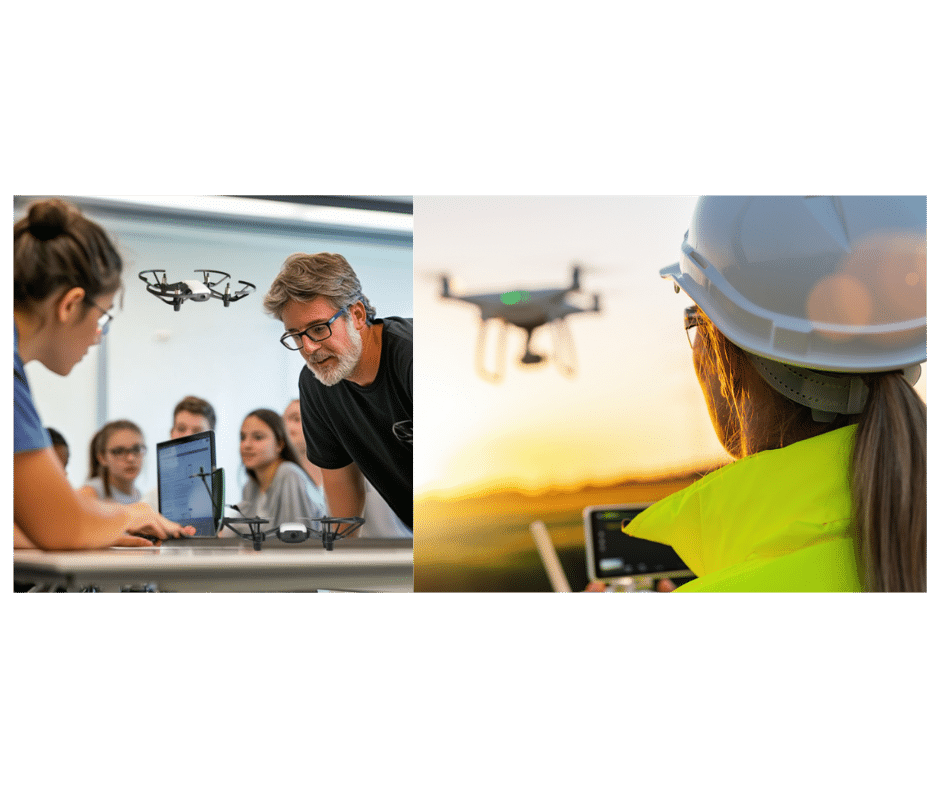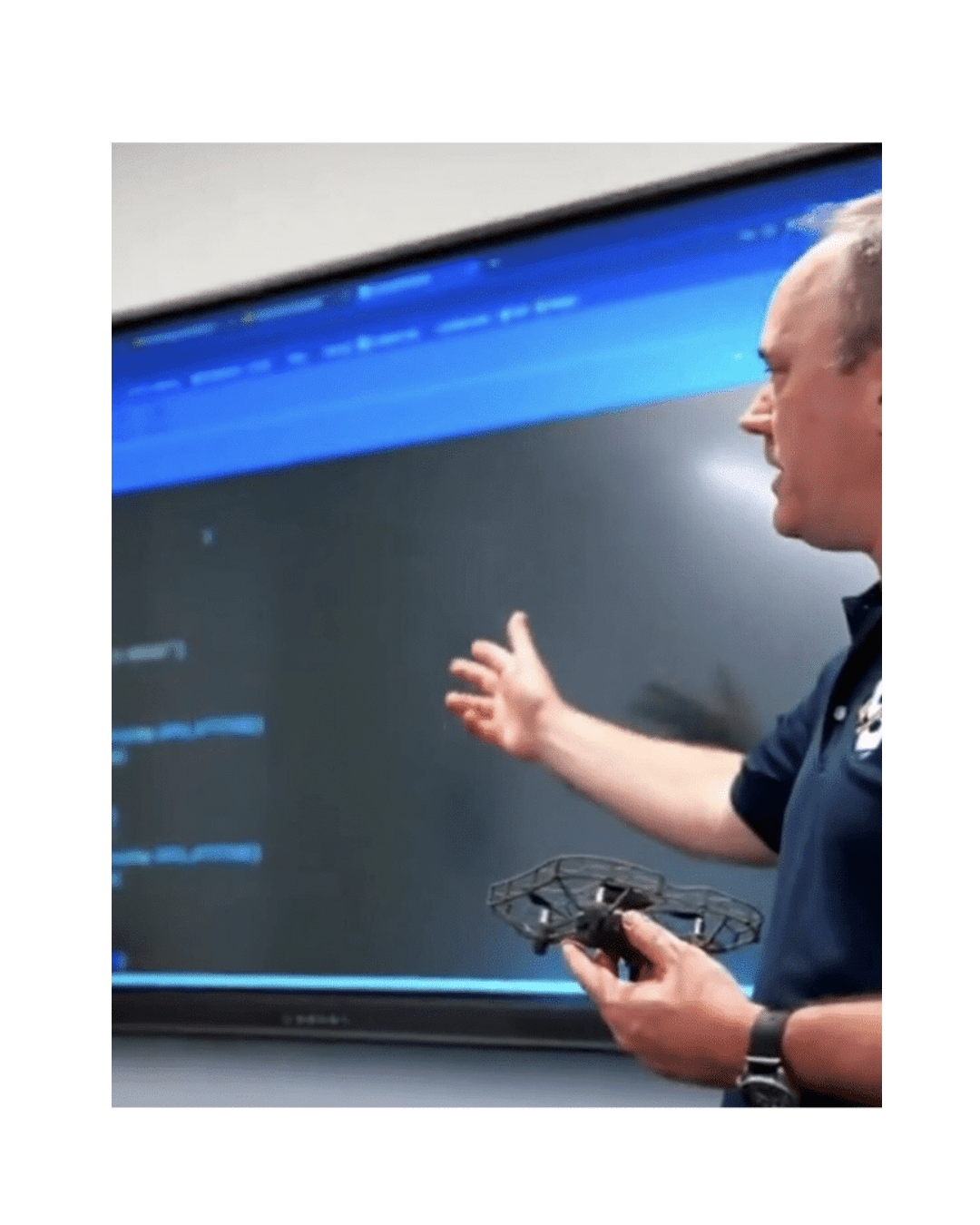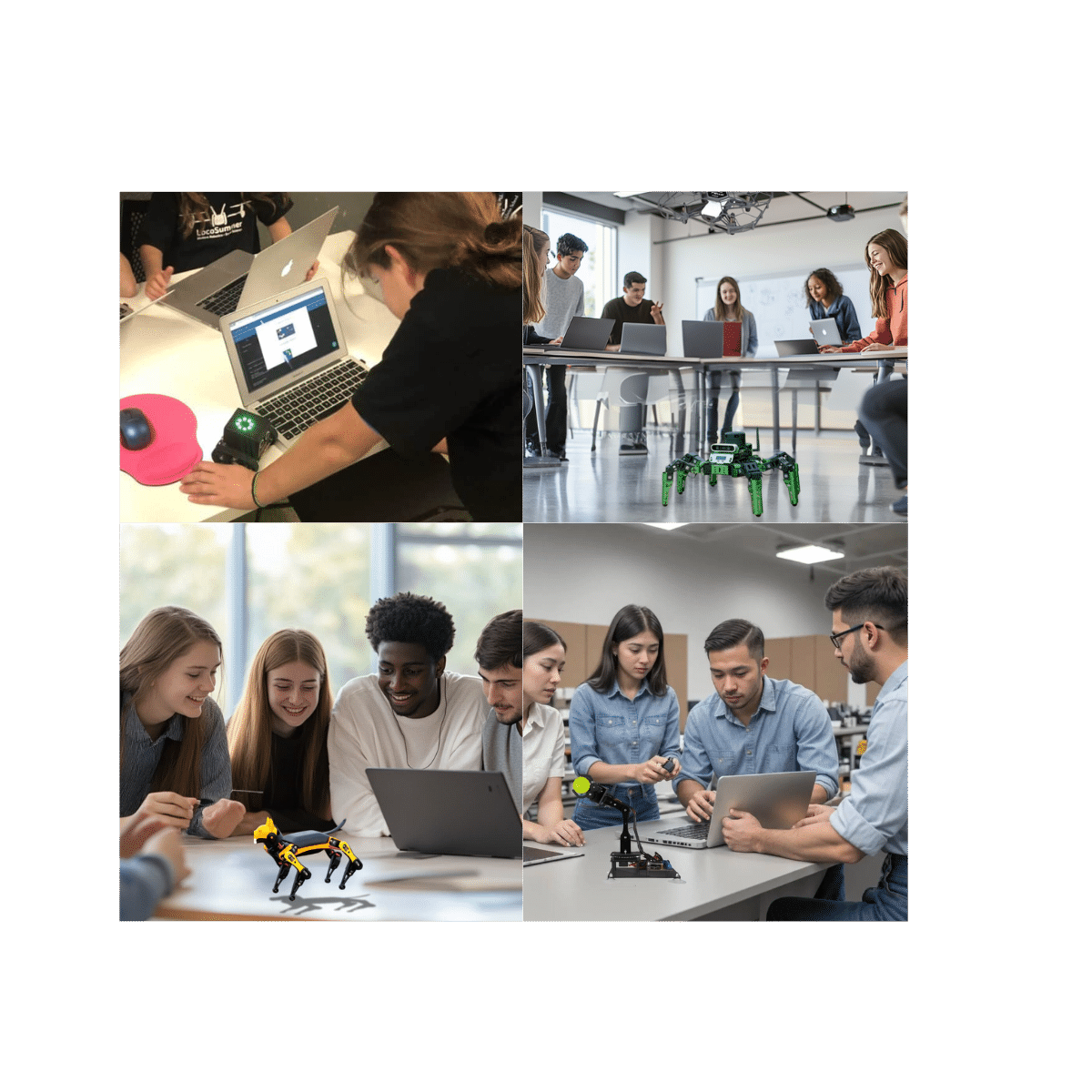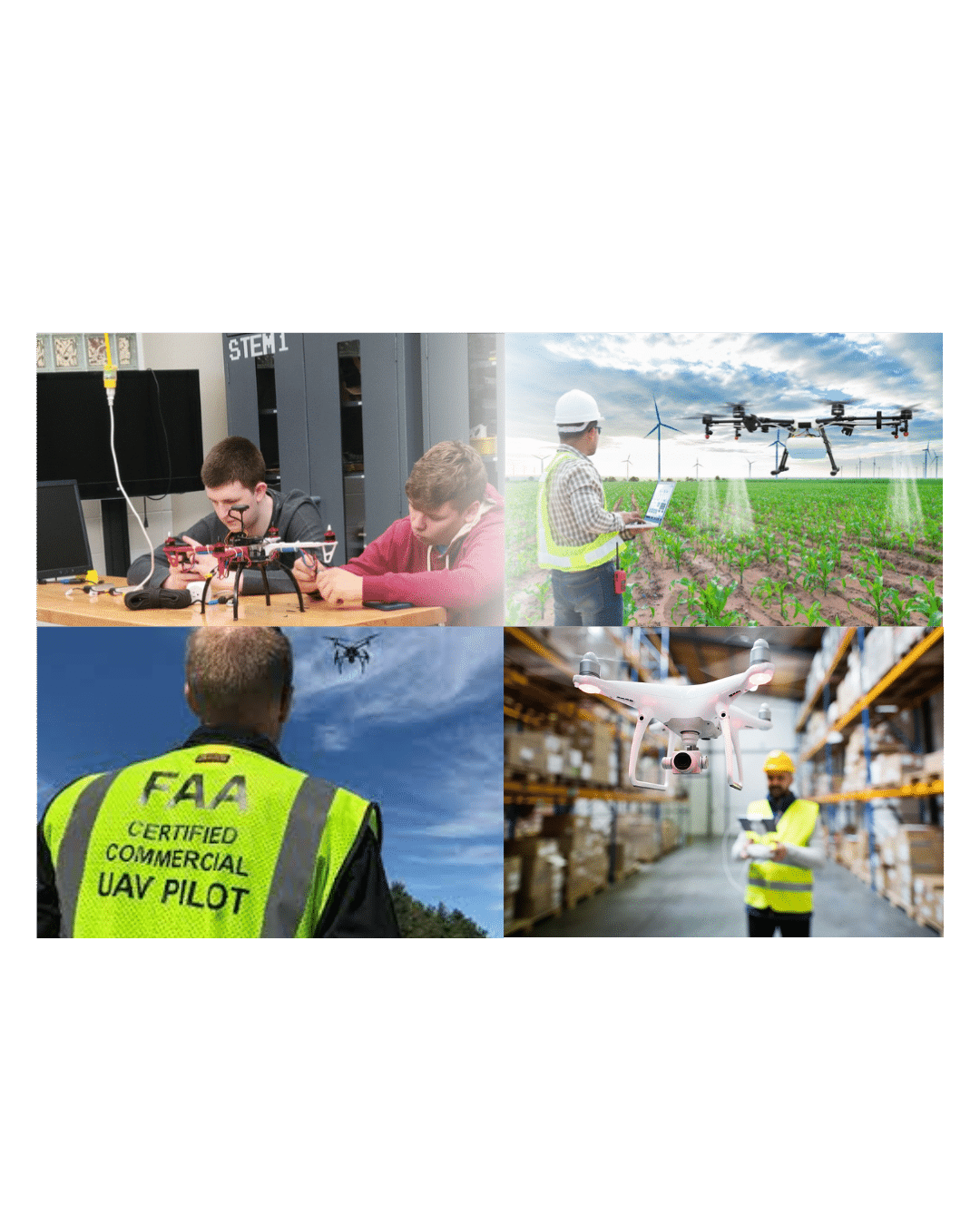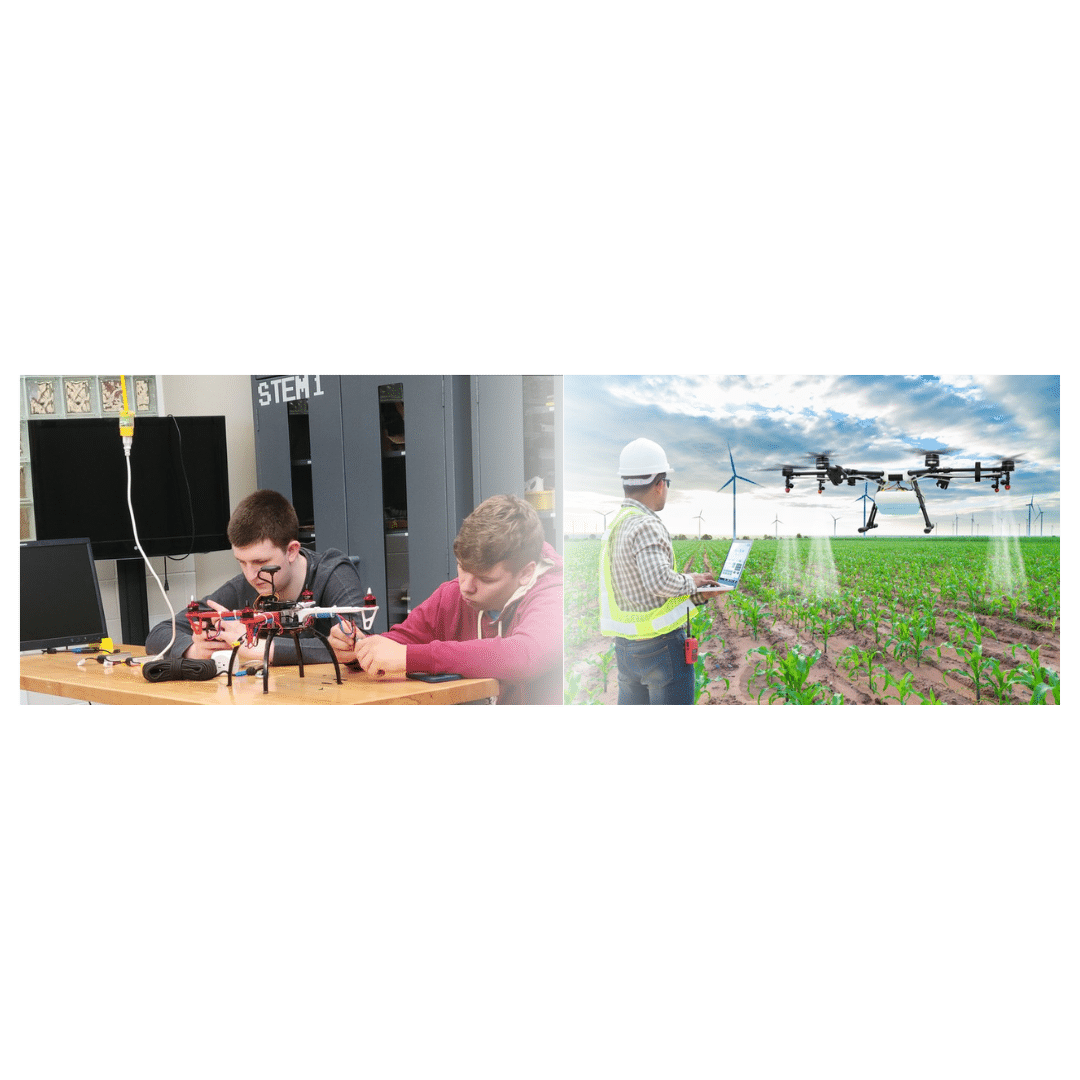

Understanding the physics of flight gives students a deeper appreciation for the science behind motion, force, and balance. Drones make these abstract ideas tangible. When students see a drone lift, hover, and maneuver, they are witnessing Newton’s Laws in real time, each flight a living physics experiment.
Newton’s First Law: Balanced Forces and Steady Flight
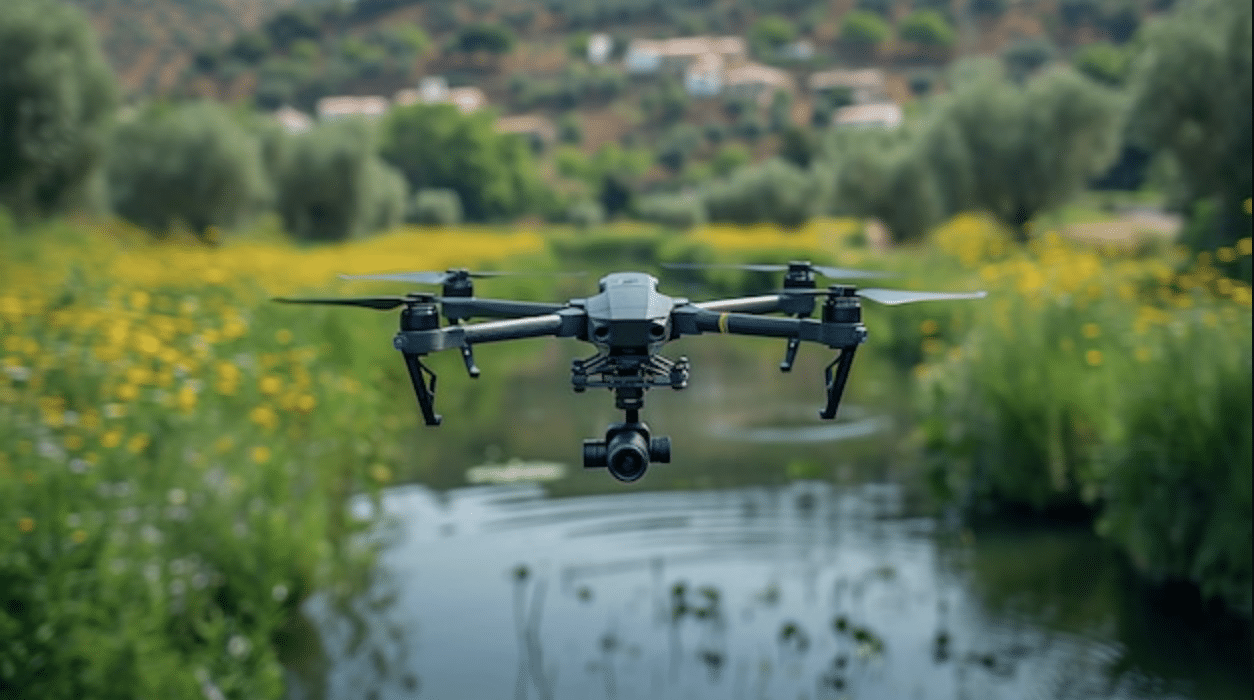
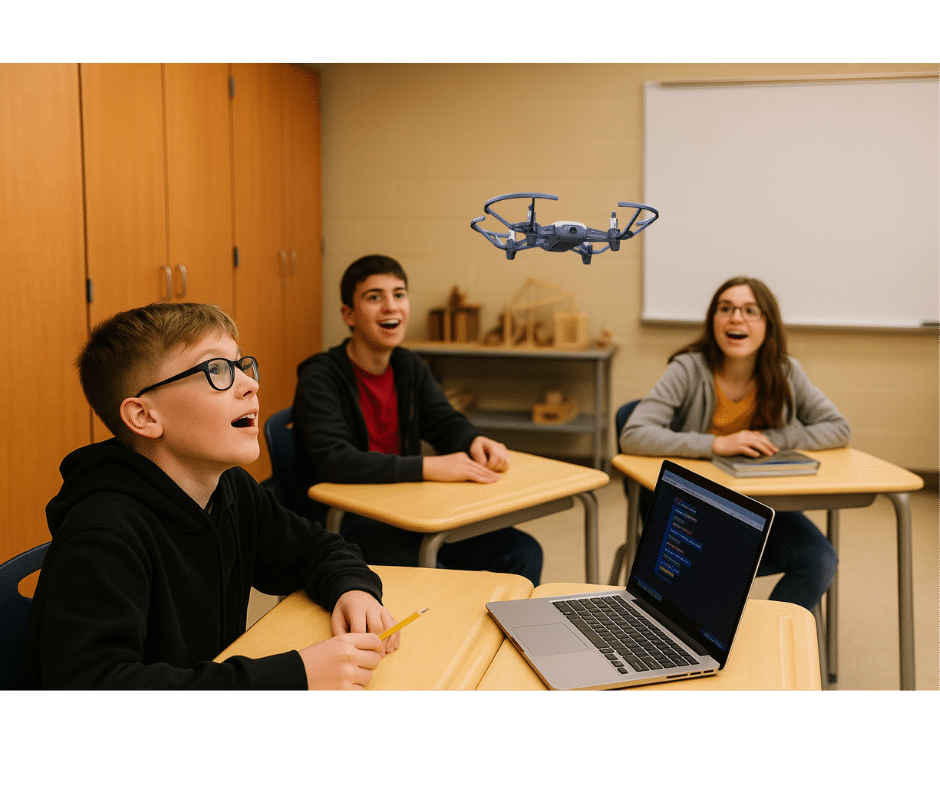
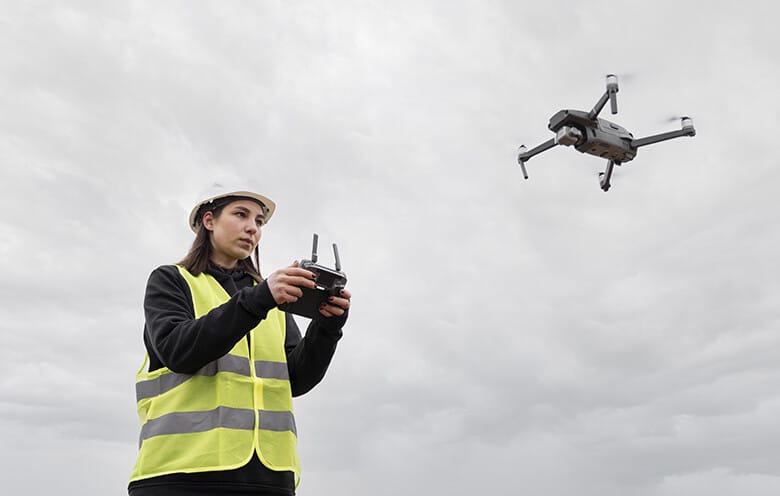
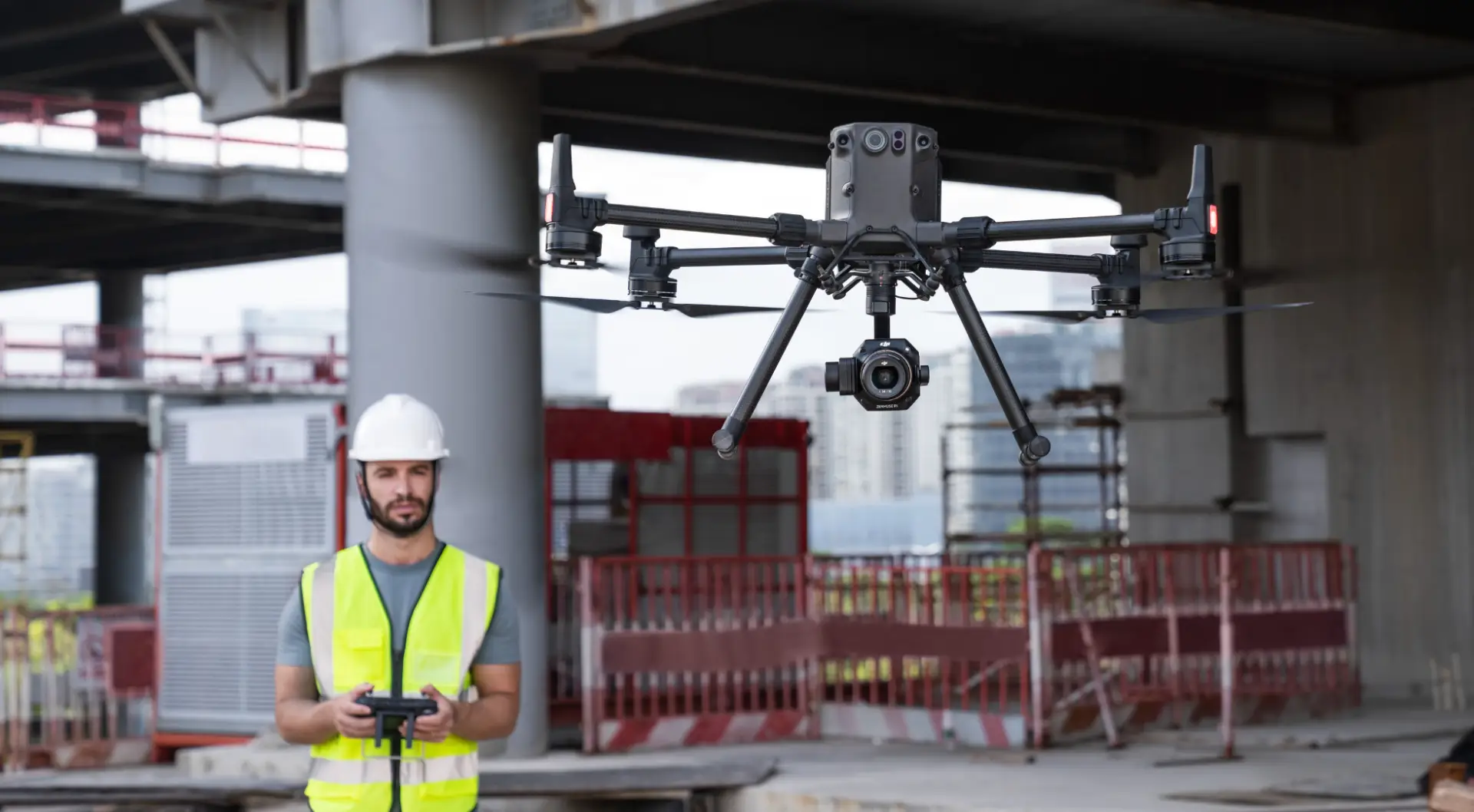
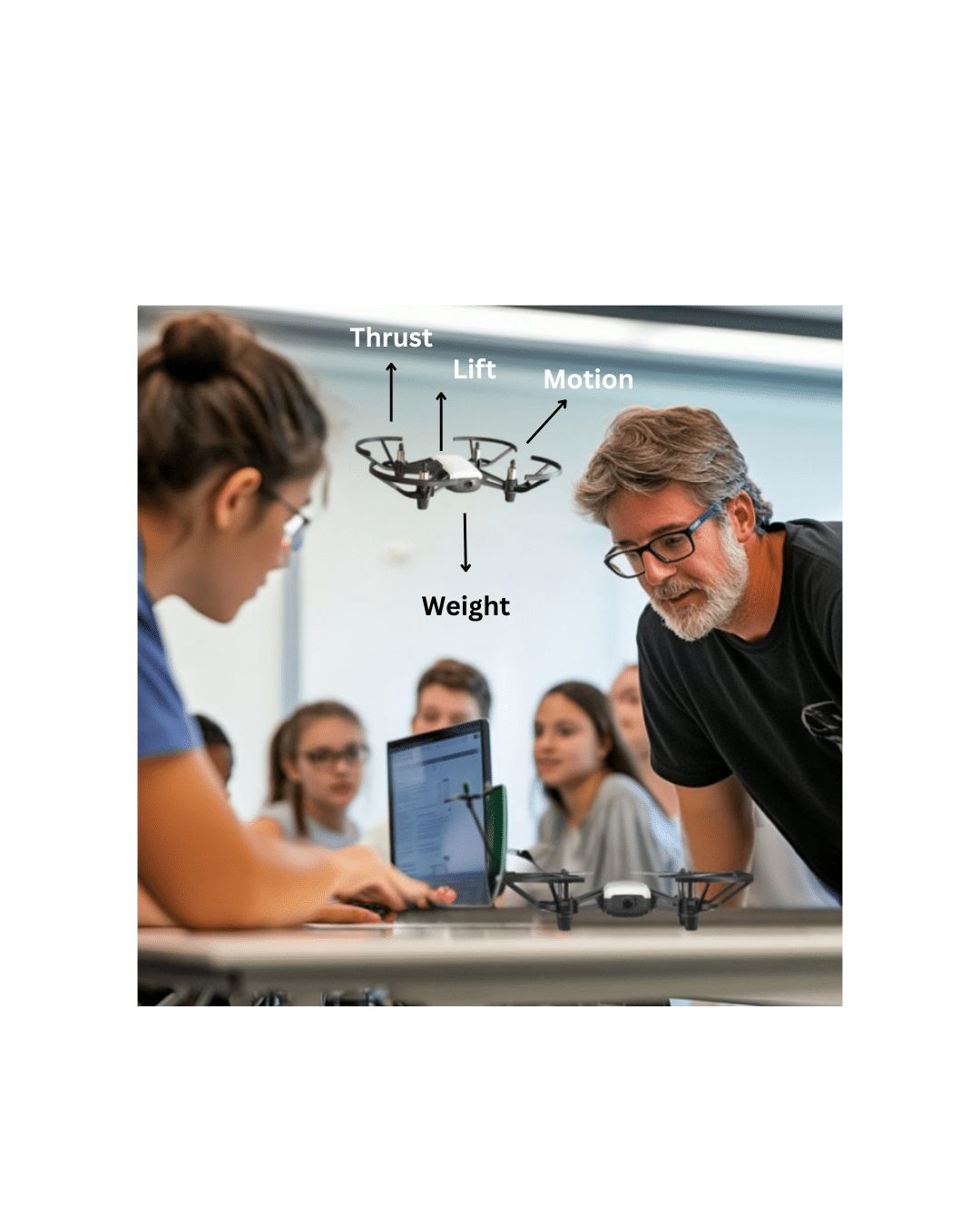
A drone hovering in midair perfectly demonstrates Newton’s First Law- an object remains at rest or in uniform motion unless acted upon by an external force. Students can see how balanced forces create stability. When thrust from the propellers equals the force of gravity, the drone maintains altitude. Adjusting the throttle slightly changes that balance, helping students visualize how motion begins and ends.
Newton’s Second Law: Acceleration in Action
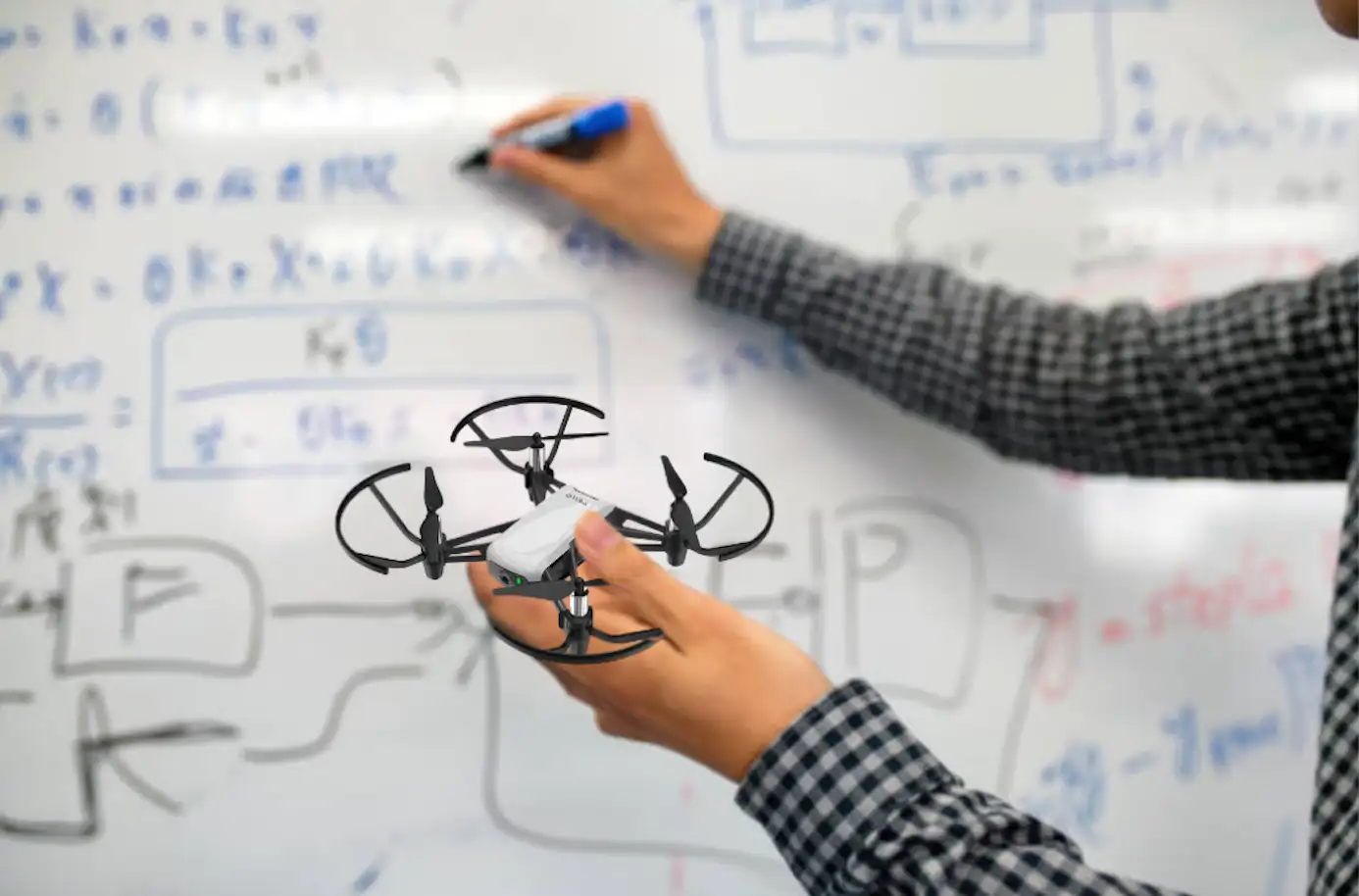
Newton’s Second Law (F = ma) comes to life when students vary a drone’s speed. By adjusting thrust, they can calculate how much force is needed to achieve different accelerations. This gives them a direct way to connect mathematical formulas to observable motion. Experiments comparing payload weights or battery power also help students see how mass affects acceleration, a key insight in both physics and engineering.
Newton’s Third Law: Reaction and Propulsion
Every lift-off is a perfect illustration of Newton’s Third Law: for every action, there is an equal and opposite reaction. As propellers push air downward, the drone rises upward. Students can test this principle further by experimenting with direction or propeller speed, observing how changes affect yaw, pitch, and roll. It’s hands-on physics that turns theory into understanding.
From Theory to Real-World Application
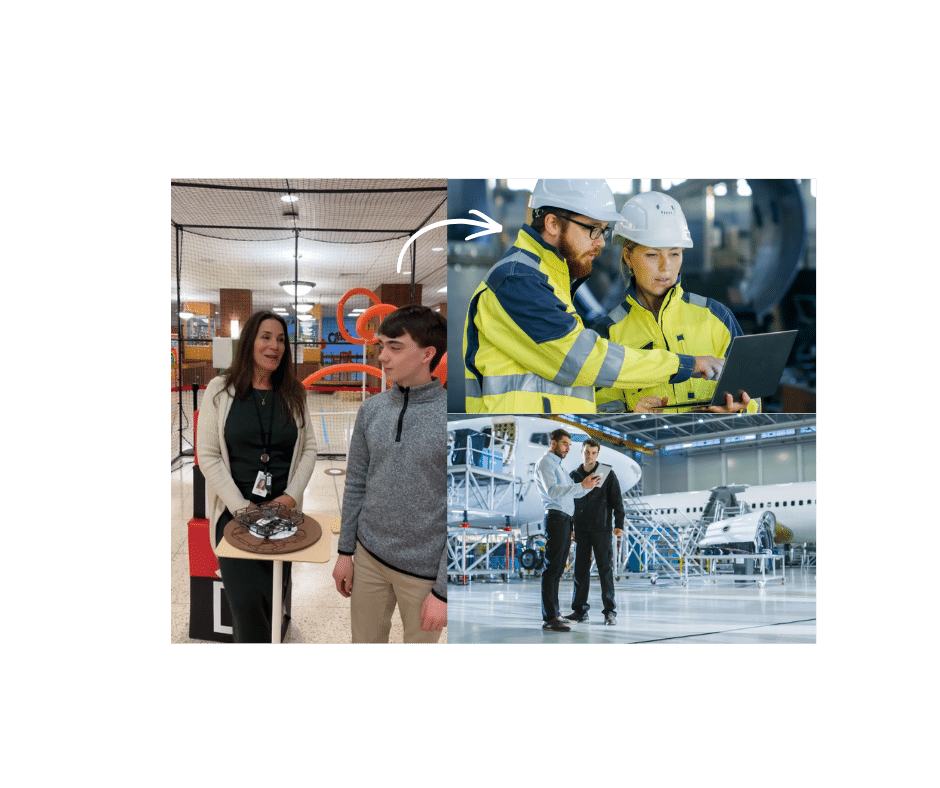
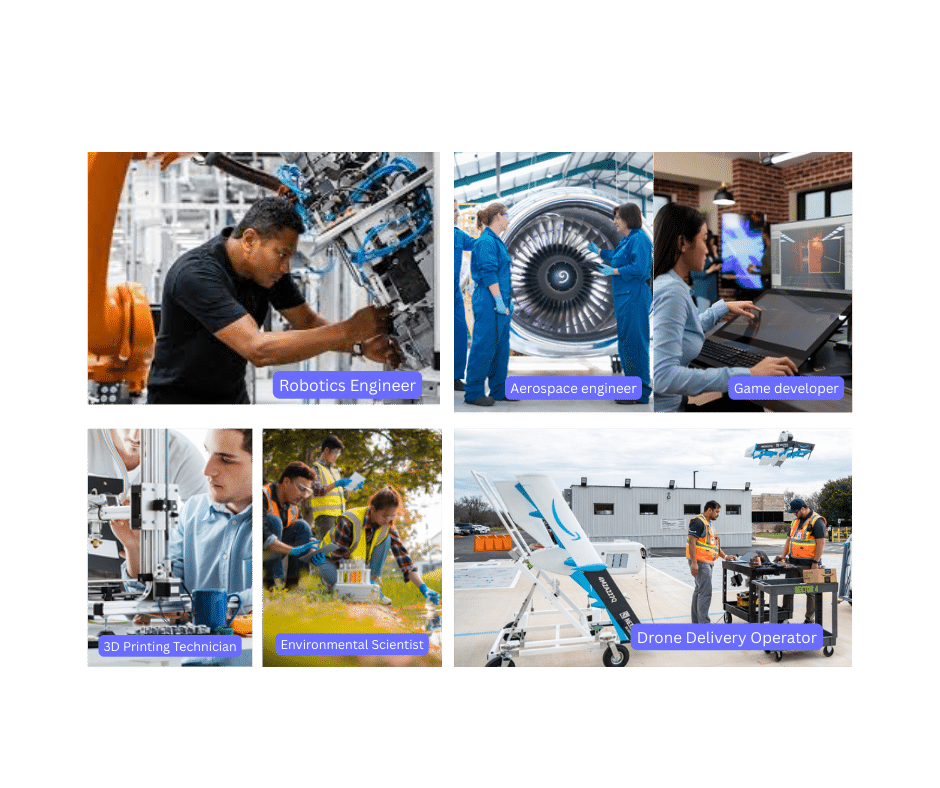
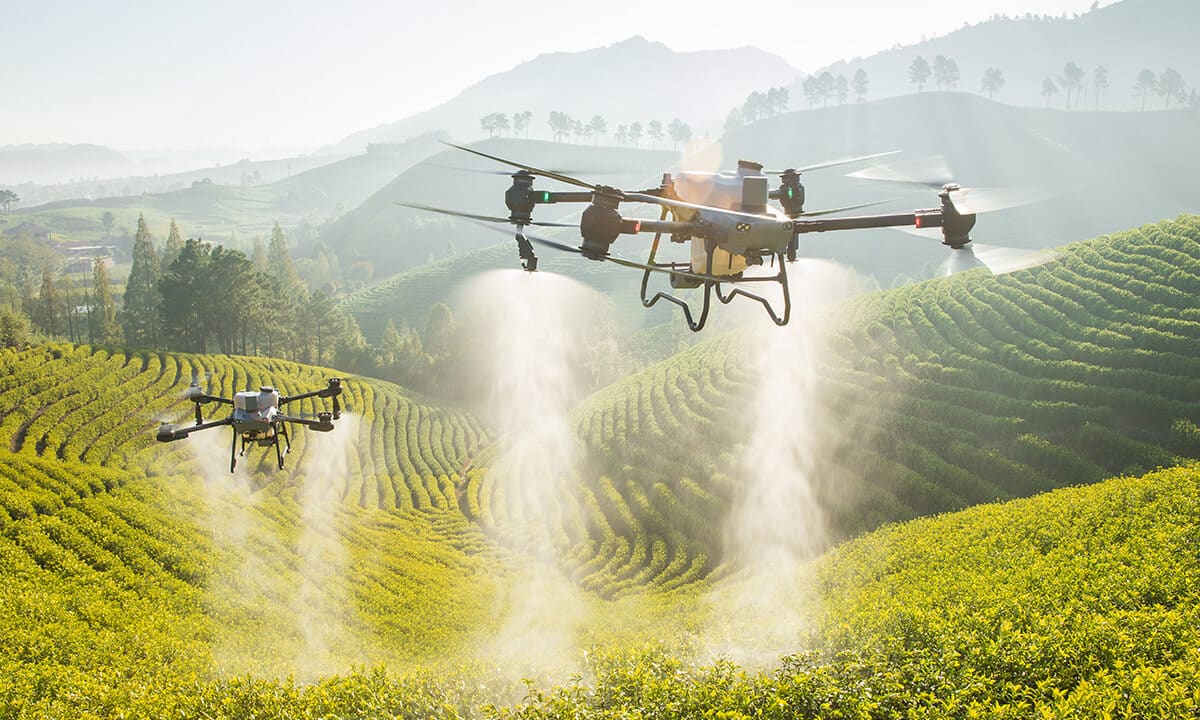
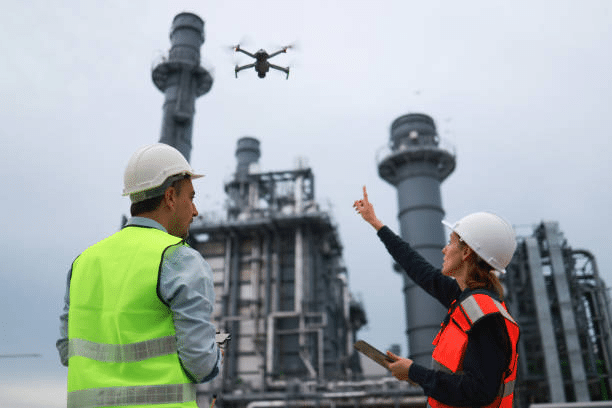
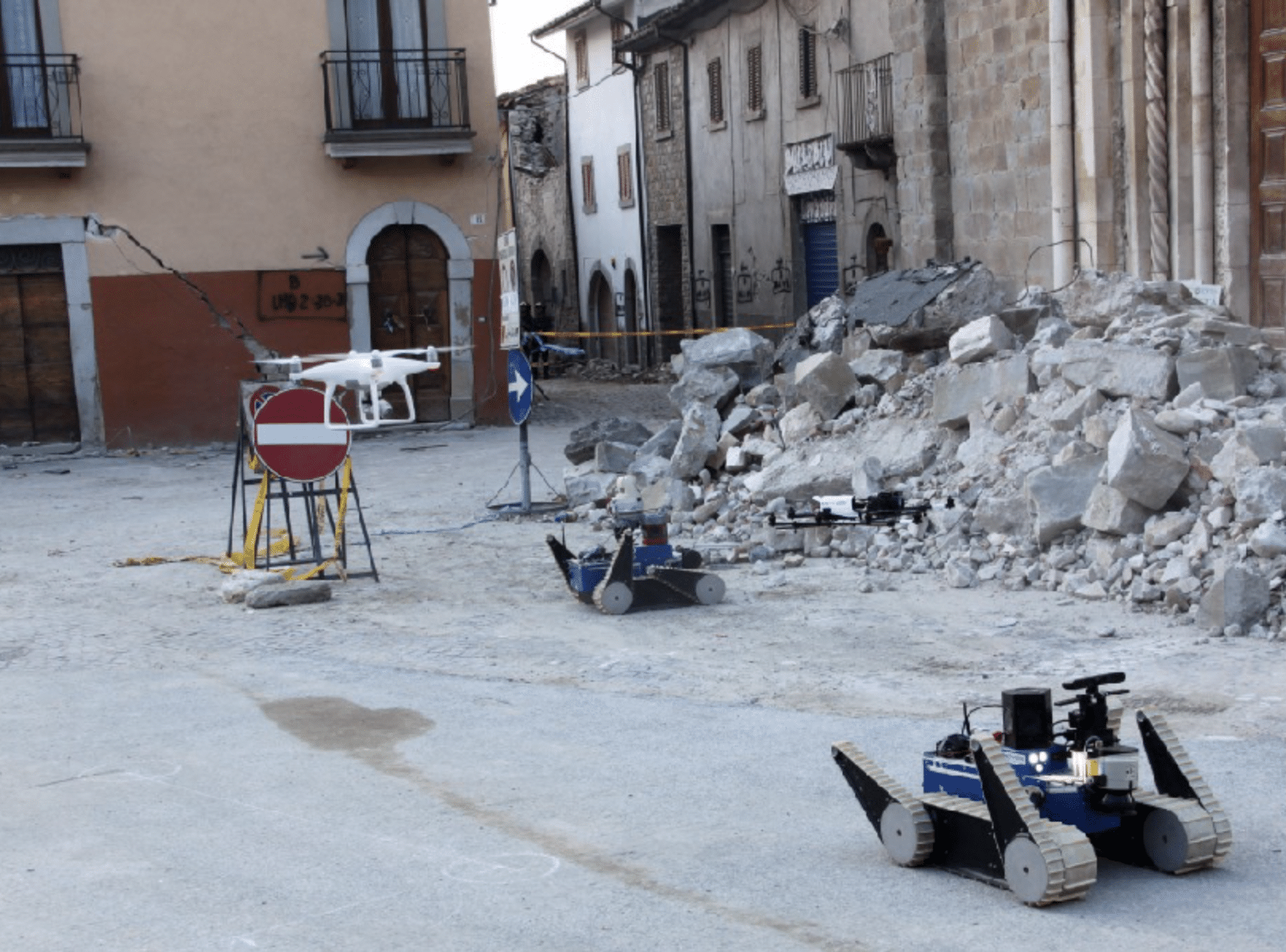
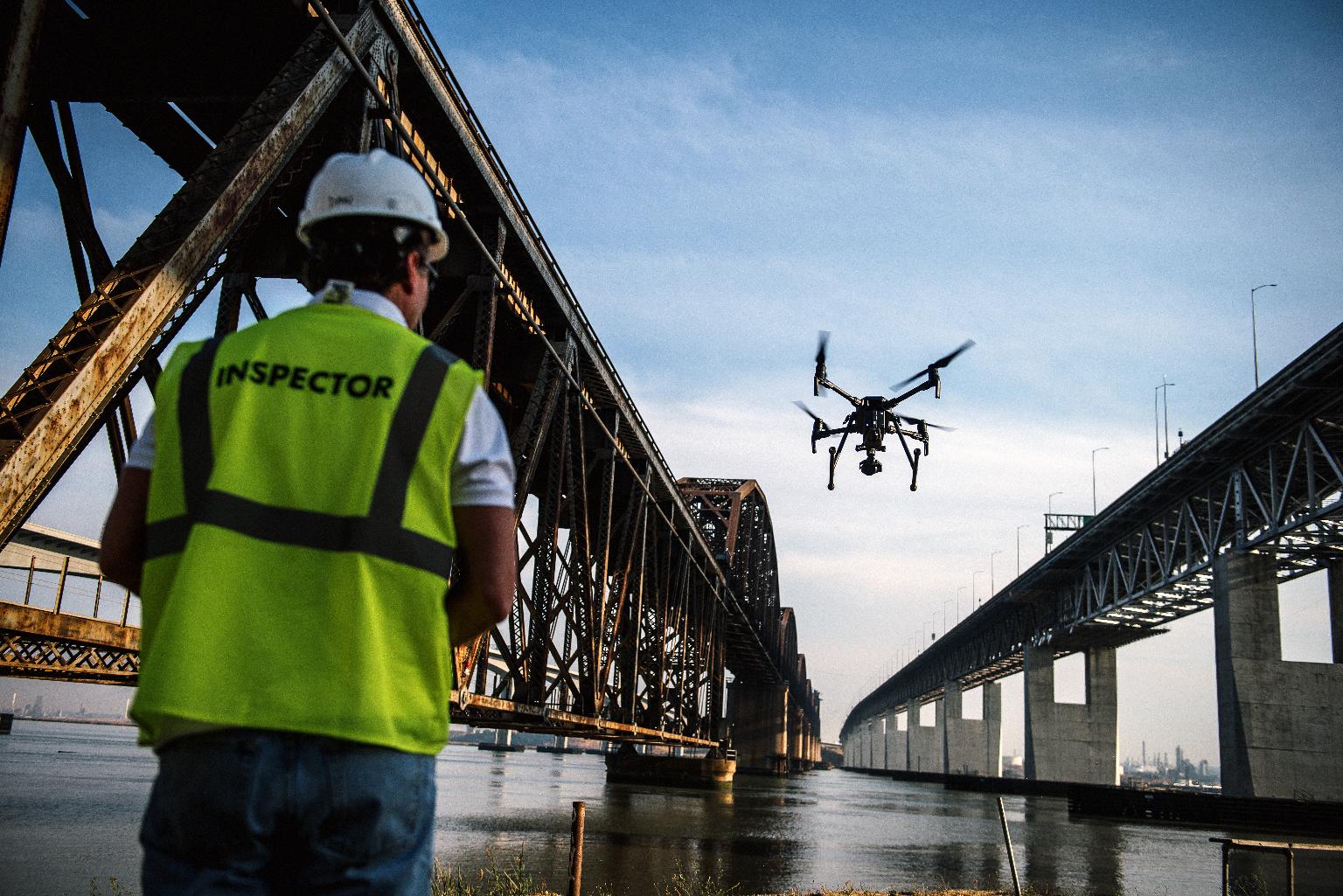
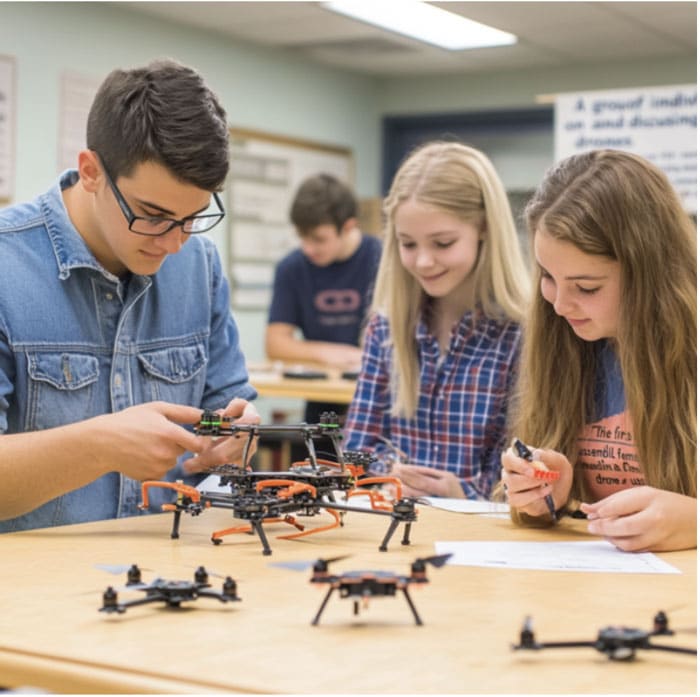
Drones in education bridge classroom theory and real-world relevance. Students explore how physics governs weather monitoring, aerospace engineering, or drone delivery systems. Through coding and flight tests, they learn how small adjustments in force, mass, or velocity lead to major changes in performance, mirroring how professionals optimize drone design in research and industry.
Teaching Flight Physics with LocoRobo
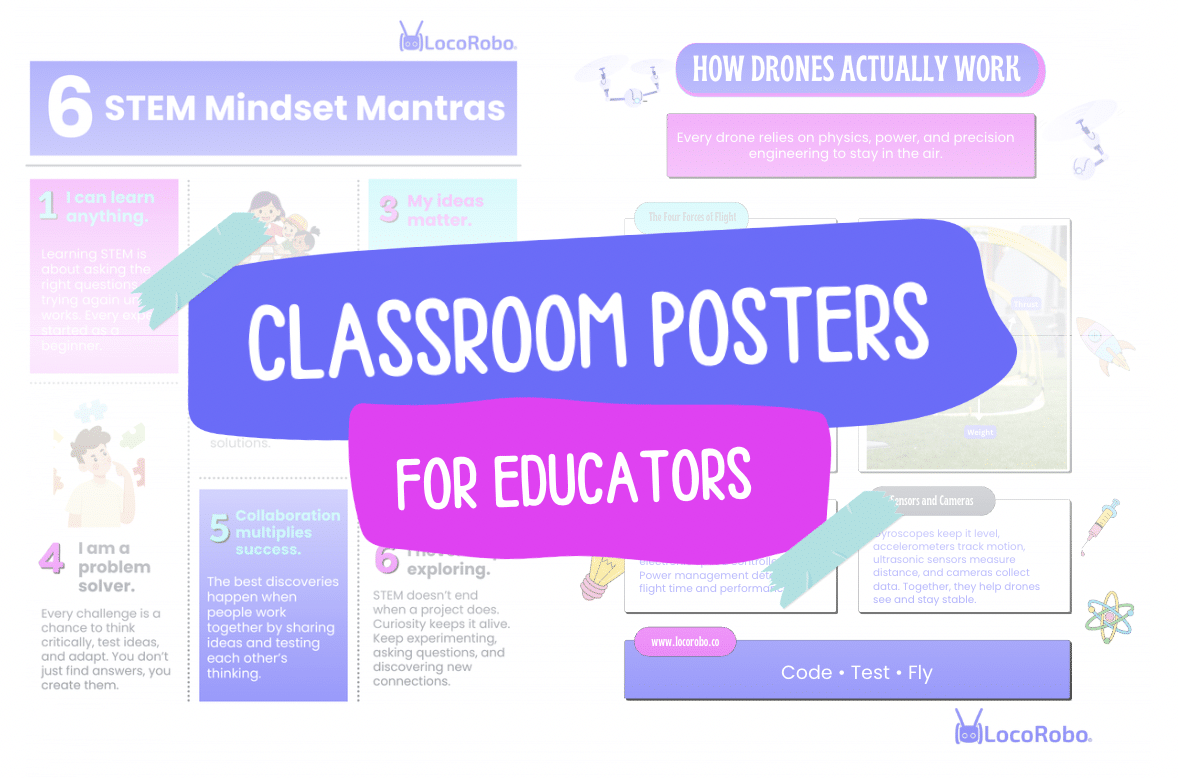
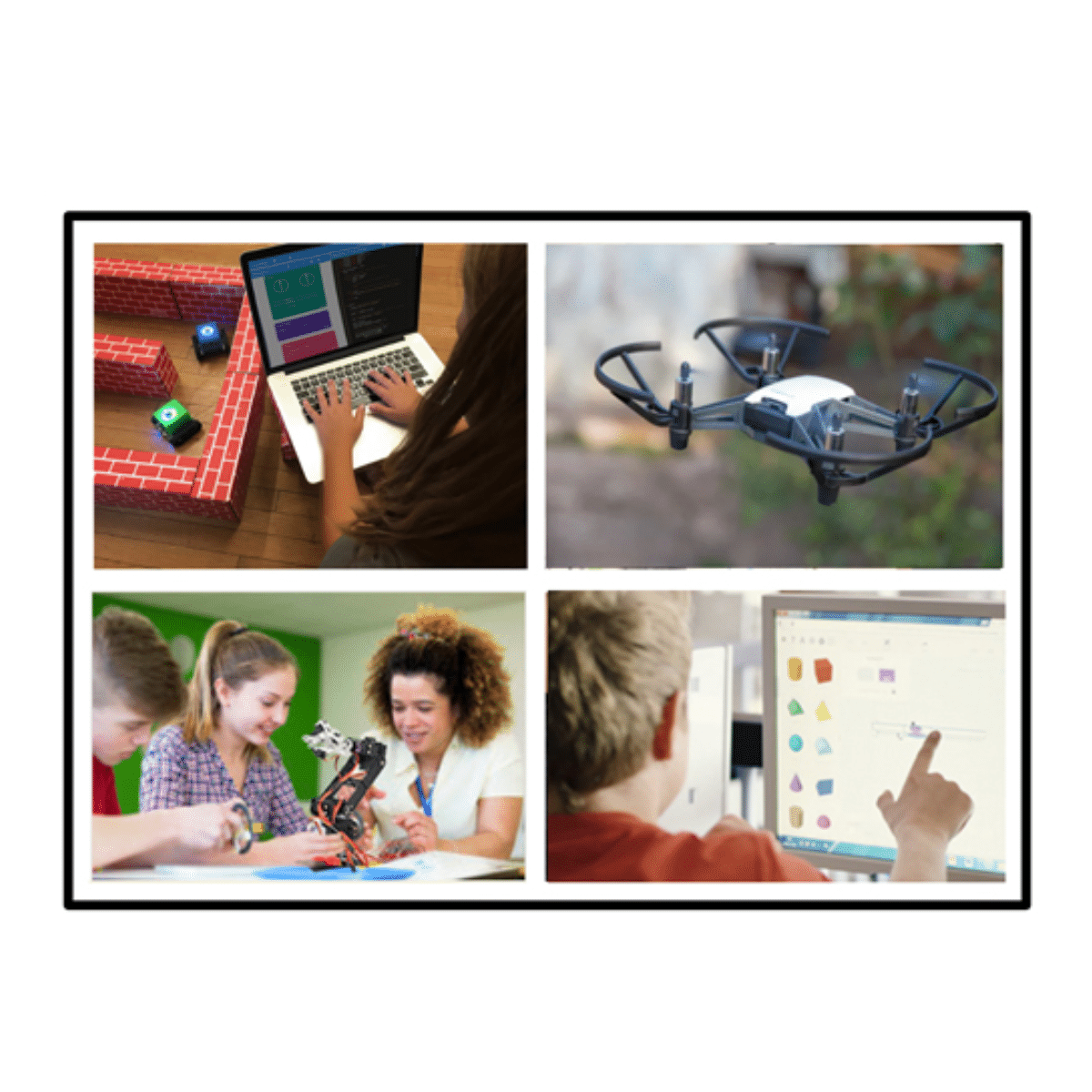
LocoRobo’s drones for education help teachers turn flight physics into meaningful classroom experiences. With ready-to-teach drone curriculum, coding platforms, and hardware designed for safe, hands-on learning, educators can easily guide students from the basics of lift and thrust to complex concepts like autonomous flight and energy efficiency.
Explore how LocoRobo’s drones make physics and STEM learning take flight.