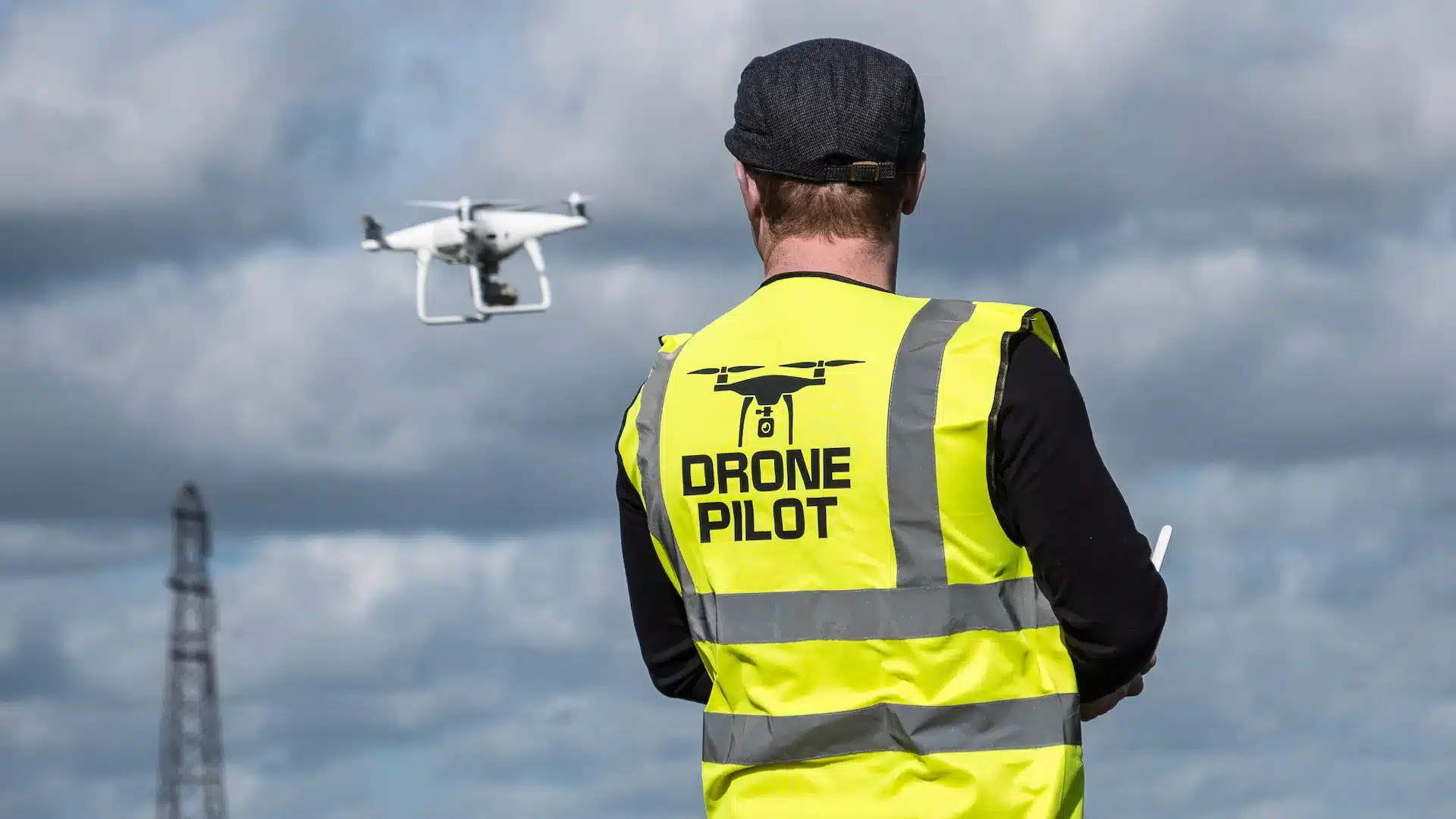

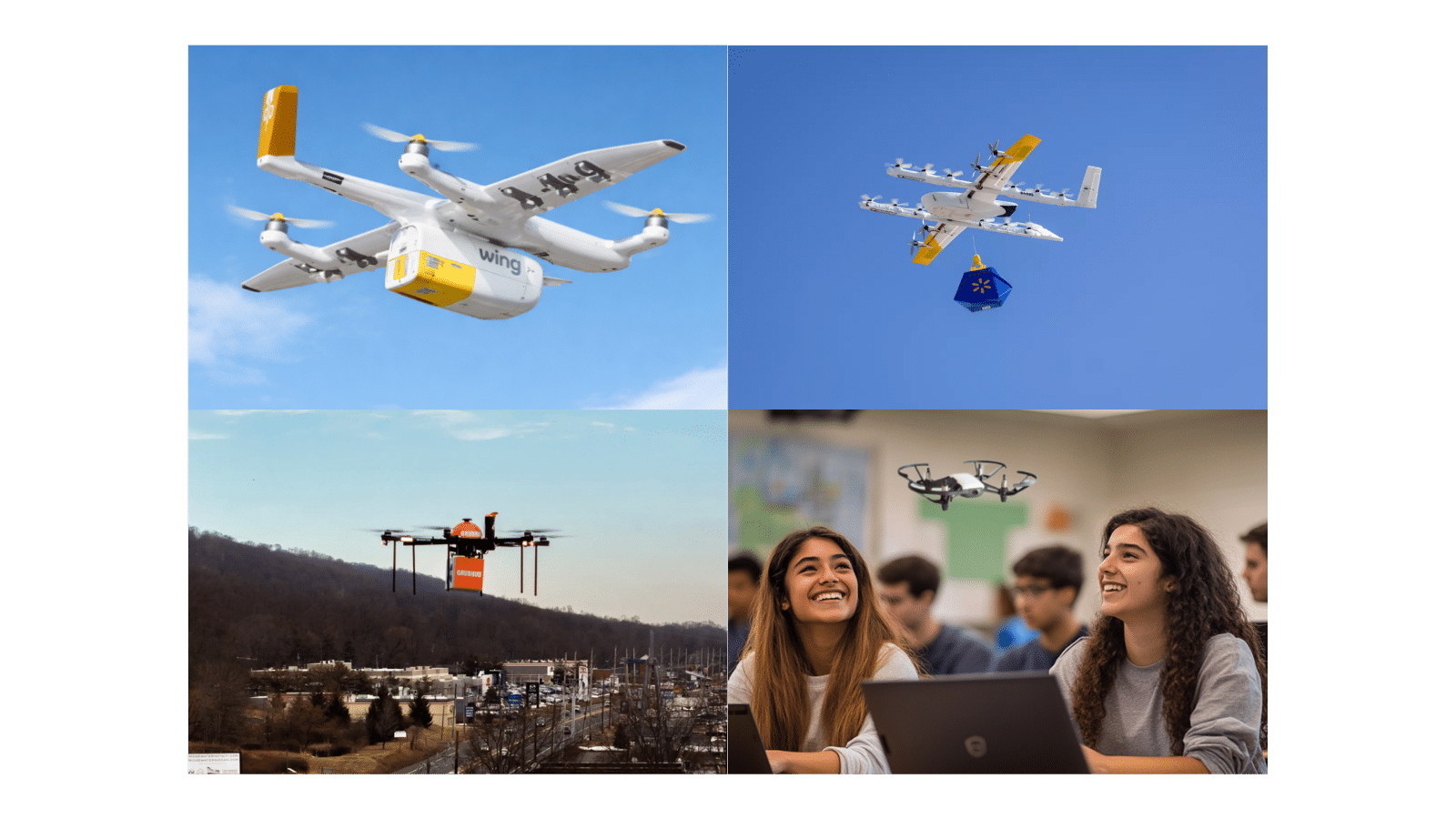
Drone delivery has moved well beyond early testing and is landing in neighborhoods across the United States right now. Several companies are now expanding real-world services across U.S. cities, showing how autonomous aerial logistics is becoming part of everyday commerce.
Recent announcements from Alphabet’s Wing and Grubhub highlight how retailers, restaurants, and technology companies are working together to shorten delivery times and improve last-mile logistics. These developments provide a glimpse into how autonomous systems may reshape delivery networks in the coming years.
Below are three recent updates shaping the drone delivery landscape.
Google’s Wing Brings Drone Delivery to the San Francisco Bay Area
Alphabet-owned Wing announced plans to launch drone delivery services in the San Francisco Bay Area, bringing the technology to one of the company’s original development regions.
Wing has already tested drone delivery in communities such as Christiansburg, Virginia, and across parts of the Dallas–Fort Worth region, where drones deliver products from retailers and restaurants directly to customers’ homes. These early deployments allowed the company to test operations across different neighborhoods, weather conditions, and delivery patterns before expanding into larger metropolitan areas.
The Bay Area expansion represents a major step forward because of the region’s dense population, complex airspace, and high consumer demand for delivery services. Wing drones are designed to transport small packages weighing up to about 3.5 pounds, including groceries, medications, meals, and household essentials.
These deliveries target one of the biggest challenges in logistics: the “last-mile” problem. The final step of getting goods from a distribution point to a customer’s door accounts for roughly 53% of total shipping costs. Drones offer a potential solution because they can travel directly to homes without traffic delays and complete deliveries in minutes rather than hours.
Wing holds an FAA Part 135 air carrier certificate, which allows the company to operate commercial drone delivery services in the United States. The company has also developed its own air traffic management platform, called OpenSky, designed to coordinate drone flights safely within shared airspace as operations expand.
Wing reports that it has completed more than 750,000 drone deliveries and currently serves over two million customers across parts of the United States. The Bay Area rollout reflects the company’s broader goal of expanding drone delivery networks into larger metropolitan regions, with additional cities such as Los Angeles and Miami expected in future deployments.
Wing and Walmart Expand Drone Delivery Across Houston
The two companies have been working together to bring drone-based grocery and household deliveries to several U.S. cities.
In Houston, the service allows customers to order items from Walmart stores and receive them via drone delivery directly to their homes. This model focuses on small, high-demand products such as last-minute ingredients, snacks, or household essentials.
Customers place orders through the Wing app or partner platforms, and the drone delivers the package using a tethered drop system that safely lowers the item to the ground.
Looking ahead, Wing and Walmart plan to build a network of more than 270 drone delivery locations by 2027, potentially serving tens of millions of Americans. The expansion highlights how retailers are exploring new logistics models that reduce delivery times and traffic congestion while improving convenience for customers. In Greater Houston, Wing and Walmart are launching drone delivery from five Walmart stores, allowing customers to order everyday items such as groceries, baby products, and household essentials for delivery in about 30 minutes.
Wing’s lightweight autonomous drones fly at around 150 feet and can travel up to about 60 miles per hour. Packages weighing up to about 2.5 pounds are lowered to customers’ homes using a tether system that places the item in a small designated landing zone.
The company reports over 750,000 drone deliveries globally across its operating markets. Looking ahead, Wing and Walmart plan to expand the service to more than 270 stores nationwide as they continue building a larger drone-based retail delivery network.
Grubhub Tests Drone Food Delivery in New Jersey
Food delivery companies are also exploring aerial logistics. Grubhub recently launched a three-month drone delivery pilot program in New Jersey, marking the state’s first commercial food delivery test using drones.
The program operates from Wonder’s Green Brook location and serves customers within a 2.5-mile radius. Orders can be placed through the Grubhub app, where customers can choose drone delivery at no additional cost beyond standard service fees.
The initiative is being developed in partnership with drone delivery company Dexa, which operates the FAA-certified DE-2020 autonomous delivery aircraft.
Before takeoff, trained crews ensure that food orders are securely packaged. During delivery, the drone lowers the order to the ground using a controlled tether system. Customers can track their delivery in real time through the app, receiving notifications and estimated arrival times.
The test program aims to evaluate how drone technology can integrate with existing delivery platforms while improving speed and reliability for restaurant deliveries.
The Bigger Picture: A New Phase of Autonomous Logistics
Taken together, these updates show that drone delivery is transitioning from limited pilot projects into operational services across multiple industries.
Several trends are becoming clear:
- Retail partnerships are accelerating adoption
Companies such as Walmart and DoorDash are working directly with drone operators to integrate aerial logistics into existing delivery networks. - Urban and suburban expansion is underway
Companies are gradually expanding services from test locations to larger metropolitan areas. - Food delivery is becoming a major testing ground
Platforms like Grubhub are exploring drones as a way to reduce wait times and improve efficiency for short-distance deliveries.
As regulations evolve and drone technology continues to mature, the role of autonomous aerial delivery in everyday commerce is likely to expand further.
Preparing Students for the Future of Drone Technology
As industries continue exploring new applications for drones, from delivery networks to infrastructure inspection, students benefit from opportunities to learn how these systems work.
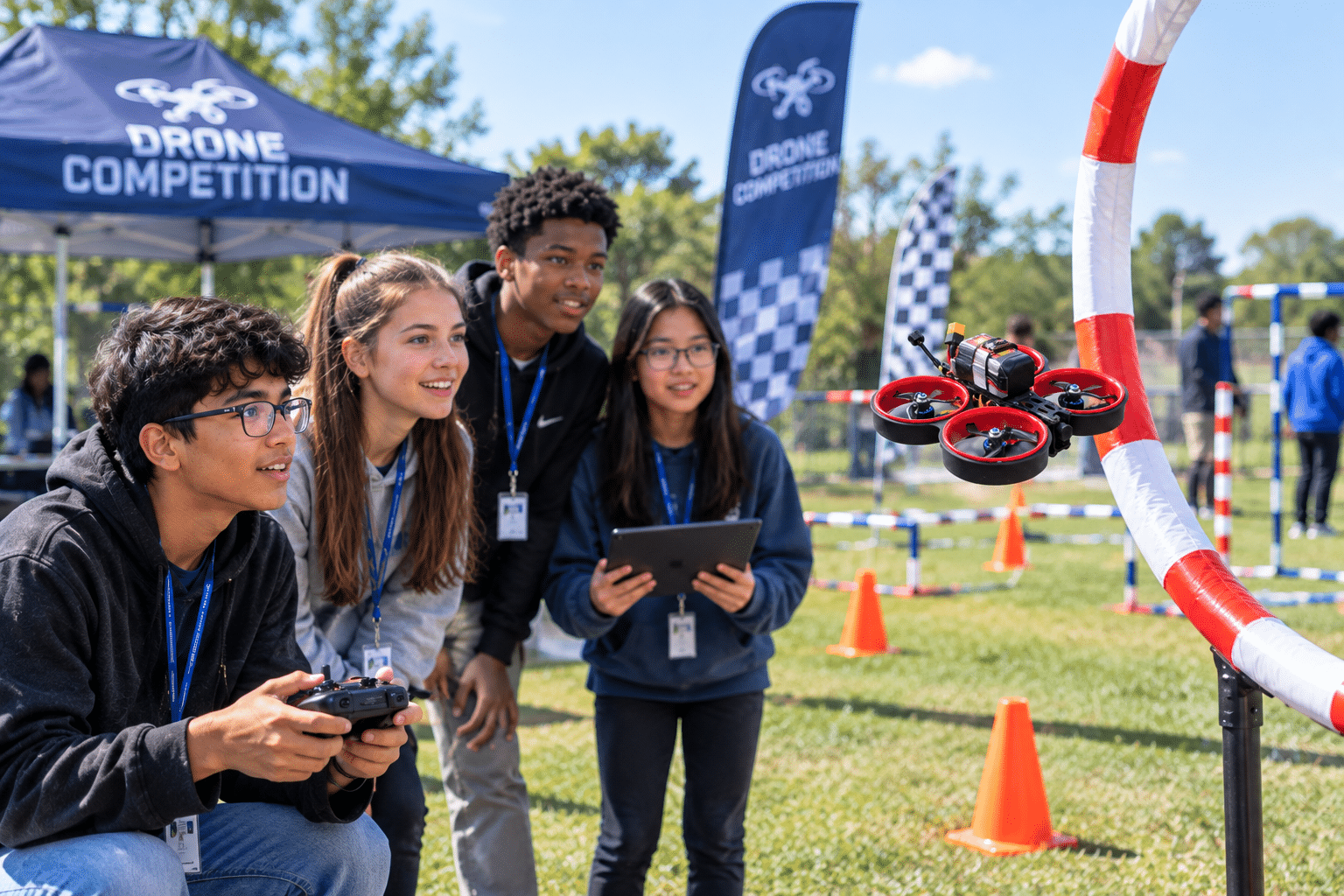
LocoRobo helps schools introduce drone technology through structured STEM programs that combine flight, coding, and real-world problem solving.
LocoRobo’s educational drone kits provide students with:
- Classroom-ready drone curriculum across grade levels
• Web-based coding tools for drone programming
• Hands-on learning that connects engineering, physics, and computer science
• Teacher training and ongoing support for program implementation
These experiences help students explore how technologies like drone delivery operate while developing the technical and problem-solving skills used across modern industries with drones and education.
Learn more about LocoRobo’s drone solutions