
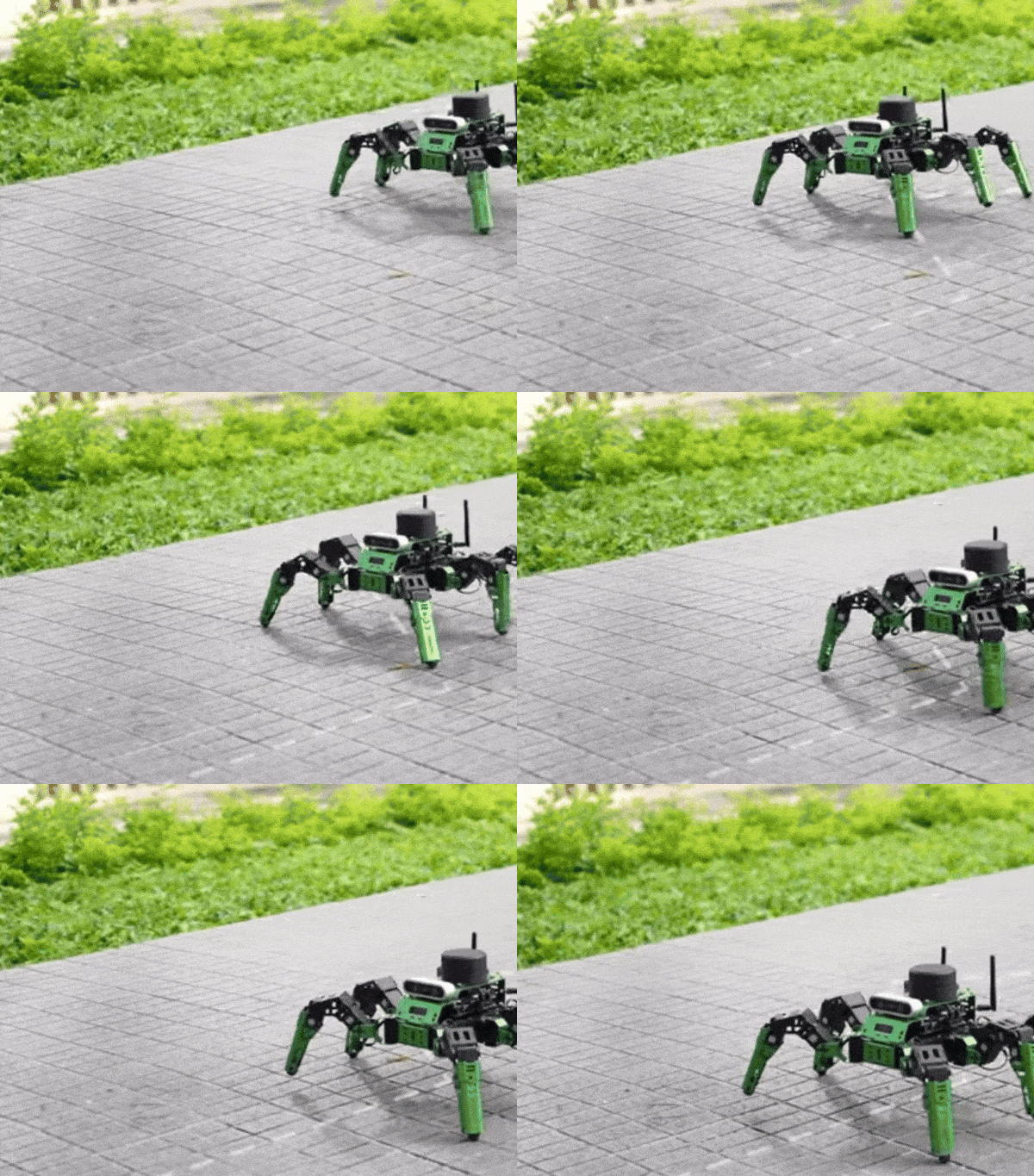
Hexapod robots provide a way to teach coding through coordinated movement, balance, and multi-system control
Unlike wheeled robots, hexapods move using six legs, similar to insects. This design allows them to adjust their gait, walk over uneven surfaces, and maintain balance in ways that are closer to real-world robotics systems.
For students, that difference matters.
Instead of learning coding through simple forward, backward, and rotational motion, they begin to understand how multiple systems work together to produce coordinated movement.
What Is a Hexapod Robot?
A hexapod robot is a six-legged robotic platform that uses coordinated leg movement to navigate its environment.
Each leg typically has multiple joints, controlled by motors. To walk, the robot must sequence these movements precisely, often using gait algorithms such as the tripod gait, where three legs move at a time while the other three provide stability.
This introduces students to:
- Multi-axis motion control
- Feedback systems from sensors
- Timing and synchronization
- Real-time adjustments based on environment
In short, a hexapod robot turns coding into a systems-level problem rather than a single command.
Why Hexapod Robots Work Well for Teaching Coding
Many classroom robots focus on basic navigation. While that is useful for beginners, it can limit how far students can explore more advanced concepts.
Hexapod robots expand what students can learn.
1. Coding Becomes Visible and Immediate
When students write code for a hexapod, they can see how each instruction affects movement. A small change in timing or sequence can completely alter how the robot walks.
This creates a direct feedback loop between code and outcome.
2. Students Learn How Complex Systems Work Together
A hexapod robot is not controlled by a single command. It requires coordination between:
- Motors controlling each joint
- Code managing balance and movement patterns
- Sensors detecting obstacles or terrain
Students begin to think in terms of systems, not isolated actions.
3. It Introduces Real Robotics Concepts
Hexapods are closer to robots used in research, defense, and industrial inspection than basic classroom robots.
Students are exposed to:
- Gait algorithms
- Stability and balance control
- Autonomous decision-making
- Sensor-driven navigation
These concepts align with how robots operate outside of school environments.
4. Encourages Problem-Solving and Iteration
Students test, adjust, and refine their code to improve movement, avoid obstacles, or complete tasks. This process builds persistence and analytical thinking.
How Schools Are Using Hexapod Robots
Schools are integrating hexapod robots across different grade levels and subjects, depending on the complexity of the robotics curriculum.
Middle School: Introduction to Robotics Systems
Students start with basic movement:
- Controlling individual legs
- Running pre-built programs and modifying them
- Understanding simple gait patterns
The focus is on understanding how multiple components work together.
High School: Advanced Coding and Autonomy
At this level, students begin to:
- Use Python or block-based coding depending on experience
- Write custom movement algorithms
- Integrate sensors for obstacle detection
- Develop autonomous navigation behaviors
Projects often involve real-world scenarios such as terrain navigation or search simulations.
STEM and CTE Programs: Career Pathway Exploration
Hexapod robots are used to introduce students to fields like:
- Robotics engineering
- Mechatronics
- Inspection robotics
- AI and autonomous systems
Students are not just learning how to code. They are seeing how coding connects to real applications.
Example Classroom Projects with Hexapod Robots
Schools are using hexapod robotics in classroom for hands-on learning that goes beyond basic programming.
- Obstacle Navigation Challenge
Program a robot to detect and move around objects using sensors. - Terrain Adaptation Task
Adjust gait patterns to move across different surfaces. - Autonomous Patrol Routine
Create a loop where the robot moves through a predefined path without manual control. - Search and Rescue Simulation
Simulate a scenario where the robot must navigate a space to locate a target.
Each project reinforces how coding, hardware, and decision-making connect.
Why This Matters for STEM Learning
Teaching with hexapod robots shifts how students experience coding.
Instead of focusing only on syntax, students begin to understand:
- How systems interact
- How to troubleshoot complex problems
- How real-world robots operate
This type of learning builds skills that are directly relevant to robotics, engineering, and computer science pathways.
Bringing Hexapod Robotics into the Classroom
For schools looking to introduce more advanced STEM robotics concepts, hexapod platforms provide a structured way to move beyond entry-level learning.
LocoRobo’s stem robotics kits include platforms designed for this type of progression. Codable robots like LocoHex allow students to explore multi-legged movement, sensor integration, and autonomous behaviors through guided robotics curriculum and hands-on projects.
With curriculum support, coding environments, and classroom-ready hardware, educators can introduce complex robotics concepts without needing to build programs from scratch.
Explore how LocoRobo supports robotics learning pathways.