


Funding is often treated as the biggest barrier to starting or expanding a STEM program. Robotics, drones, AI, and cybersecurity can feel expensive, complicated, and out of reach.
But in practice, many strong STEM programs are delayed not by a lack of money, but by a few persistent myths about how funding actually works.
Myth 1: “We need a massive grant to get started”
This is one of the most common misconceptions.
Many educators assume STEM education only begins after landing a large, competitive grant. In reality, most successful programs start much smaller.
Funding often comes from:
- Pilot programs funded through existing instructional budgets
- Incremental purchases spread across semesters
- Career and technical education allocations
- Technology refresh cycles already planned by districts
Starting small reduces risk and makes it easier to show proof before scaling. One classroom. One club. One pathway component. That is often enough to justify future investment.
Myth 2: “STEM funding only applies to advanced or high school programs”
STEM funding is not limited to upper grades.
Elementary and middle school programs often qualify under:
- Computer science initiatives
- STEM enrichment and innovation funding
- Career awareness and exploration goals
- Curriculum and instructional materials budgets
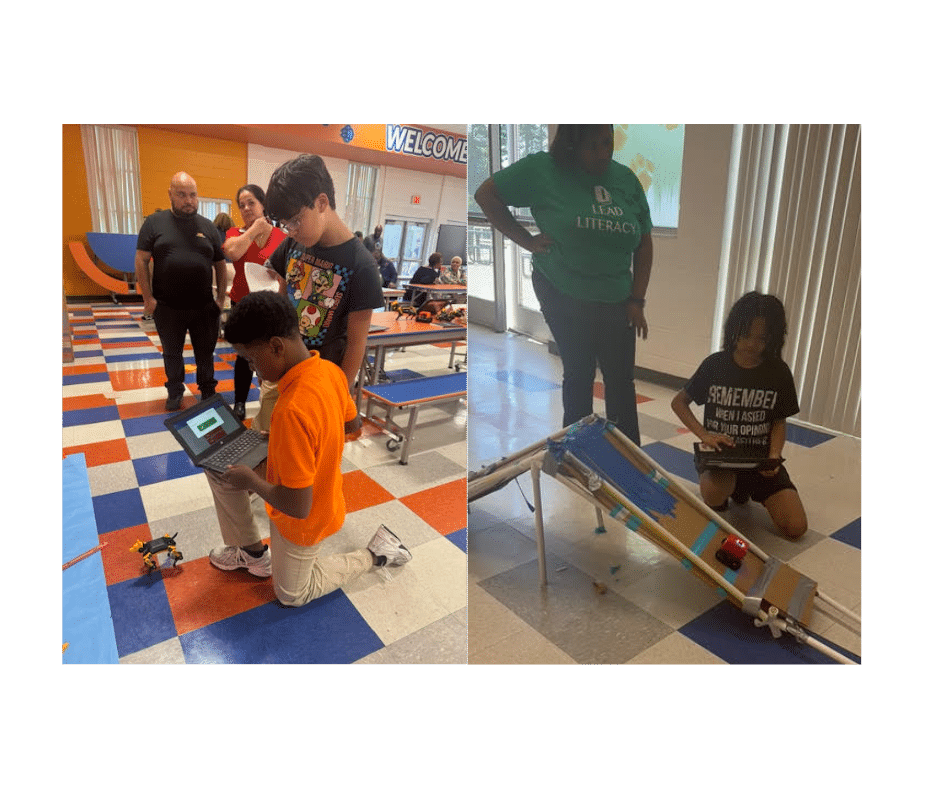
Early exposure matters. Districts increasingly recognize that robotics and drone programs at younger grade levels support foundational skills like problem solving, collaboration, and computational thinking.
Waiting until high school is no longer the default.
Myth 3: “If it is not labeled CTE, it will not qualify”
While Career and Technical Education funding is a major source, it is not the only one.
STEM programs are frequently funded through:
- General curriculum adoption funds
- Perkins V when aligned to career pathways
- Title IV Part A when tied to well rounded education and technology use
- Technology integration budgets
- Professional development allocations
Myth 4: “Hardware is the hard part to fund”
Many teams focus entirely on the cost of equipment. In reality, STEM curriculum and support are often easier to justify and fund.
Districts are more comfortable approving:
- Standards-aligned curriculum
- Structured lesson plans and assessments
- Platforms that reduce prep time and classroom friction
- Teacher training and professional development
When hardware is paired with curriculum and support, it shifts from a purchase to an instructional investment. That framing matters during approval conversations.
Myth 5: “We need to decide everything before we apply”
Funding decisions do not require a fully built, multi-year plan upfront.
In fact, flexible programs are often easier to approve because they allow schools to:
- Start with one grade band
- Adapt pacing to schedules
- Grow pathways gradually
- Respond to student interest and staffing realities
Districts value STEM programs that can evolve without locking them into rigid structures.
Moving Forward Without the Myths
Funding does not have to be the reason STEM programs stall.
When educators understand where flexibility exists, how programs can start small, and how curriculum and support fit into funding conversations, it becomes much easier to move forward.
STEM growth is rarely about finding a single perfect funding source. It is about stacking smart decisions over time.
If you are exploring how robotics, drones, AI, cybersecurity, or esports fit into your school’s goals, LocoRobo supports educators with STEM kits for classrooms, implementation guidance, and funding alignment across grade levels.
Request our funding guide to see how schools align STEM programs with common funding sources and approval pathways.