
Problem-solving is one of the most valuable skills students can develop in school. Whether they pursue careers in healthcare, engineering, manufacturing, business, or education, they will be expected to identify challenges, evaluate possible solutions, test ideas, and adapt when things do not go as planned.
Traditional classroom instruction teaches many important concepts, but students often develop stronger problem-solving abilities when they actively apply what they learn.
This is one of the biggest advantages of robotics in education.
Instead of memorising information or following a single correct answer, students work through authentic engineering challenges that require collaboration, creativity, and persistence. Every robot they build, code, and improve becomes an opportunity to think critically and solve real problems.
What Is Problem-Solving in Robotics?
Problem-solving in robotics is much more than fixing a robot that is working.
Students must:
- Understand a challenge
- Break complex problems into smaller tasks
- Design a solution
- Build and test prototypes
- Debug hardware and software
- Analyse results
- Improve their design through iteration
Rather than completing one assignment and moving on, robotics encourages continuous improvement.
This mirrors the engineering design process used by professionals across countless industries.
Students Learn to Break Down Complex Problems
Large challenges can feel overwhelming.
Robotics teaches students to divide a project into manageable pieces.
For example, instead of asking:
“How do we build a robot that completes this course?”
Students begin asking:
- How will the robot move?
- How can we avoid obstacles?
- Which sensors should we use?
- What happens if lighting conditions change?
- How should the code respond?
Breaking large problems into smaller parts makes complex challenges easier to solve while strengthening logical thinking.
Debugging Builds Critical Thinking
Few robotics projects work the first time perfectly.
A robot may:
- Turn too far
- Stop unexpectedly
- Read incorrect sensor values
- Miss an object
- Move too slowly
- Ignore commands
Instead of becoming frustrated, students learn to investigate.
They begin asking questions like:
- Is the code correct?
- Is the sensor positioned properly?
- Does the robot need recalibration?
- Is the battery affecting performance?
- Is there another solution?
This process develops analytical thinking while helping students become comfortable with trial and error.
Students quickly realise that mistakes are not failures. They are valuable information that leads to better solutions.
Robotics Encourages Creative Thinking
Many classroom assignments have one correct answer.
Robotics often has dozens.
One team may solve a navigation challenge using sensors.
Another may redesign the chassis.
A third team may improve the programming logic.
Each solution can achieve the same goal through a different approach.
Students learn there is rarely only one way to solve a problem, encouraging creativity alongside technical skills.
Students Learn Through Hands-On Experimentation
Reading about engineering concepts is helpful.
Applying those concepts makes them meaningful.
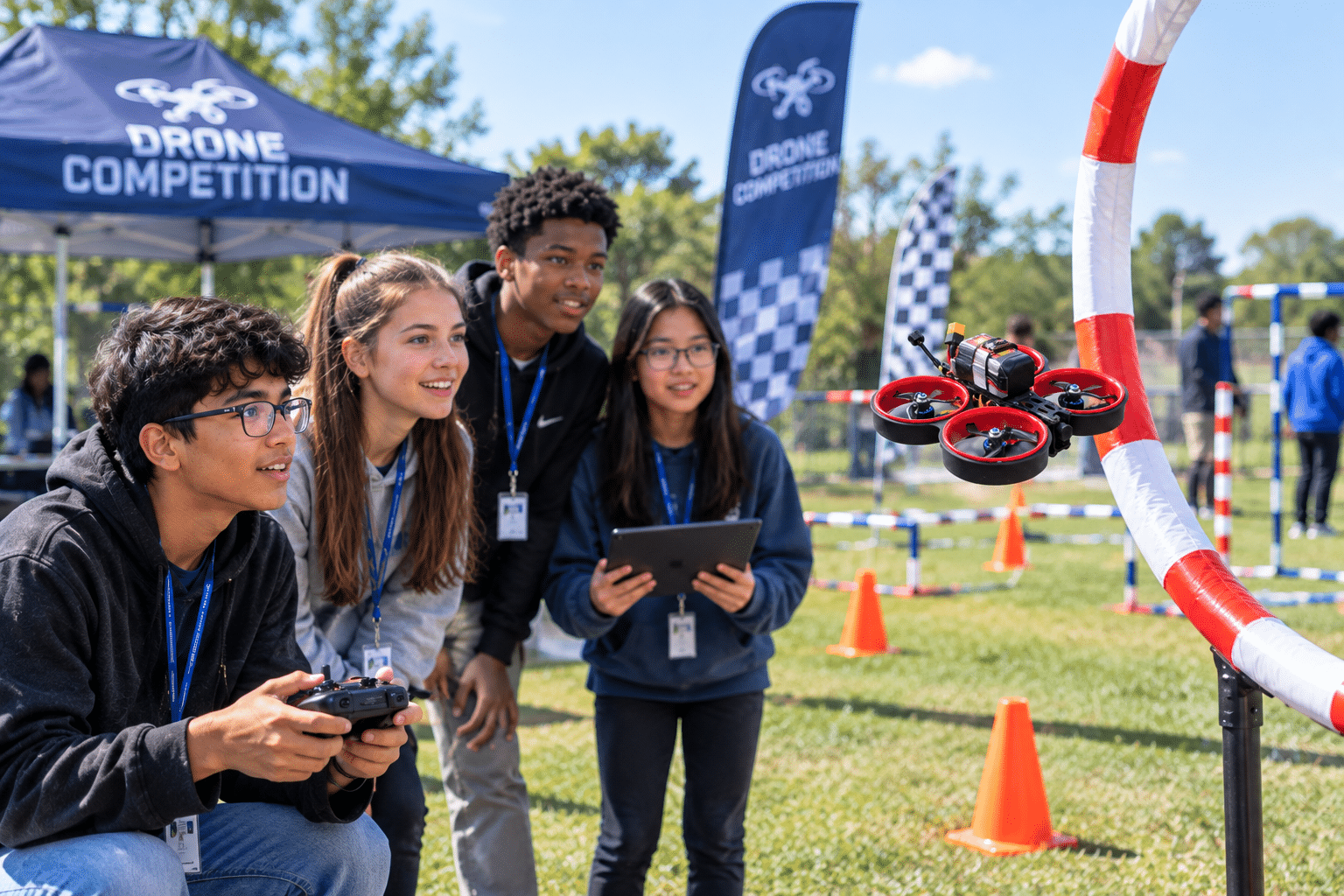
Robotics in the classroom gives students opportunities to experiment by:
- Changing code
- Testing different wheel configurations
- Adjusting motor speeds
- Modifying robot designs
- Comparing sensor performance
Every experiment provides immediate feedback.
Students see the impact of their decisions, helping them understand cause-and-effect relationships more effectively than lectures alone.
Robotics Builds Persistence
Problem-solving requires persistence.
Students quickly discover that successful STEM robotics projects involve repeated testing and refinement.
A typical robotics lesson might involve:
Build.
Test.
Observe.
Improve.
Repeat.
Over time, students become more comfortable facing challenges instead of avoiding them.
They begin expecting setbacks as part of the learning process rather than viewing them as obstacles.
This mindset benefits students in every academic subject and future career.
Students Strengthen Collaboration Skills
STEM learning with robotics are often completed in teams.
Students naturally divide responsibilities such as:
- Building
- Programming
- Wiring
- Testing
- Documentation
- Presentations
Working together teaches students how to:
- Share ideas
- Resolve disagreements
- Listen to different perspectives
- Support teammates
- Make group decisions
Real-world engineering projects rely on collaboration, making these experiences highly valuable.
Robotics Connects Mathematics and Science to Real Problems
Students often ask:
“When will I ever use this?”
Robotics provides immediate answers.
Students apply mathematics to:
- Measure distances
- Estimate angles
- Calculate speed
- Optimise movement
Science concepts become practical through:
- Force
- Friction
- Motion
- Energy
- Electricity
- Sensors
Instead of learning abstract formulas, students see how classroom knowledge solves real engineering challenges.
Coding Becomes Purposeful
Programming a robot feels meaningful when students immediately see their code controlling a physical robot.
Rather than writing code on a screen alone, students watch robots:
- Follow lines
- Pick up objects
- Avoid obstacles
- Navigate maps
- Respond to sensor input
When something does not work, students analyse the code, identify errors, and improve their programs.
This continuous feedback loop strengthens computational thinking and logical reasoning.
Robotics Prepares Students for Real-World Careers
Many of today’s fastest-growing careers require employees who can think critically, solve complex problems, and work with technology. Robotics gives students early exposure to the same tools, processes, and ways of thinking used in industries such as manufacturing, engineering, logistics, healthcare, aerospace, and automation.
As students build, program, test, and improve robots, they develop technical skills alongside workplace skills like communication, collaboration, adaptability, and persistence. These experiences help students understand how classroom learning connects to real careers while building confidence in their ability to solve practical challenges.
Why Schools Are Investing in Robotics Education
Schools are increasingly adopting robotics in stem education because it develops multiple skills simultaneously.
Students strengthen:
- Problem-solving
- Critical thinking
- Computational thinking
- Engineering design
- Communication
- Collaboration
- Coding
- Creativity
- Adaptability
- Resilience
Rather than teaching these skills separately, robotics integrates them into engaging, hands-on learning experiences that align with STEM and CTE goals.
Prepare Students to Solve Tomorrow’s Challenges with LocoRobo
Developing strong problem-solving skills starts with meaningful, hands-on learning.
LocoRobo’s STEM education robotics ecosystem helps schools bring engineering, coding, artificial intelligence, and computational thinking into the classroom through standards-aligned robotics curriculum, classroom-ready robotics platforms, and ongoing educator support.
Whether you are introducing elementary students to robotics or preparing high school learners for advanced STEM and CTE pathways, LocoRobo provides everything educators need to build engaging, future-ready robotics programs.