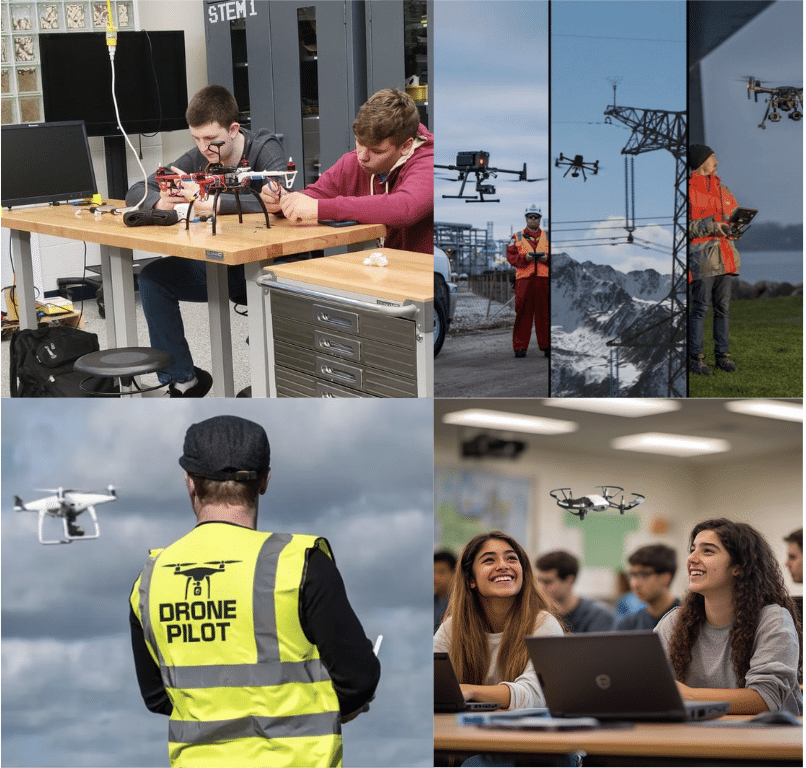

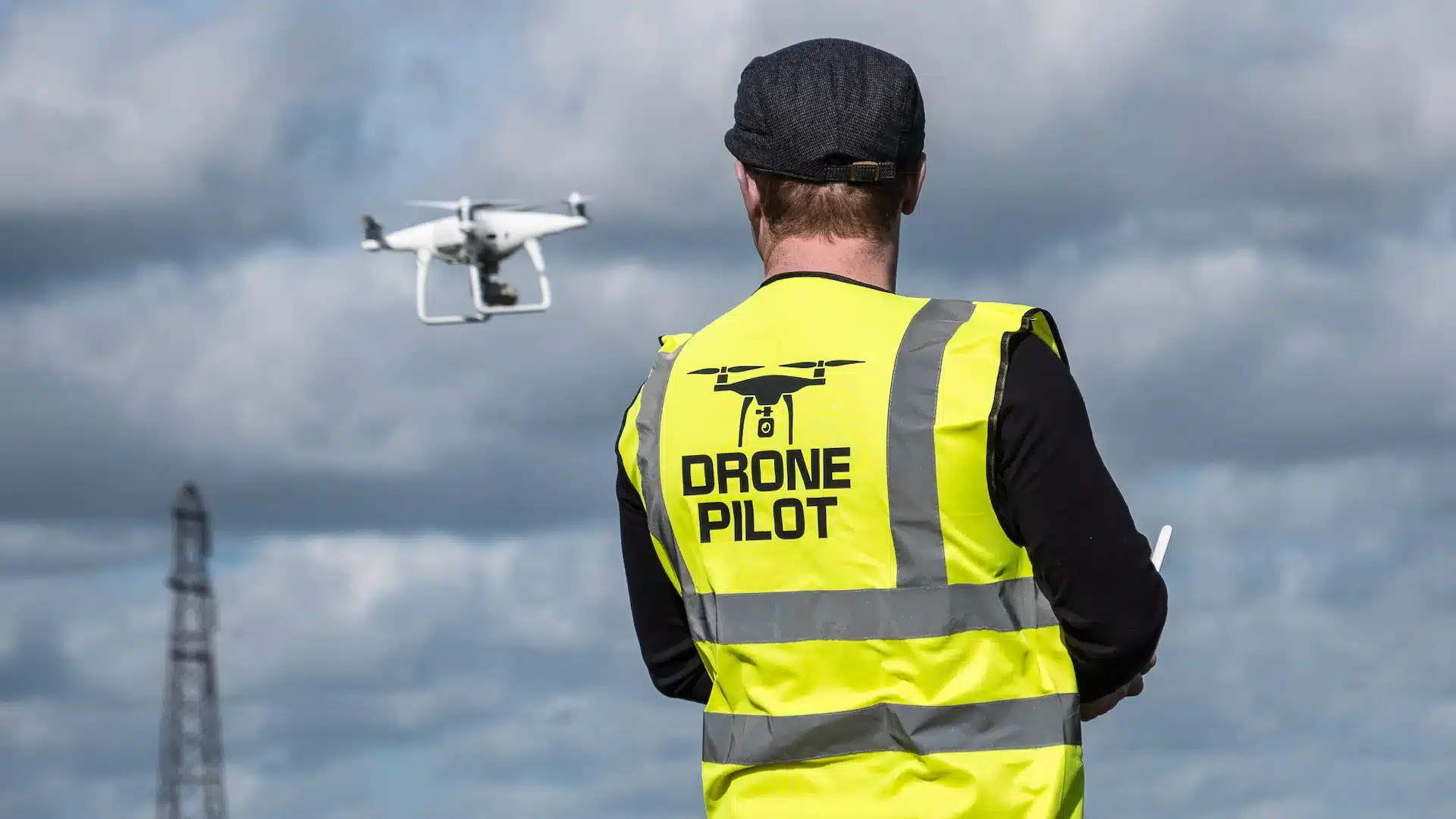
Drones are becoming valuable tools across industries such as construction, transportation, agriculture, surveying, infrastructure inspection, filmmaking, and public safety. As their use grows, schools have an opportunity to introduce students to more than drone flight. They can help students understand the regulations, safety practices, and aviation knowledge behind professional drone operations.
For high schools and CTE programs, FAA drone education can provide a practical connection between classroom learning and career preparation.
But where should a school begin?
This starter guide explains the fundamentals of FAA drone education, what students should learn, how FAA Part 107 certification fits into a drone program, and what schools should consider when building a pathway.
What Is FAA Drone Education?
FAA drone education teaches students how to operate drones safely and understand the rules governing drone operations in the United States.
While introductory drone programs may focus primarily on piloting, coding, or STEM activities, FAA-focused education introduces students to the aviation knowledge required for responsible drone operations.
Students can explore topics such as:
- FAA drone regulations
- Airspace classifications
- Flight restrictions
- Preflight planning
- Weather and aviation conditions
- Emergency procedures
- Safe operating practices
- Pilot responsibilities
- Risk management
For older students, these concepts can also provide a foundation for preparing for the FAA Part 107 Remote Pilot Certificate.
What Is FAA Part 107?
FAA Part 107 is the federal rule that governs most commercial small unmanned aircraft system (sUAS) operations in the United States.
A person who wants to fly a drone under Part 107 must meet FAA requirements, including passing the FAA’s initial aeronautical knowledge test to earn a Remote Pilot Certificate.
For students interested in professional drone applications, learning Part 107 concepts can introduce them to the expectations and responsibilities associated with operating drones beyond recreational flight.
Students under age 16 can still begin learning the material and developing their flight knowledge, but an individual must be at least 16 years old to qualify for a Remote Pilot Certificate.
What Do Students Need to Learn?
FAA drone education involves much more than memorizing regulations for an exam. A strong program helps students understand why those regulations exist and how they affect real flight decisions.
1. FAA Regulations
Students should understand the basic rules that apply to small unmanned aircraft operations.
This includes topics such as pilot responsibilities, registration requirements, operating limitations, and rules for conducting flights safely and legally.
Understanding regulations helps students recognize that professional drone operation requires accountability and preparation.
2. Airspace
Airspace is one of the most important concepts for aspiring drone pilots.
Students learn that they cannot simply launch a drone anywhere. Different types of airspace have different requirements, restrictions, and authorization procedures.
FAA education can introduce students to:
- Controlled and uncontrolled airspace
- Airport considerations
- Flight restrictions
- Airspace classifications
- Aeronautical charts
- Airspace authorization
These concepts help students develop the habit of evaluating a location before every flight.
3. Weather
Weather can significantly affect drone performance and flight safety.
Students can learn how factors such as wind, visibility, temperature, clouds, and atmospheric conditions influence flight decisions.
Instead of simply asking, “Can the drone fly?”, students begin asking, “Is it safe and appropriate to fly under these conditions?”
That distinction is an important part of developing professional aviation judgment.
4. Preflight Planning
Professional drone operations begin before the drone leaves the ground.
Students should learn how to prepare for a flight by checking:
- Flight location
- Weather
- Airspace
- Drone condition
- Battery levels
- Potential obstacles
- People and activity nearby
- Mission requirements
Preflight planning can also reinforce organization, risk assessment, and decision-making skills.
5. Emergency Procedures
Even a carefully planned flight can encounter unexpected situations.
Students should understand how pilots respond to potential problems such as communication loss, unexpected weather, low battery levels, equipment issues, or changes in the flight environment.
Practicing how to think through these scenarios helps students understand the responsibility involved in operating an aircraft.
Why Teach FAA Concepts in High School?
FAA drone education can connect several areas of learning within one program.
Students can apply concepts from:
- Physics
- Computer Science
- Engineering
- Geography
- Mathematics
- Meteorology
- Aviation
- Career and Technical Education
For example, a lesson about weather can become a flight-planning exercise. A lesson about maps can introduce airspace charts. A programming activity can be paired with discussions about where an autonomous flight can legally and safely take place.
This gives students opportunities to connect technical knowledge with practical decision-making.
From Drone Piloting to Career Preparation
One of the biggest benefits of FAA-focused drone education is the connection to workforce skills.
Professional drone operators may support work in fields such as:
- Transportation
- Construction
- Surveying and mapping
- Infrastructure inspection
- Agriculture
- Environmental monitoring
- Real estate
- Media production
- Utilities
- Logistics
Students can begin to see drones as professional tools rather than simply devices they learn to fly.
For schools building CTE pathways, this creates an opportunity to connect aviation knowledge, technical skills, and recognized credentials within the same learning experience.
Building an FAA-Ready Drone Program with LocoRobo
LocoRobo helps schools connect hands-on drone education with aviation and career preparation.
For high school students ready to take the next step, LocoRobo offers an FAA-Certified Remote Pilot (Part 107) pathway designed to prepare them to safely and legally operate drones under FAA regulations.
Students develop knowledge across key Part 107 areas, including:
- Aeronautical knowledge
- Weather impacts
- Airspace operations
- FAA regulations
- Flight safety
- Emergency procedures
The program helps students build proficiency in drone operations while preparing them to understand and comply with Part 107 requirements.
For students exploring careers in transportation and other drone-enabled industries, FAA certification can provide a meaningful credential alongside their hands-on technical experience.
Schools can use the pathway to move students from learning how drones work to understanding what it takes to operate them safely and professionally.
Explore LocoRobo’s FAA Part 107 certification pathway and learn how it can fit into your school’s drone, STEM, aviation, or CTE program.