
Cybersecurity is becoming an increasingly important part of CTE. As schools introduce cybersecurity programs, educators face a practical question:
Which certification should students start with?
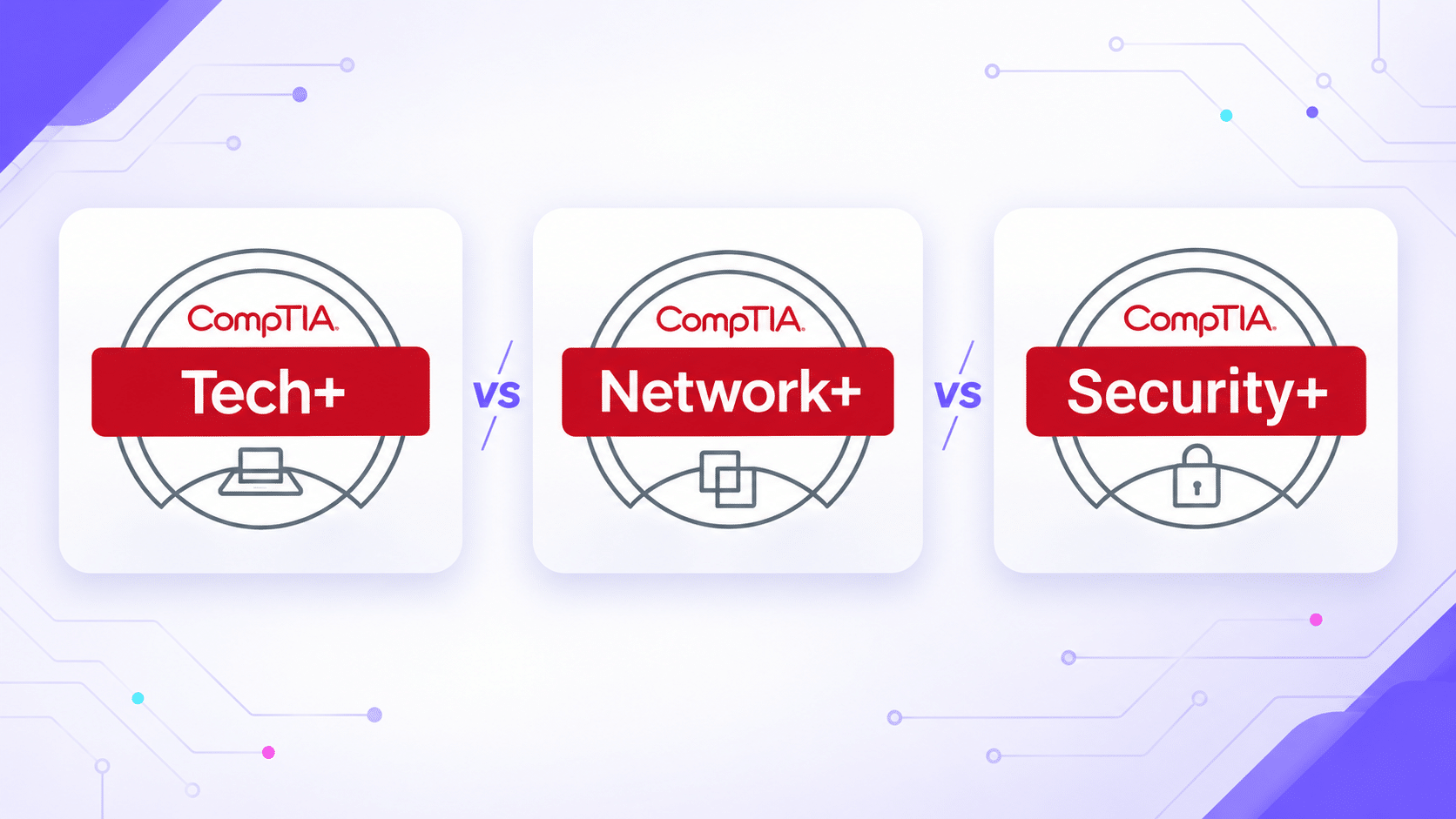
CompTIA Tech+, Network+, and Security+ are three industry-recognized certifications that help students develop skills in information technology, networking, and cybersecurity.
But they are not interchangeable.
Each certification focuses on different skills and assumes a different level of technical knowledge. Choosing the right starting point can help students build a stronger foundation before moving into more advanced cybersecurity education concepts.
For schools planning a cybersecurity pathway, understanding these differences is an important first step.
Understanding the Three CompTIA Certifications
1. CompTIA Tech+: Building the IT Foundation
Before students can secure a computer system, they need to understand how that system works.
CompTIA Tech+ introduces students to essential technology concepts, making it a useful starting point for those with limited IT experience.
Students explore:
- Computer hardware and software
- Basic networking concepts
- Operating systems and applications
- Troubleshooting and problem-solving
- Fundamental cybersecurity practices
- Data management and introductory programming concepts
For example, students might learn how different computer components interact, troubleshoot a connectivity issue, or identify common security risks.
Best for: High school students beginning their IT education, particularly those without prior technical experience.
Why start here? Tech+ helps students develop the technical vocabulary and foundational knowledge they will need when studying networking and cybersecurity.
2. CompTIA Network+: Understanding How Systems Connect
Once students understand individual computer systems, the next step is learning how those systems communicate.
CompTIA Network+ focuses on network infrastructure, connectivity, configuration, troubleshooting, and security.
Students explore:
- IP addressing and network protocols
- Network architecture and infrastructure
- Cloud and virtual networking concepts
- Routers, switches, and wireless networks
- Network monitoring and troubleshooting
- Network security and common vulnerabilities
Consider a school network connecting hundreds of computers, devices, and wireless access points.
Students studying Network+ learn how these connections work, what happens when communication fails, and how administrators maintain secure and reliable networks.
Best for: Students who already understand basic IT concepts and are ready to explore network administration and infrastructure.
Why study it? Networking knowledge is essential for understanding how cyberattacks spread, how systems communicate, and where security vulnerabilities can emerge.
3. CompTIA Security+: Learning to Protect Digital Systems
Understanding technology and networks creates the foundation for studying cybersecurity in greater depth.
CompTIA Security+ focuses on protecting systems, identifying threats, managing security risks, and responding to incidents.
Students explore:
- Cyber threats, attacks, and vulnerabilities
- Cryptography and encryption
- Security architecture and controls
- Risk management and security policies
- Identity and access management
- Security monitoring and incident response
For example, students might investigate a simulated security incident, identify vulnerabilities in a network, or evaluate security measures designed to protect sensitive information.
These activities help connect technical knowledge with the responsibilities of cybersecurity professionals.
Best for: Students with a strong understanding of IT and networking who are ready for more advanced cybersecurity coursework.
Why study it? Security+ introduces the knowledge used in cybersecurity operations, risk assessment, and defensive security practices.
Tech+ vs. Network+ vs. Security+: A Quick Comparison
| Certification | Primary focus | Recommended student level |
| CompTIA Tech+ | IT fundamentals, hardware, software, basic security | Beginners |
| CompTIA Network+ | Network infrastructure, protocols, connectivity, troubleshooting | Intermediate |
| CompTIA Security+ | Threats, vulnerabilities, risk management, security operations | Advanced |
These are recommended learning levels, not formal prerequisites. CompTIA does not require students to earn Tech+ before Network+ or Network+ before Security+.
However, for students new to technology, progressing from foundational IT concepts to networking and then cybersecurity can provide a more structured learning experience.
Should Every Student Follow the Same Certification Path?
Not necessarily.
A student who has already built computers, configured networks, or completed introductory IT coursework may be ready to begin with Network+.
Another student encountering computer hardware and networking concepts for the first time may benefit from Tech+.
Educators should consider three factors when selecting a starting point:
- Prior technical knowledge: Can students explain basic computer components, operating systems, and network connections?
- Student goals: Are students exploring cybersecurity careers, preparing for advanced technical coursework, or working toward industry certifications?
- Program duration: Is cybersecurity offered as a one-semester elective, a one-year course, or a multi-year CTE pathway?
The objective is not simply to move students through certifications as quickly as possible. It is to ensure they understand and can apply the concepts behind each credential.
What If Your School Only Has One Year?
Not every school has the schedule, staffing, or resources to introduce a three-year certification pathway.
For schools launching a shorter cybersecurity program, the Certiport IT Specialist – Cybersecurity certification offers another option.
This entry-level credential focuses on cybersecurity fundamentals, including threat awareness, network security basics, access control, and device protection.
It can be a practical option for students exploring cybersecurity in high school for the first time.
Students can develop foundational security knowledge, work toward an industry-recognized credential, and prepare for more advanced cybersecurity education.
Building a Cybersecurity Pathway With LocoRobo
Choosing the right certification is only part of building a successful cybersecurity program.
Schools also need cybersecurity curriculum, hands-on learning opportunities, certification preparation, and educator support.
LocoRobo helps schools bring these elements together through structured cybersecurity pathways designed for K–12 STEM and CTE education.
Our solutions include:
- Multi-Year CompTIA Pathway: Tech+, Network+, and Security+ preparation, supported by hands-on labs covering IT fundamentals, networking, and cybersecurity.
- 1-Year Certiport Pathway: A focused program preparing students for the Certiport IT Specialist – Cybersecurity certification.
- Foundational Cybersecurity Courses: Intro to Cybersecurity & Digital Safety and Foundations of Cybersecurity introduce essential security concepts before advanced coursework.
- Flexible Classroom Implementation: Curriculum can support electives, capstones, or multi-year CTE programs, with educator guidance and ongoing support.
Whether your school is introducing cybersecurity for the first time or expanding an established IT pathway, LocoRobo works with educators to align courses, certifications, and hands-on learning with their program goals.
Explore Cybersecurity curriculum and certification options for your students.