
One robot can complete a task.
A fleet of robots creates a much bigger challenge.
As autonomous mobile robots, delivery systems, warehouse robots, inspection robots, and other robotic platforms are deployed in larger numbers, organizations need people who can coordinate how those machines work together.
Which robot should take the next task? What happens when a robot loses connectivity, needs to recharge, or encounters an obstacle? How should multiple robots move through the same environment without creating congestion? How do operators know whether an entire fleet is performing efficiently?
These questions are creating an increasingly important area within robotics: robot fleet management.
And around it, a range of technical careers is developing that combines robotics, software, data, networking, operations, and automation.
What Is Robot Fleet Management?
Robot fleet management is the coordination, monitoring, and optimization of multiple robots operating within the same system.
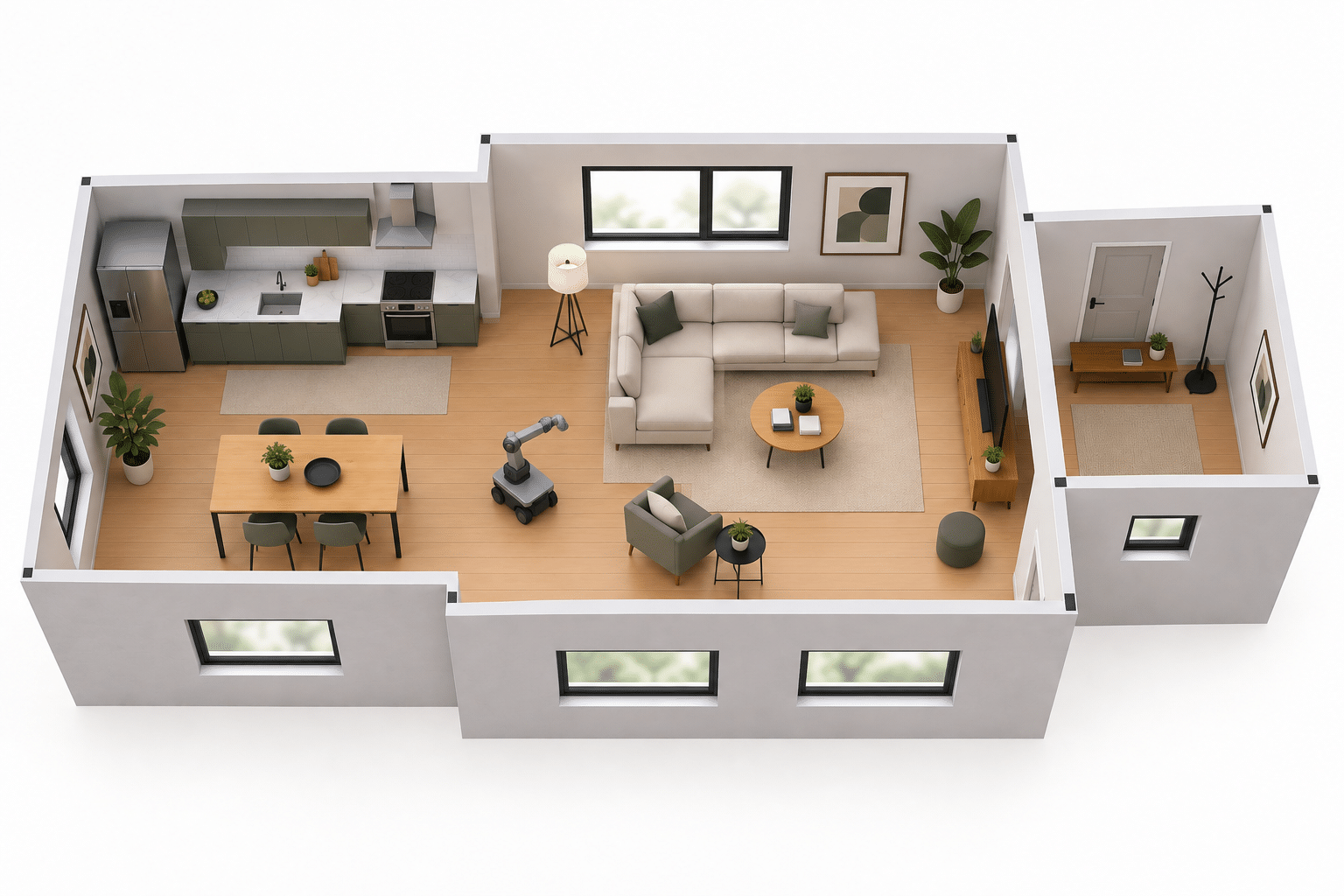
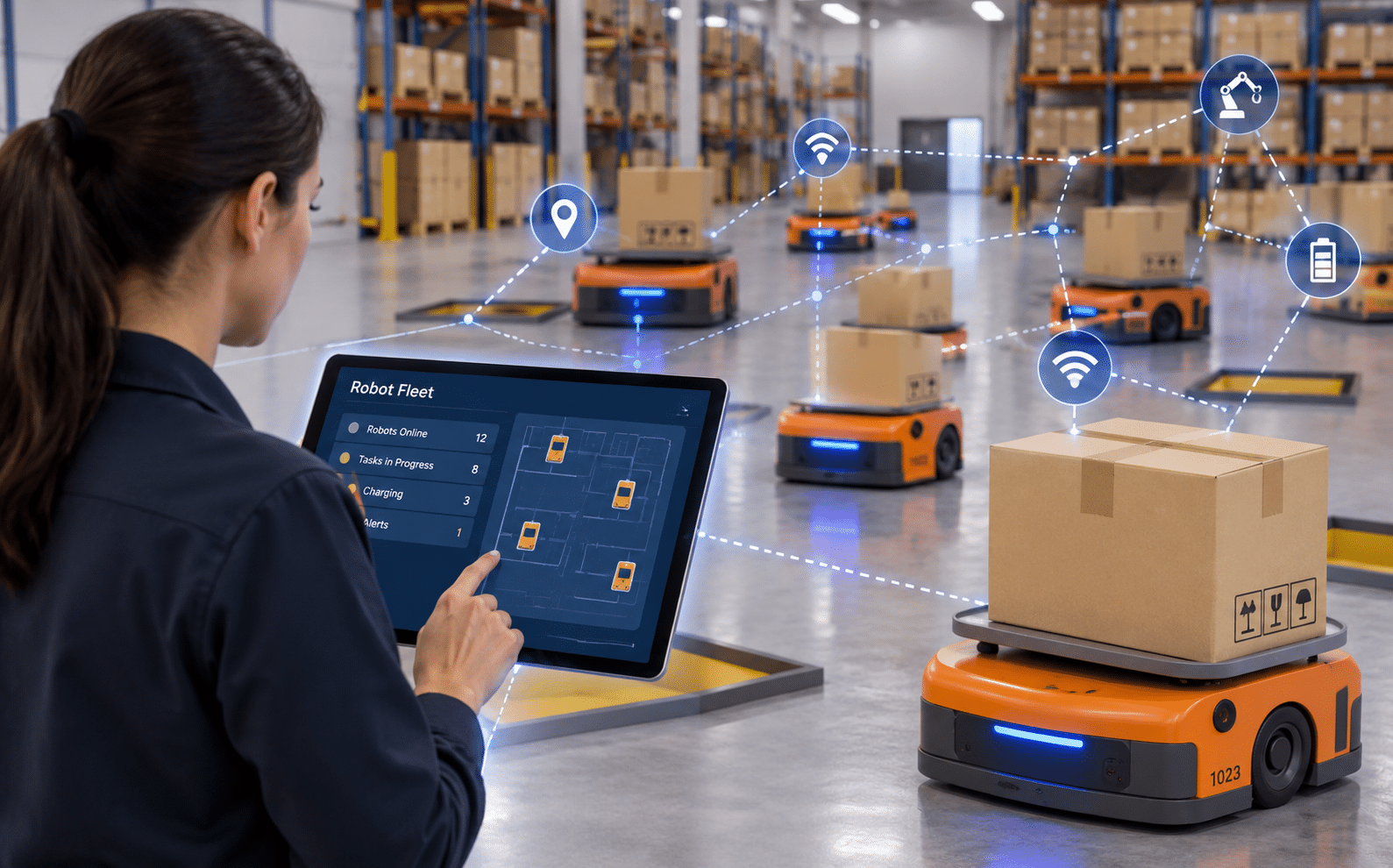
Consider a warehouse with dozens or even hundreds of autonomous mobile robots moving products between storage locations and workstations.
The robots cannot simply operate independently.
A fleet management system may need to determine:
- Which robot receives each task
- How robots share pathways and intersections
- Which route each robot should take
- When robots should charge
- How traffic or congestion should be managed
- Whether robots are operating normally
- What happens when a robot encounters a problem
- How work should be redistributed when conditions change
Commercial fleet-management platforms already coordinate tasks, charging, traffic, and workflows for autonomous mobile robots. Current robotics engineering roles also specifically focus on scheduling, routing, task allocation, resource allocation, and multi-robot coordination.
That means working with robot fleets requires much more than knowing how to build or program an individual robot.
Why Robot Fleets Are Becoming More Important
The number of robots working outside traditional isolated industrial cells continues to grow.
According to the International Federation of Robotics, almost 200,000 professional service robots were sold in 2024, a 9% increase from the previous year. Transportation and logistics represented the largest application category, with 102,900 units sold. Robot-as-a-Service fleets also grew substantially during the same period.
Warehouses are an obvious example, but fleet-based robotics can extend into manufacturing, construction, hospitals, agriculture, laboratories, inspection, security, and other environments.
As deployments become larger, organizations need people who understand both individual robots and the systems connecting them.
That is where new career opportunities begin to appear.
1. Robot Fleet Management Software Engineer
Some of the most important work happens behind the robots.
Fleet management software engineers develop the systems responsible for coordinating multiple autonomous machines.
Their work can include task allocation, routing, traffic management, scheduling, communication between robots, telemetry, and system monitoring.
For example, current robotics roles at Symbotic involve developing software that orchestrates fleets of autonomous mobile robots inside automated warehouses. The company’s Fleet Controls team works between systems responsible for tasks and inventory and systems responsible for path planning and individual robot control.
This type of career can draw on skills in:
- Python, C++, Java, or other programming languages
- Algorithms
- Robotics
- Path planning
- APIs and distributed systems
- Data structures
- Software engineering
Students learning to program a single robot are working with the foundations of a much larger problem: How do you program many robots to accomplish a shared objective?
2. Robotics Fleet Operator
Not every career around robot fleets involves developing the underlying software.
Organizations also need people who can oversee robotic systems while they are operating.
A fleet operator may monitor robot status, review missions, respond to alerts, identify robots requiring attention, and coordinate with technicians or operations teams when something goes wrong.
Instead of manually controlling every robot, the operator supervises the overall system.
This changes the relationship between people and machines.
The question becomes less about controlling one machine and more about understanding what an automated system is doing and knowing when human intervention is necessary.
3. Robotics Deployment and Integration Specialist
A robot that works in a testing environment still needs to be successfully deployed into a real facility.
Deployment and integration specialists help make that happen.
They may configure robots, map environments, connect robotic systems with existing software, establish operating zones, test workflows, troubleshoot connectivity, and verify that robots can perform reliably within the customer’s environment.
Some current robotics deployment roles involve bringing autonomous material-movement robots directly onto active job sites and taking responsibility for the hardware operating there.
This type of work combines robotics knowledge with practical problem-solving.
4. Multi-Robot Systems Engineer
As fleets become larger, coordinating their behavior becomes an engineering problem of its own.
A multi-robot systems engineer might work on questions such as:
Which robot should receive a high-priority task?
What happens when ten robots need to use the same corridor?
How should the system respond when a route becomes unavailable?
How can hundreds of robots complete tasks without interfering with one another?
Current fleet-management engineering positions specifically address optimization, scheduling, routing, mission dispatching, traffic management, and multi-robot coordination.
These problems connect robotics with computer science, mathematics, optimization, and systems engineering.
5. Robotics Data and Performance Analyst
Every robot can produce information.
A fleet produces much more.
Robots may continuously report location, battery status, task completion, operating time, faults, sensor information, and other telemetry.
Someone has to make sense of that information.
Robotics data and performance work can involve identifying patterns, measuring fleet efficiency, investigating recurring failures, studying downtime, evaluating routes, and finding opportunities to improve system performance.
Students interested in both robotics and data science may eventually find themselves working less on the physical construction of robots and more on understanding what thousands or millions of robot operations reveal.
6. Robotics Maintenance and Field Technician
More robots in operation also means more systems that need to remain operational.
Technicians may diagnose hardware problems, test sensors, replace components, perform preventive maintenance, install software or firmware updates, and return robots to service.
But maintaining an autonomous robot can require knowledge beyond traditional mechanical repair.
A problem might come from a sensor, motor, network connection, software configuration, battery, calibration issue, or interaction between several systems.
Future technicians may therefore need a combination of mechanical, electrical, networking, and programming skills.
7. Robotics Systems Integration Engineer
Robot fleets rarely operate completely on their own.
They may need to communicate with warehouse management systems, cloud platforms, manufacturing systems, inventory databases, sensors, enterprise software, or other automation equipment.
Systems integration engineers help connect these technologies.
Current fleet-management engineering roles include building interfaces between robot software, cloud services, fleet orchestration platforms, and customer systems.
This creates careers at the intersection of robotics, networking, software development, and industrial automation.
The Skills Behind Robot Fleet Careers
The interesting part about robot fleet management is that there is no single skill that defines the field.
A student interested in this area might eventually work with:
Programming: Writing software that controls robots or coordinates tasks.
Networking: Understanding how robots and other systems communicate.
Robotics: Understanding sensors, motors, navigation, localization, and autonomous behavior.
Data: Using operational information to identify problems and improve performance.
AI and autonomy: Developing systems that help robots perceive environments, make decisions, and respond to changing conditions.
Systems thinking: Understanding how hardware, software, people, and processes interact within a larger system.
Troubleshooting: Determining whether a problem originates in code, hardware, sensors, communications, configuration, or the operating environment.
That combination makes robotics an increasingly interdisciplinary career field.
From Programming One Robot to Managing Many
Students do not need a warehouse filled with autonomous robots to begin exploring these ideas.
Many of the concepts behind robot fleet management start with much smaller robotics projects.
A student programs a robot to navigate around an obstacle.
Then two robots need to share the same space.
One robot receives a task.
Then several robots need to decide which should complete it.
A robot follows a predetermined route.
Then the route becomes blocked and the robot needs another option.
These classroom problems introduce ideas that can later appear in autonomous navigation, logistics automation, multi-agent systems, fleet orchestration, and industrial robotics.
The scale changes.
The underlying thinking does not.
Preparing Students for a Robotics Industry Built Around Systems
The growth of robotics is creating career opportunities that extend well beyond designing or assembling robots.
The International Federation of Robotics reported 542,000 industrial robot installations worldwide in 2024, while professional service robots continued expanding across logistics and other applications.
As organizations operate larger and more complex robotic systems, they will need people who understand how robots move, collect data, communicate, make decisions, and work together.
For schools, that creates an opportunity to introduce robotics as more than a single machine completing a programmed task.
Students can begin thinking about the larger system around the robot.
Explore Robotics Education with LocoRobo
Bringing robotics in the classroom gives students a practical way to build skills in programming, sensing, autonomous navigation, AI, and system integration.
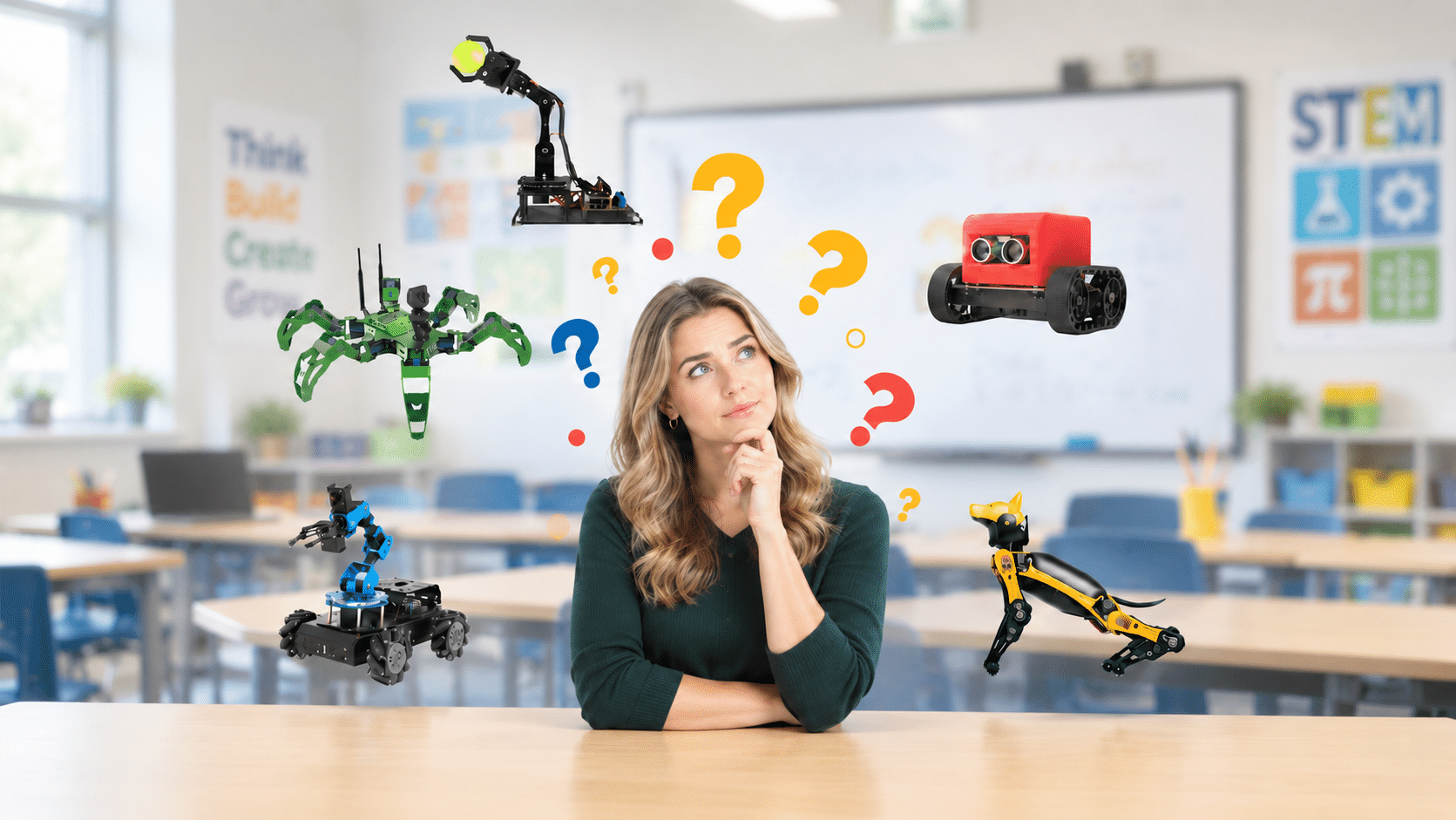
LocoRobo provides STEM robot kit options that support different grade levels, learning goals, and stages of a school’s K12 robotics program. Students can begin with foundational programming and mobile or legged robotics, then progress toward more advanced concepts involving robotic automation, LiDAR technology, SLAM, AI vision, autonomous navigation, and mobile manipulation.
With platforms including LocoXtreme, LocoScout, LocoArm, LocoHex, LocoTerra, and LocoRover, schools can build robotics STEM experiences that connect classroom learning with technologies used across autonomous systems and robotics careers.
As robotics careers expand from programming individual machines to coordinating complex robotic systems, students can benefit from understanding both how a robot works and how it operates as part of a larger system.