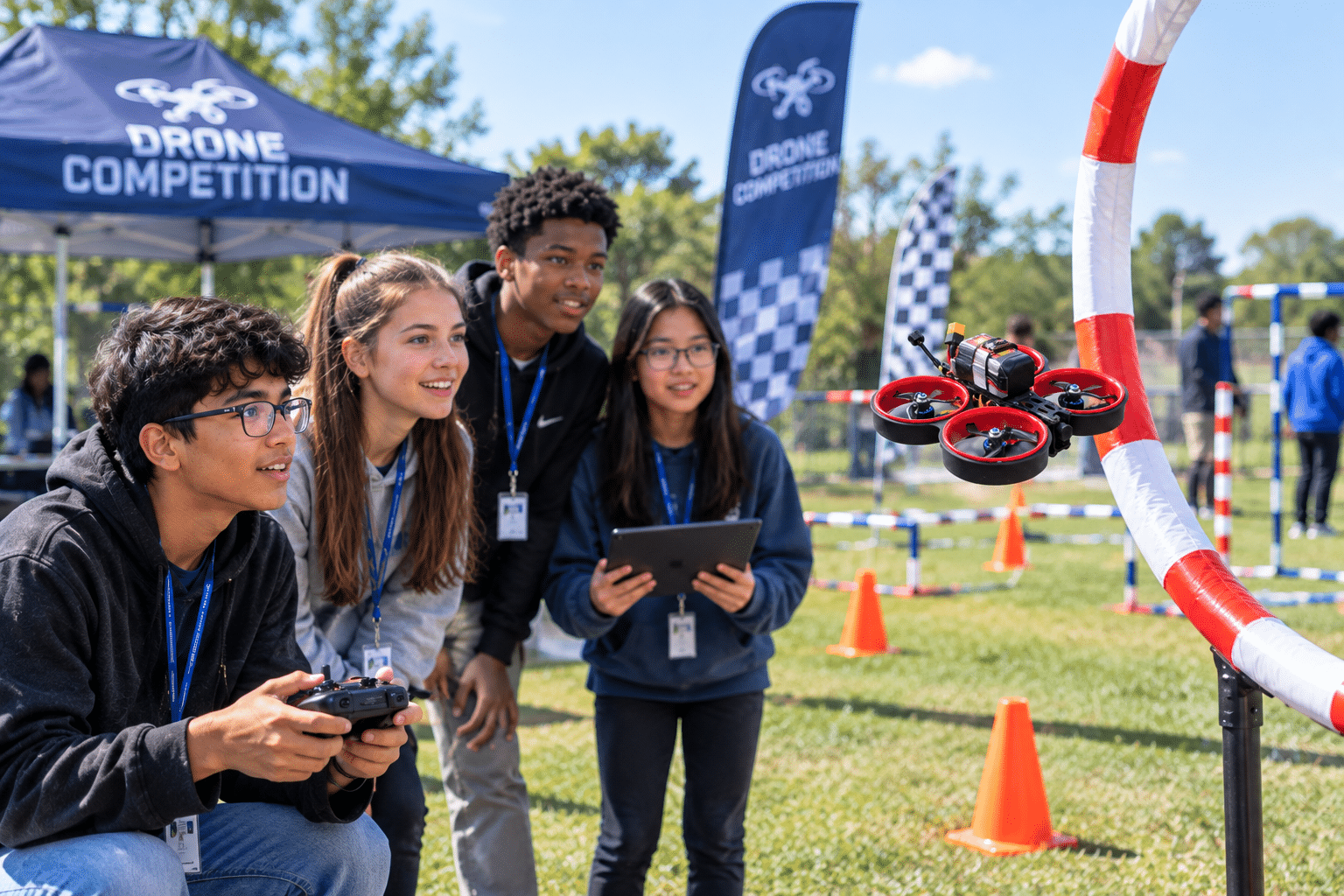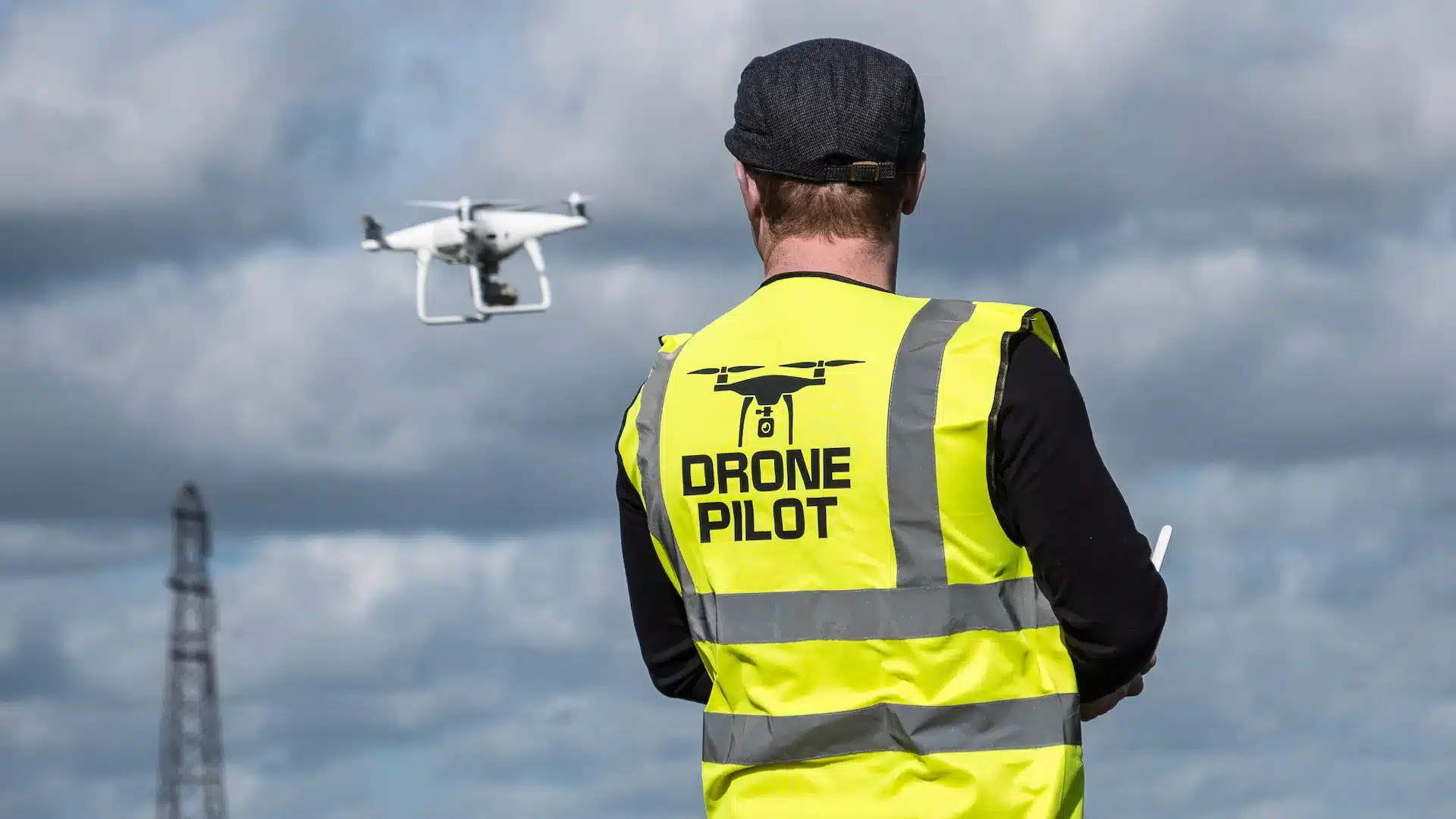

Robotics education has become one of the fastest-growing areas of STEM learning in K-12 schools. As robotics continues to reshape industries such as manufacturing, logistics, healthcare, agriculture, and aerospace, schools are recognizing the importance of helping students understand how technology works and how to build, program, and improve it.
Unlike traditional computer science lessons that focus primarily on coding, K-12 robotics combines programming with engineering, electronics, design, mathematics, and problem-solving through hands-on experiences. Students see the direct impact of the code they write as robots move, complete challenges, and solve real-world problems.
For educators looking to launch or expand a robotics program, understanding what robotics education includes and why it matters is the first step.
What Is Robotics Education?
Robotics education is the process of teaching students how robots are designed, built, programmed, and operated.
Students learn by working with physical robots rather than only writing code on a screen. They explore how hardware and software work together while completing increasingly complex engineering challenges.
A comprehensive robotics program typically introduces students to:
- Programming fundamentals
- Basic engineering concepts
- Sensors and actuators
- Electronics
- Computational thinking
- Mechanical design
- Artificial intelligence concepts
- Data collection and analysis
- Testing and iterative design
The goal is to teach students how to code a robot and develop the critical thinking, collaboration, creativity, and technical skills they will use throughout their education and careers.
Why Robotics Education Matters
Technology careers continue to expand across nearly every industry.
Today’s engineers, technicians, software developers, automation specialists, healthcare professionals, and data scientists all work with intelligent systems in some form. Even careers outside traditional STEM fields increasingly require familiarity with automation, AI, and digital tools.
Robotics in the classroom prepares students by helping them:
- Think critically when solving problems
- Collaborate on engineering projects
- Break large challenges into smaller steps
- Learn through experimentation
- Build resilience through trial and error
- Apply classroom concepts to real-world situations
Perhaps most importantly, robotics makes learning active.
Instead of memorizing concepts, students immediately apply them by building, testing, debugging, and improving their designs.
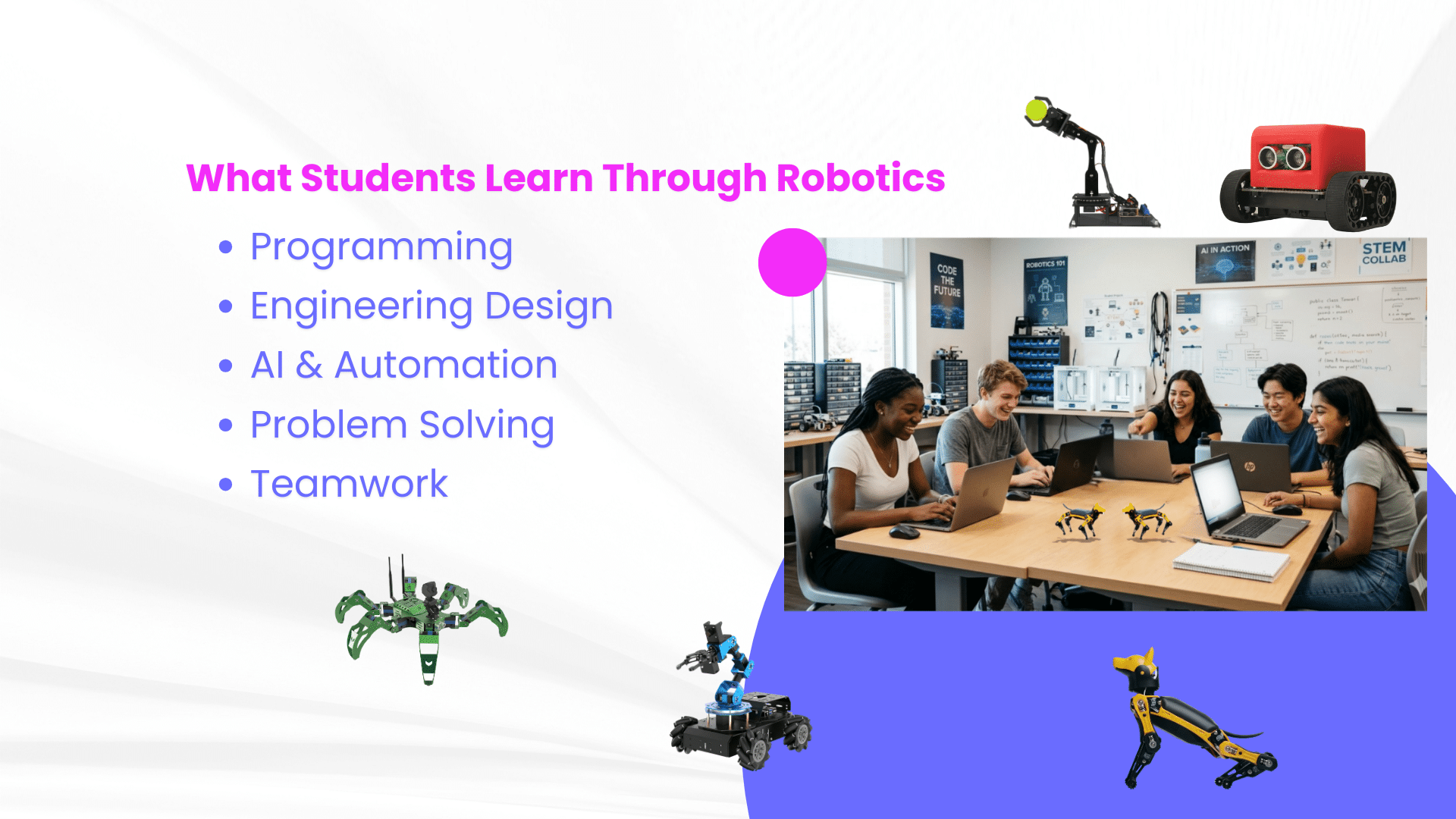
What Students Learn in Robotics Education
Robotics is interdisciplinary by nature, bringing together concepts from multiple subjects into meaningful projects.
Programming
Students learn programming a robot through visual block coding before progressing to text-based languages such as Python, Java, or C++.
They explore:
- Variables
- Loops
- Functions
- Conditional statements
- Debugging
- Algorithms
Because students immediately see their code controlling a physical robot, programming becomes much more engaging than writing code that only produces text output.
Engineering Design
Students learn how engineers approach problems.
Projects encourage them to:
- Define problems
- Brainstorm solutions
- Prototype designs
- Test ideas
- Evaluate results
- Improve performance
This engineering design cycle mirrors the process used by professional engineers across industries.
Electronics
Students gain an understanding of hardware components, including:
- Motors
- LEDs
- Sensors
- Controllers
- Batteries
- Communication systems
These concepts help students understand how software interacts with physical devices.
Mathematics
Robotics naturally reinforces mathematics through activities involving:
- Measurement
- Angles
- Speed
- Distance
- Geometry
- Ratios
- Coordinate systems
Students experience math as a practical tool rather than an isolated subject.
Science
Robotics projects connect directly to scientific principles, including:
- Motion
- Forces
- Electricity
- Energy
- Magnetism
- Environmental sensing
These hands-on applications strengthen classroom science instruction.
Robotics Across Grade Levels
One of the biggest advantages of robotics education is that it can be introduced at virtually every grade level.
Elementary School
Elementary students focus on exploration and creativity.
Activities typically include:
- Block coding
- Sequencing
- Problem-solving games
- Team challenges
The emphasis is on building confidence while introducing computational thinking.
Middle School
Middle school robotics expands into more structured engineering concepts.
Students begin learning:
- Sensors
- Autonomous behavior
- Intermediate programming
- Mechanical systems
- Design challenges
- Robotics competitions
This stage builds the technical foundation for advanced STEM coursework.
High School
High school robotics prepares students for college and careers.
Students explore:
- Python programming
- Computer vision
- Embedded systems
- Autonomous navigation
- Artificial intelligence
- Engineering documentation
- Career pathways
Projects become increasingly open-ended, allowing students to tackle authentic engineering challenges.
How Schools Can Start a Robotics Program
Launching a robotics program does not require building an entirely new robotics curriculum from scratch.
Successful programs often begin with:
- Standards-aligned robotics curriculum
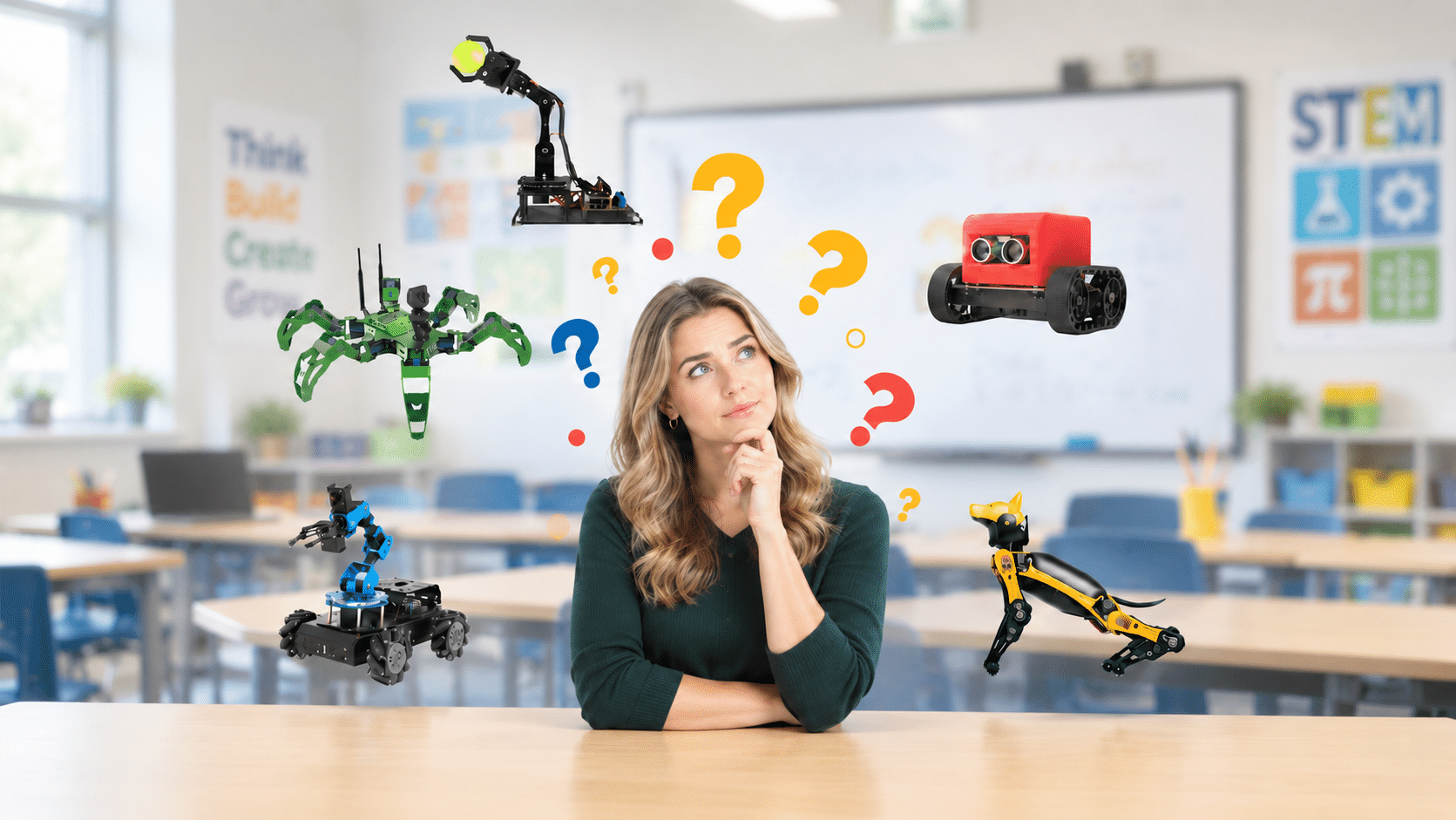
- Classroom-ready robotics kits
- Teacher professional development
- Project-based learning activities
- Flexible lesson plans
- Assessment tools
- Ongoing instructional support
Starting with the right resources allows educators to focus on teaching rather than spending hours creating materials themselves.
Bring Robotics Education to Your School with LocoRobo
Whether you are launching your first robotics program or expanding an existing STEM or CTE pathway, LocoRobo provides everything schools need to deliver engaging, hands-on robotics education.
LocoRobo’s robotics ecosystem includes classroom-ready STEM robot kits, standards-aligned curriculum, programming in block coding, Python, Java, and C++, teacher professional development, and ongoing support. Students can progress from introductory robotics to advanced autonomous systems while building real engineering, programming, and AI skills.
Explore LocoRobo’s robotics solutions or request a demo to see how hands-on robotics can engage students and support your STEM and CTE goals.