
Companies around the world are investing billions of dollars into developing intelligent machines capable of working alongside people in factories, warehouses, retail stores, and even homes.
While advances in artificial intelligence and Large Behavior Models (LBMs) are helping robots understand and perform increasingly complex tasks, software is only one part of the equation. The hardware that allows these systems to move through the world remains one of robotics’ biggest engineering challenges.
One question continues to divide researchers and robotics companies:
Should humanoid robots walk on legs or move on wheels?
The answer influences everything from cost and reliability to energy efficiency, maintenance, and commercial adoption. Rather than a simple design preference, it is a practical engineering decision that determines where robots can work and how quickly they can become part of everyday life.
Let’s explore both approaches and why there may not be a one-size-fits-all answer.
Why Some Engineers Believe Humanoid Robots Need Legs
The strongest argument for bipedal robots is straightforward:
Humans designed the world for humans.
Buildings, staircases, walkways, sidewalks, tools, shelves, and workstations were all built around the way people move. If robots are expected to perform many of the same jobs as people without redesigning existing infrastructure, they need to navigate those environments effectively.
Moving Through Human Spaces
Legged robots can handle environments that are difficult or impossible for wheeled machines.
They can:
- Walk up and down stairs
- Cross uneven terrain
- Step over cables and debris
- Navigate construction sites
- Move through cluttered workspaces
- Traverse outdoor environments
Instead of maintaining constant contact with the ground like wheels, legs allow robots to choose where each foot lands, making movement far more adaptable.
This flexibility is especially valuable for search and rescue, disaster response, field inspections, and service robotics where the terrain changes constantly.
The Challenge of Walking Like a Human
Although walking appears effortless for people, it is incredibly difficult for robots.
Every step requires the robot to:
- Maintain balance in real time
- Shift its centre of gravity
- Coordinate dozens of motors simultaneously
- Predict foot placement
- React instantly to unexpected obstacles
Even a slight miscalculation can cause a fall.
To achieve stable movement, bipedal robots often require between 20 and 30 precision actuators dedicated solely to locomotion. Each joint must be precisely controlled while working together with cameras, sensors, inertial measurement units (IMUs), and onboard AI systems.
This complexity increases both manufacturing costs and maintenance requirements.
Why Wheels Still Dominate Industrial Robotics
While humanoid robots often capture headlines, most industrial robots that move around facilities today rely on wheels.
That is because physics strongly favors rolling motion.
Greater Energy Efficiency
Rolling requires significantly less energy than walking.
A wheeled robot maintains continuous contact with the ground, allowing it to move with minimal friction and far fewer mechanical adjustments.
As a result, wheeled robots typically offer:
- Faster movement
- Longer battery life
- Greater operational efficiency
- Lower energy consumption
For facilities operating robots around the clock, these efficiency gains translate into lower operating costs.
Higher Payload Capacity
Factories and warehouses often require robots to transport heavy materials throughout the day.
Because wheeled platforms provide a stable base, they can carry substantially heavier payloads than similarly sized legged robots.
This makes them ideal for:
- Manufacturing
- Warehouse automation
- Inventory transport
- Distribution centres
- Material handling
When the floor is flat and predictable, wheels usually provide the most practical solution.
Simpler Design Means Greater Reliability
One of the biggest advantages of wheeled robots is mechanical simplicity.
Compared to bipedal robots, wheeled systems have:
- Fewer moving parts
- Lower maintenance requirements
- Simpler control systems
- Reduced manufacturing costs
- Longer service intervals
Many industrial wheeled robots use proven components that have already demonstrated years of reliable operation in manufacturing environments.
For businesses focused on uptime, reliability often outweighs human-like movement.
Source: Peter Wirth, “Walk or Roll: Which Humanoid Will Win the Race?”, LinkedIn.
Hybrid Robots: Combining the Best of Both Worlds
Instead of choosing one approach, many robotics companies are exploring hybrid designs that combine the strengths of legs and wheels.
These systems aim to maximise efficiency while retaining adaptability.
Wheeled-Legged Robots
One increasingly popular design uses legs equipped with powered wheels instead of traditional feet.
This configuration allows robots to:
- Roll efficiently across smooth floors
- Step over obstacles
- Lower their centre of gravity for stability
- Navigate curbs and small staircases
- Handle uneven terrain when necessary
Rather than walking continuously, these robots only use leg movement when the environment requires it.
This significantly reduces energy consumption while preserving versatility.
Modular Robot Platforms
Another emerging trend is modular robotics.
Instead of building a completely different robot for every application, manufacturers design a standard upper body containing:
- AI computing
- Sensors
- Vision systems
- Dual robotic arms
- Manipulation capabilities
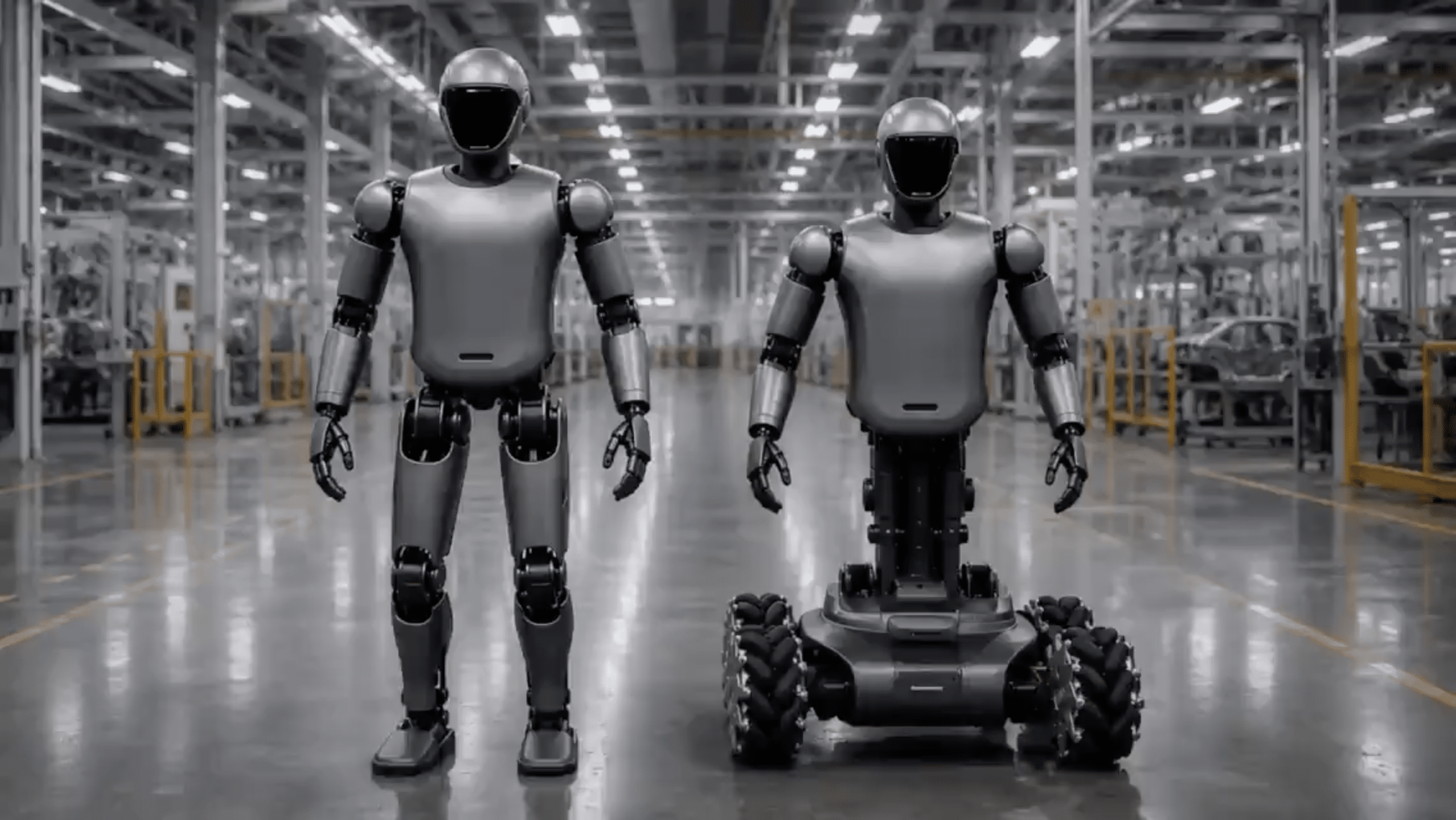
The lower body can then be swapped depending on the environment.
For example:
Warehouses
A robotic torso can be mounted on an omnidirectional wheeled base for maximum speed and efficiency.
Industrial Plants
The same upper body can be attached to a legged platform capable of climbing stairs and moving across complex factory layouts.
This modular approach lowers manufacturing costs while allowing companies to tailor robots to specific industries.
Maintenance Is Often the Hidden Cost
While mobility receives most of the attention, long-term maintenance is equally important when evaluating robotic platforms.
Legged robots contain numerous precision joints that require:
- Calibration
- Inspection
- Lubrication
- Software tuning
- Mechanical servicing
Walking also introduces repeated impact forces that create vibration throughout the robot’s frame, placing additional stress on sensors and electronics.
By comparison, wheeled robots generally experience less mechanical wear and can often operate longer between maintenance intervals.
For organisations deploying fleets of robots, these operational differences can significantly affect total cost of ownership.
There Is No Universal Winner
Legged robots are likely to play an important role in environments where mobility and adaptability matter most, such as disaster response, healthcare, home assistance, and infrastructure inspection.
Wheeled robots will probably continue dominating structured environments like manufacturing facilities, warehouses, and logistics centres where efficiency, speed, and reliability are the highest priorities.
Hybrid and modular systems may ultimately become the preferred solution by offering the flexibility to adapt a robot’s mobility system to the job at hand.
As robotics technology continues to advance, the future may not belong exclusively to legs or wheels, but to platforms that intelligently combine both.
Preparing Students for the Future of Robotics
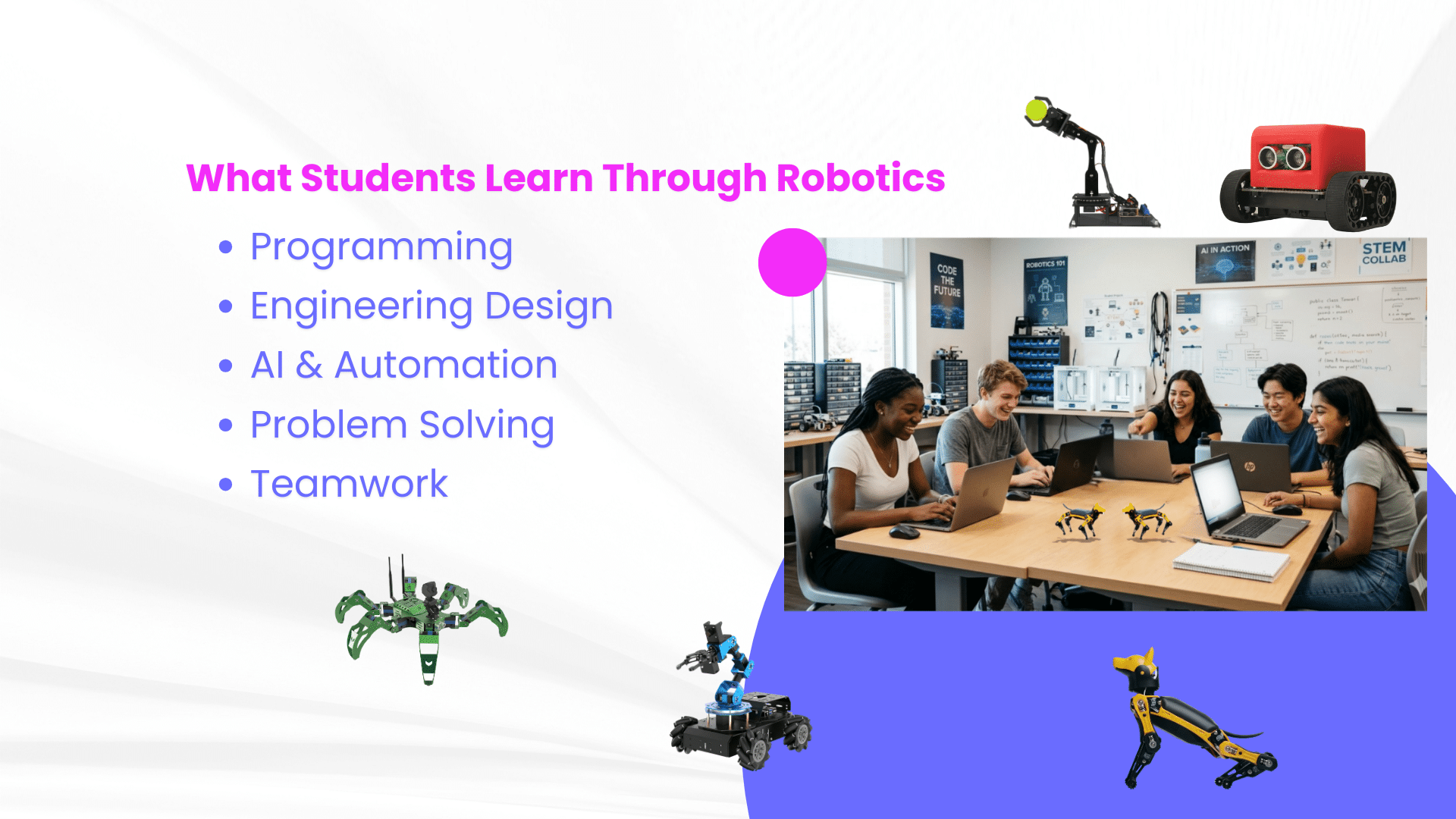
Questions like “Should robots walk or roll?” introduce students to the kinds of engineering trade-offs that robotics professionals solve every day. Designing intelligent machines requires mechanical engineering, artificial intelligence, electronics, sensor integration, systems thinking, and problem-solving.
At LocoRobo, students experience these concepts through hands-on robotics programs designed for K-12 STEM and CTE. Rather than simply learning how robots work, students build, program, test, and refine robotic systems while exploring the engineering decisions behind modern automation with robotics in the classroom.
LocoRobo’s K12 robotics ecosystem includes classroom-ready STEM robotics kits, standards-aligned robotics curriculum, web-based robotics programming tools, teacher professional development, and structured learning pathways that progress from introductory robotics to advanced AI and autonomous systems.
Whether students are interested in robotics engineering, artificial intelligence, automation, or future technology careers, LocoRobo helps schools provide engaging, real-world STEM experiences that prepare learners for tomorrow’s workforce.
Ready to build a robotics program at your school? Explore LocoRobo’s complete robotics education solutions and discover how hands-on learning can help students develop the skills shaping the future of intelligent machines.