

Robotics and drone technology are becoming essential tools across manufacturing, healthcare, logistics, agriculture, construction, environmental science, public safety, and many other industries.
As automation and intelligent systems continue to expand, employers are looking for professionals who can design, program, operate, and maintain these technologies.
For schools, this presents an opportunity to introduce students to STEM career pathways that combine coding, problem-solving, engineering, and hands-on learning. Here are five of the fastest-growing career paths in robotics and drone technology.
1. Robotics Engineer
Robotics engineers design, build, and improve robotic systems used in industries ranging from manufacturing to healthcare.
They combine mechanical engineering, electronics, robotics programming, and artificial intelligence to create machines that can perform complex tasks safely and efficiently.
Students develop skills such as:
- Programming robots using Python or C++
- Integrating sensors and actuators
- Designing autonomous behaviors
- Understanding embedded systems
- Testing and troubleshooting robotic systems
Industries hiring robotics engineers:
- Manufacturing
- Automotive
- Warehouse automation
- Healthcare
- Research and development
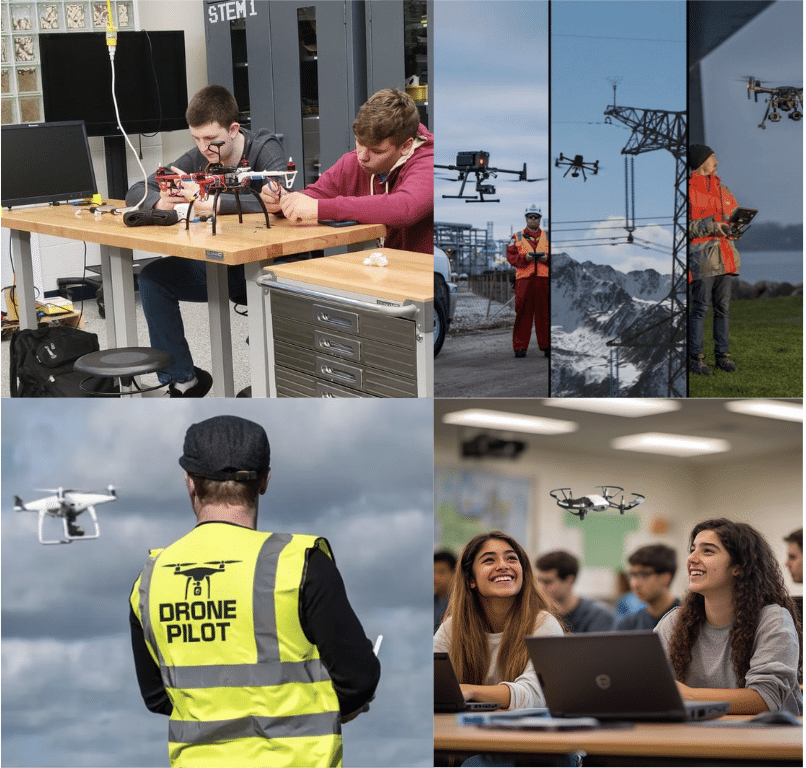
2. Drone Pilot and UAV Operator
Commercial drones are now used for inspections, mapping, agriculture, emergency response, and infrastructure monitoring.
Professional drone operators often combine piloting skills with mission planning, data collection, and safety compliance.
Students gain experience with:
- Flight operations
- Drone programming
- Mission planning
- FAA safety concepts
- Aerial data collection
- Autonomous flight missions
Industries using drone operators:
- Construction
- Utilities
- Public safety
- Agriculture
- Environmental monitoring
- Media production
3. AI and Autonomous Systems Developer
Modern robots and drones are becoming increasingly intelligent. They use artificial intelligence to navigate environments, recognize objects, avoid obstacles, and make decisions in real time.
AI developers create the software that enables these autonomous capabilities.
Students learn concepts including:
- Computer vision
- Machine learning fundamentals
- Sensor fusion
- Path planning
- Autonomous navigation
- Data analysis
Career opportunities include:
- Autonomous robotics
- Self-driving systems
- Warehouse automation
- Smart manufacturing
- AI-powered inspection systems
4. Robotics Technician and Systems Integrator
Robotics technicians install, maintain, calibrate, and repair robotic equipment while systems integrators connect robots with software, sensors, and other automated equipment.
These professionals keep automated systems running efficiently across many industries.
Students build practical skills such as:
- Hardware assembly
- Electronics troubleshooting
- Sensor integration
- Programming and testing
- System calibration
- Preventive maintenance
Industries hiring technicians:
- Manufacturing
- Logistics
- Industrial automation
- Distribution centers
- Technology companies
5. Drone Data and Remote Sensing Specialist
Many organizations use drones as flying data collection platforms rather than simply cameras.
Remote sensing specialists collect aerial imagery and convert it into valuable insights for decision-making.
Their work supports agriculture, infrastructure inspections, environmental research, disaster response, and urban planning.
Students explore:
- GIS fundamentals
- Mapping technologies
- Environmental monitoring
- Image analysis
- Data visualization
- Surveying workflows
Industries benefiting from these skills:
- Agriculture
- Environmental science
- Energy
- Construction
- Transportation
- Government and consulting firms
Building These Skills Starts in the Classroom
The common thread across all of these careers is hands-on learning.
Students who actively build a robot, write code, program autonomous missions, analyze sensor data, and solve real engineering challenges develop technical confidence alongside critical thinking, collaboration, and problem-solving skills.
Project-based learning helps students understand how classroom concepts connect directly to real-world careers while preparing them for college programs, industry certifications, and future employment.
Prepare Students for Robotics and Drone Careers with LocoRobo
LocoRobo provides schools with an all-in-one ecosystem for robotics, drone, AI, and CS education that makes it easier to build meaningful STEM and CTE pathways.
Robotics Solutions
- Hands-on programmable robots for elementary through advanced learners
- Block-based and Python programming environments
- Robotics curriculum aligned to classroom instruction and career pathways
- Real-world projects covering robotics, AI, sensors, and autonomous systems
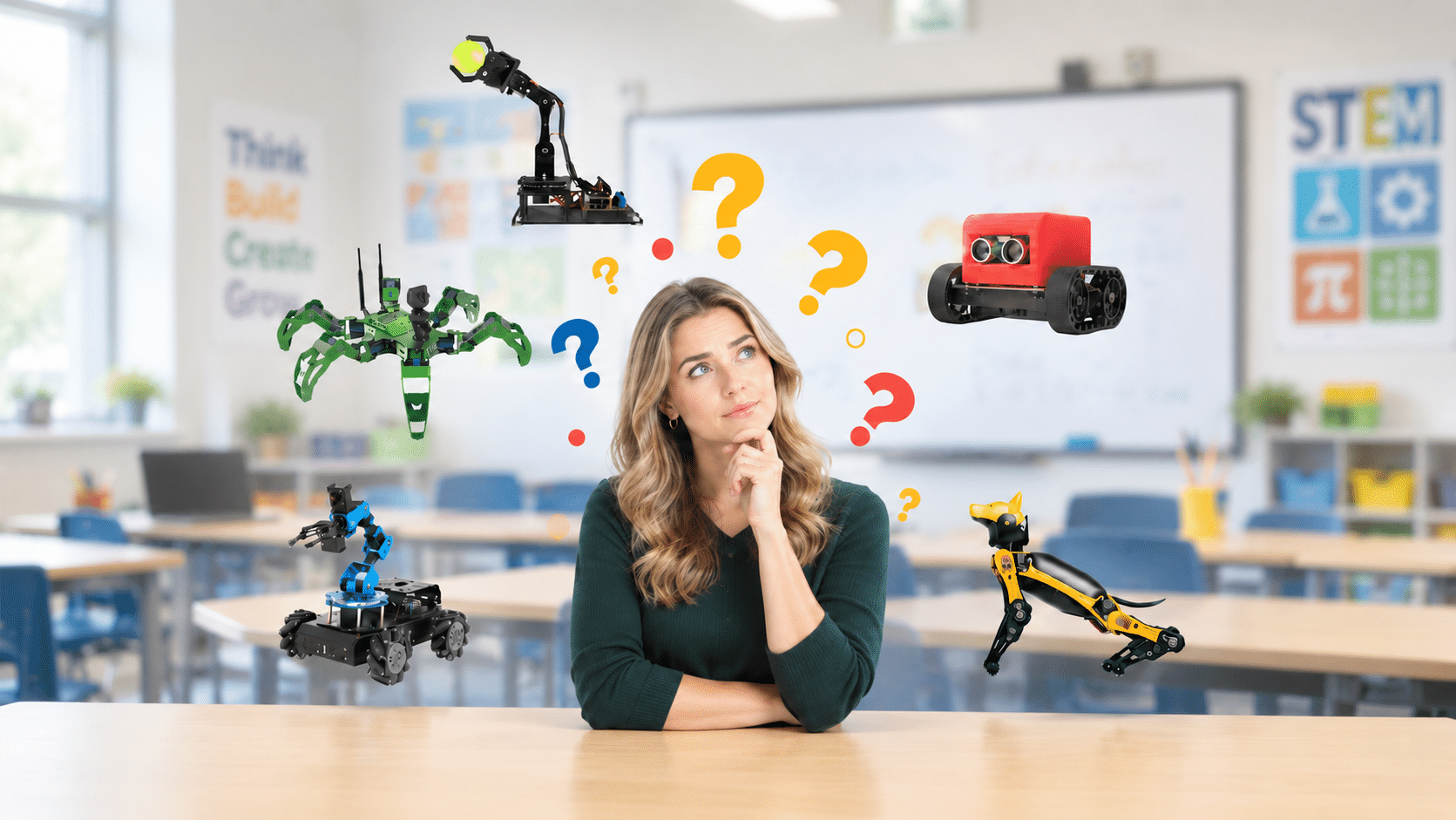
LocoXtreme: Four-wheel autonomous robot for coding, AI, sensors, and autonomous navigation.
LocoScout: Quadruped robot that introduces students to AI, mobility, and search-and-rescue applications.
LocoArm: Programmable robotic arm for learning automation, precision control, and industrial robotics.
LocoHex: Advanced hexapod robot with LiDAR and computer vision for autonomous navigation and mapping.
LocoRover: Mobile robot that combines AI vision, autonomous navigation, and robotic manipulation for advanced projects.
Drone Solutions
- Indoor and outdoor educational drone kits
- Flight, coding, and autonomous mission activities
- FAA-aligned learning opportunities for STEM career exploration
- Standards-aligned lessons designed for STEM, computer science, and CTE programs
Whether your goal is introducing elementary students to robotics or preparing high school learners for careers in autonomous systems and drone technology, LocoRobo helps schools create engaging, future-ready learning experiences that develop the skills employers are seeking today.