A laboratory specimen collected at a clinic may need to reach a central hospital lab. A medication may need to travel from a pharmacy to another facility. Although these deliveries can be small, moving them reliably takes coordination across vehicles, buildings, and staff.
A new partnership between Matternet and TransLogic aims to connect those journeys through hospital transport automation and autonomous drone delivery.
Announced on October 29, 2026, the partnership will focus initially on healthcare systems in California, Florida, and Arizona. Its goal is to link transportation systems inside hospitals with aerial delivery networks operating between facilities.
Connecting Hospital Transportation Inside and Outside the Building
Hospitals already use automation to move materials within their buildings. Pneumatic tube systems transport small items through networks of tubes, while pharmacy automation and specimen tracking support other parts of the workflow.
Moving items between separate facilities presents a different challenge. Hospitals, pharmacies, laboratories, and clinics may rely on ground couriers, creating another handoff in the delivery process.
Matternet and TransLogic plan to connect these parts of healthcare logistics. Swisslog Healthcare provides automation for movement inside hospital buildings, while Matternet provides aerial transportation between locations.
For example, a specimen could travel from a remote clinic to a hospital by drone, then continue through the hospital’s pneumatic tube network to its destination. That is the connected workflow the companies envision.
The value lies in coordinating the entire journey. A successful flight is one step in getting the right item to the right destination.
What Matternet’s M3 Delivery Platform Is Designed to Do
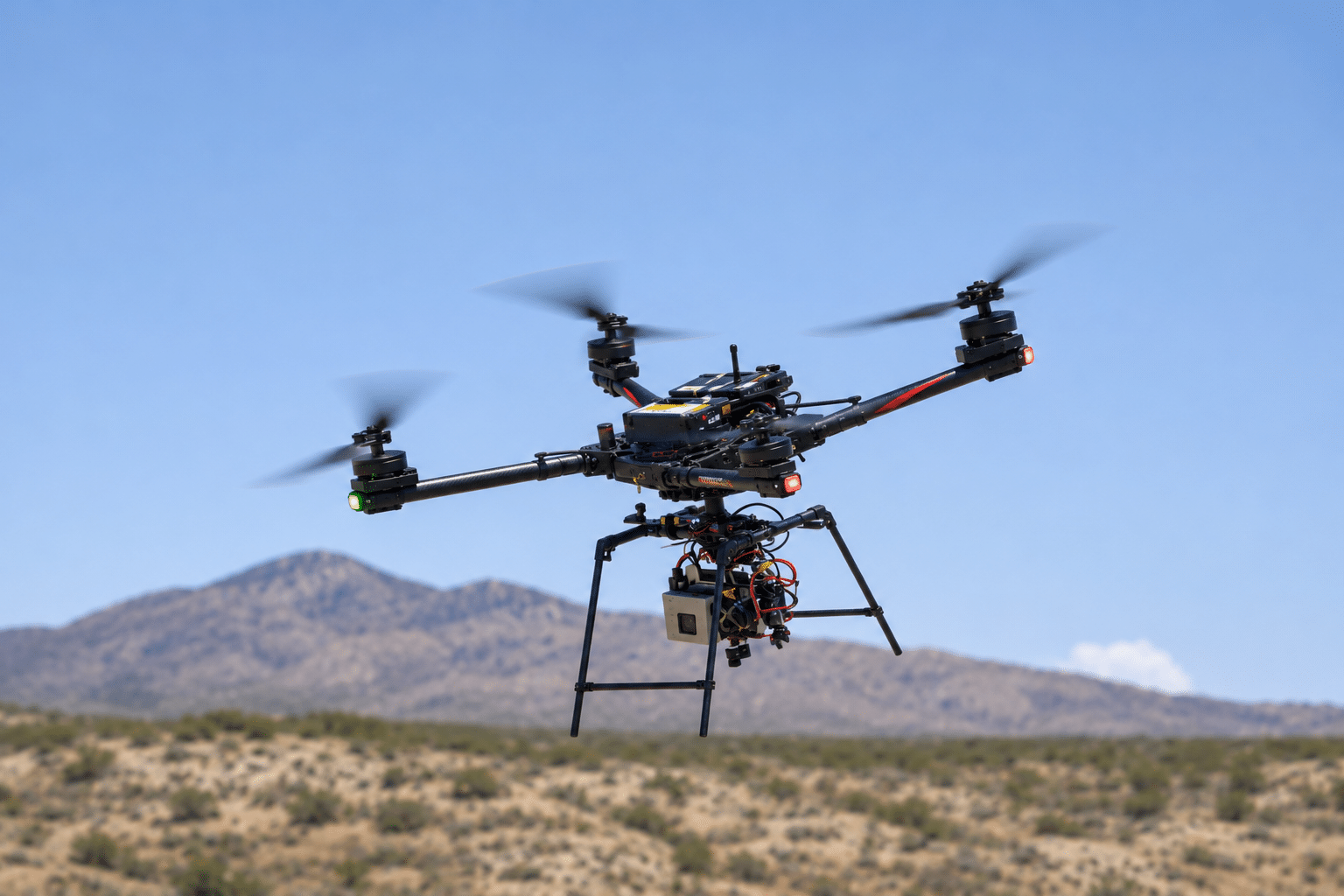
The collaboration centers on Matternet’s next-generation M3 delivery platform.
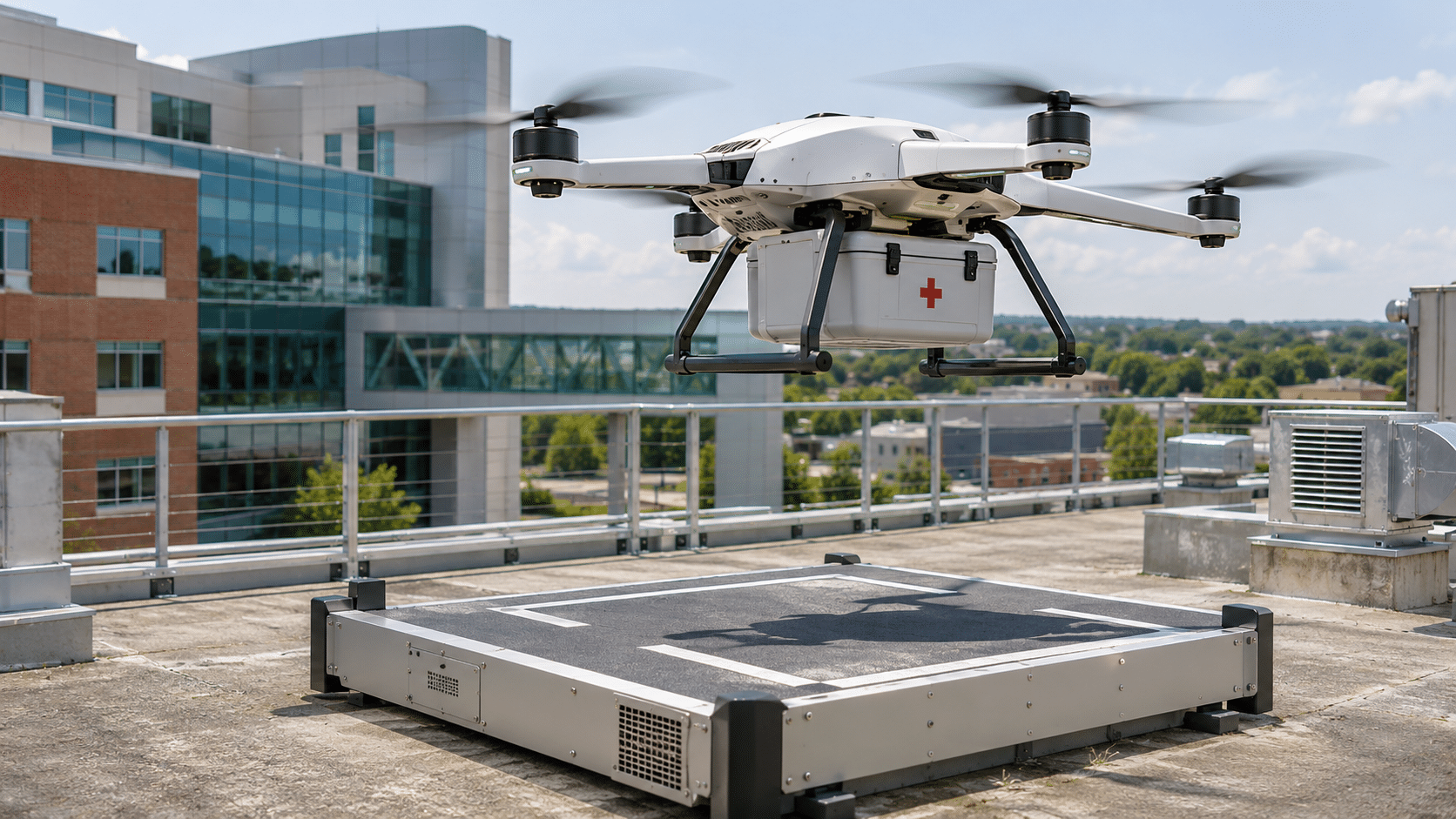
According to the announcement, M3 is designed to carry packages weighing up to 11 pounds within a 10-mile service radius and operate autonomously. Between flights, the aircraft is stored and charged in an M3 Dock, which can be installed on a hospital rooftop or another suitable space.
Across a health system, these docks could become connection points linking hospitals with nearby pharmacies, clinics, and laboratories.
These specifications describe the planned platform. Matternet also identifies development, testing, certification, and regulatory approvals as factors that could affect deployment and performance.
That distinction matters: an announced capability and a fully deployed service represent different stages of implementation.
Bringing Drone Delivery to an Established Hospital Network
TransLogic brings an existing hospital customer base to the collaboration.
According to the announcement, Swisslog Healthcare’s automated transport systems operate in more than 2,300 hospitals across North America, including 18 of the top 20 U.S. hospitals. TransLogic’s global customer base includes more than 3,000 hospitals.
This creates a potential route for introducing drone delivery to hospitals already using transport automation. During the partnership’s first year, the companies plan to work with hospital systems in Florida, California, and Arizona.
Building on Earlier Healthcare Drone Deliveries
The partnership builds on Matternet’s previous healthcare delivery operations.
The company reports that it has operated healthcare drone services in Europe since 2017 and in the United States since 2019. Deliveries have included vaccines, laboratory samples, pathology specimens, and specialty pharmaceuticals.
The new collaboration seeks to extend that experience through a hospital automation partner with established infrastructure and customer relationships.
It also highlights a practical application for commercial drones: carrying small, time-sensitive items between locations that need frequent connections.
Whether a particular route benefits from drone delivery will depend on its operating conditions and the healthcare system’s requirements. Connecting drones with existing hospital infrastructure offers a model for making aerial delivery part of a broader transportation workflow.
What Hospital Drone Delivery Can Teach Students
For students, healthcare delivery gives drone technology a concrete purpose.
A classroom mission can begin with a simple challenge: move a simulated medical supply between two designated locations. Students can plan a route, program a sequence, test landing accuracy, and revise their approach when the mission does not work as expected.
Teachers can introduce additional questions:
- What happens when the delivery destination changes?
- What should happen if a landing area becomes unavailable?
- How can students check that a mission is complete?
- How would carrying a payload affect design decisions?
These activities connect coding, engineering, flight, and problem-solving to the coordination required in a delivery system.
They also help students understand why autonomous technology requires careful planning and testing. The drone must follow instructions, respond predictably, and complete its part of a larger task.
Explore Real-World Drone Applications With LocoRobo
LocoRobo helps schools connect drone education with practical STEM, computer science, and CTE learning.
LocoRobo’s educational drone kits bring coding, flight, and real-world problem-solving into the classroom. With hands-on technology, structured drone curriculum, and teacher support, schools can help students explore how drones work and apply their skills to challenges connected to industries like healthcare.
Explore LocoRobo’s drone solutions to build a program around your school’s goals.