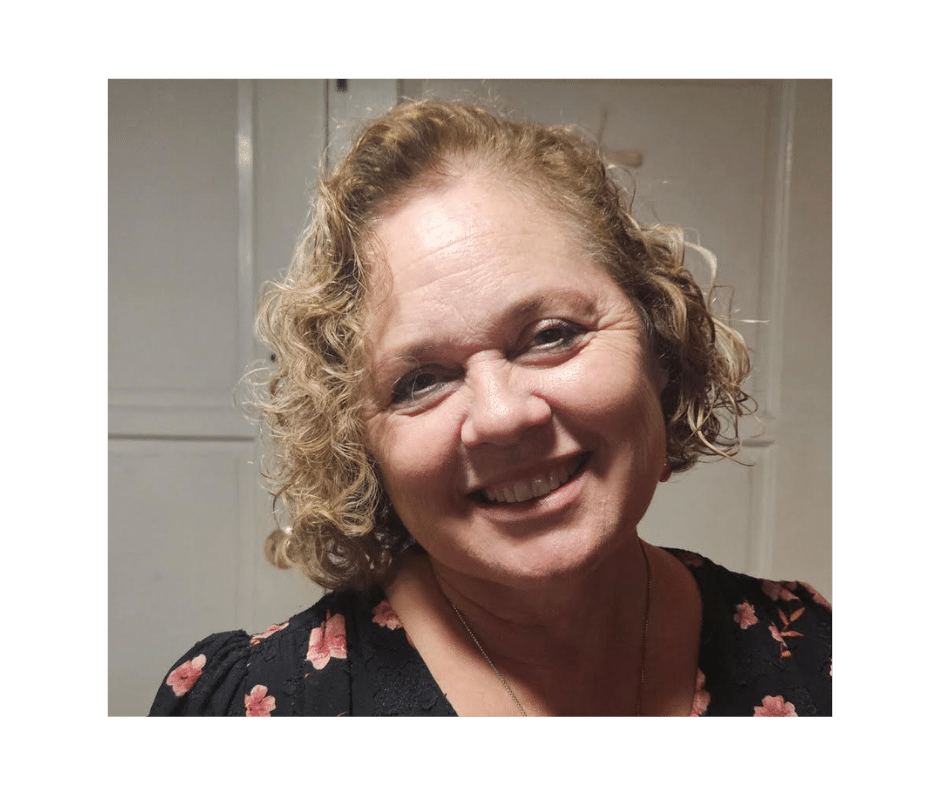



We are proud to highlight our February Educator of the Month, Devin, a leader whose work centers on expanding access to rigorous STEM opportunities and building pathways for students who have historically been underrepresented in advanced academic spaces.
“My journey into K–12 afterschool program leadership began when I stepped into the coordinator role for PROPEL & Level Up, a program that was launched in 2017 to expand access to rigorous STEM enrichment for high-achieving students who have historically been underrepresented in advanced academic spaces.”
What began as an elementary-focused initiative has grown into a 4th–8th grade pathway serving students across 15 schools in Loudoun County.
“PROPEL (Providing Rich Opportunities Plus Enrichment Learning) focuses on upper elementary students, building critical thinking, computational reasoning, and problem-solving skills through hands-on, long-term STEM investigations. Students transition into Level Up in middle school, where they continue advanced STEM learning and are supported toward placement in honors-level science courses.”
As a former classroom teacher, Devin saw the need firsthand.
“I often saw talented students who had the ability to excel but lacked consistent access to enrichment opportunities that would help close the opportunity gap.”
When the opportunity arose to lead the program, the motivation was clear.
“I was motivated to step into the coordinator role because I wanted to strengthen that access and help scale the impact already being made.”
Representation also plays a powerful role in his leadership.
“I wanted students who look like me to see themselves reflected not only in the classroom, but in leadership positions that shape opportunities and systems.”
At its core, the work is about expanding possibility.
Meeting Challenges Head-On
The greatest challenge has not been student interest or program quality, but scale.
“The primary challenge to expanding high-quality STEM enrichment, like PROPEL & Level Up, is capacity, not implementation or student interest.”
Students are engaged. Growth is evident. As STEM fields continue to expand, so does the responsibility to increase equitable access without compromising rigor.
“Our long-term goal is to build the resources and infrastructure needed to extend these transformative experiences to more students across Loudoun County.”
Why LocoRobo
As the program evolved, so did the technology landscape.
“Our content specialists within the PROPEL & Level Up Program — who lead the development of our STEM curriculum — recognized how rapidly technology was evolving, particularly in the area of drone innovation.”
Staying relevant meant staying intentional.
“We are intentional about ensuring our curriculum stays relevant, forward-thinking, and aligned to real-world applications.”
As drones became more prominent across industries, the team knew exposure mattered.
“As drone technology became more prominent across industries, we knew it was important to expose our students to these tools in a meaningful and academically rigorous way.”
LocoRobo provided that bridge.
“LocoRobo’s programmable features, and user-friendly design made it possible for our students to move beyond basic flight and into computational thinking, coding, and applied engineering.”
Implementation confidence also mattered.
“The structured support also allowed our teachers to feel confident implementing drone-based lessons within a larger STEM investigation.”
Ultimately, the integration aligned directly with the program’s mission.
“LocoRobo helped us bridge the gap between emerging technology and authentic student learning, ensuring our program remains innovative while continuing to build critical thinking, collaboration, and problem-solving skills.”
Implementation and Integration
Rather than isolating drones as a standalone tool, they were embedded into a larger inquiry-based project.
“We integrated LocoRobo into our program through this year’s Innovation Project, Habitat Heroes.”
Students research endangered species, identify environmental challenges, and design solutions aimed at protecting habitats. Drones became part of the engineering process.
“Students research endangered species, identify environmental challenges impacting their habitats, and design innovative solutions. They then use LocoRobo drones — alongside additional STEM materials coordinated by our Program Assistant and Content Specialists — in creative and strategic ways to design and test solutions aimed at ‘saving’ their animal.”
The result is technology integrated with purpose.
Impact on Students
The impact was immediate.
“Since we introduced the addition of drones to our Fall curriculum, the excitement among students has been immediate and noticeable.”
It was their first experience with drone technology for many students.
“For many of our students, this is their first time interacting with drone technology, and the novelty alone has sparked curiosity and anticipation.”
But the engagement runs deeper than novelty.
“The drones have elevated student engagement because they represent real-world, high-impact technology that students see reflected in careers and industries around them.”
The classroom culture shifted.
“We have seen students become more invested in lessons, ask deeper questions, and demonstrate greater persistence when troubleshooting challenges.”
Collaboration increased naturally.
“The integration of drones has naturally increased collaboration, as students work together to code, test, revise, and improve their designs.”
And ownership strengthened.
“It has also strengthened their sense of ownership over their projects, as they can physically see their ideas come to life through flight and programming.”
Beyond engagement, LocoRobo supports broader school goals.
“LocoRobo has directly supported our school’s broader goals of fostering high-achievement behaviors while strengthening the 5C’s: collaboration, communication, contribution, creation, and critical thinking.”
Students plan, code, test, revise, and present. They iterate and troubleshoot. They think critically and adapt in real time.
“This process mirrors the engineering design cycle and promotes resilience, adaptability, and persistence — all behaviors associated with high academic achievement.”
Exposure matters just as much as skill-building.
“Integrating drone technology has expanded access to emerging STEM tools that many of our students may not otherwise encounter. It provides exposure to fields such as robotics, programming, environmental science, and aerospace concepts, helping students see themselves in advanced STEM pathways.”
Aha Moments That Matter
Some of the most powerful moments come from student iteration.
“One memorable instance involved a student brainstorming a way to distribute ‘food’ within their animal’s habitat.”
The initial approach required flipping the drone mid-flight.
“Initially, their plan was to fly the drone over the habitat, dump the ‘food’ by coding the drone to flip, and then fly away.”
But the student noticed a problem.
“The student observed that this flipping mechanism significantly drained the drone’s battery more quickly than their peers’ drones.”
They revised the approach instead of accepting the limitation.
“Responding to this challenge, the student critically thought through the issue and recoded the drone to gently shake the ‘food,’ allowing for a more accurate and energy-efficient spread.”
It was more than a coding fix.
“This moment powerfully showcased the student’s creativity, critical thinking, and admirable ability to address challenges directly.”
And that is where real growth takes shape.