
Kenneth Fisher’s journey into teaching was a path shaped by sports, perseverance, and a realisation of purpose. “I was not the perfect student. I focused on sports and friends. In college I met my wife and things quickly changed. I went from wanting to be a physical therapist to mathematician and then to a teacher. My University professors motivated me to be a teacher, and I have not looked back since.”
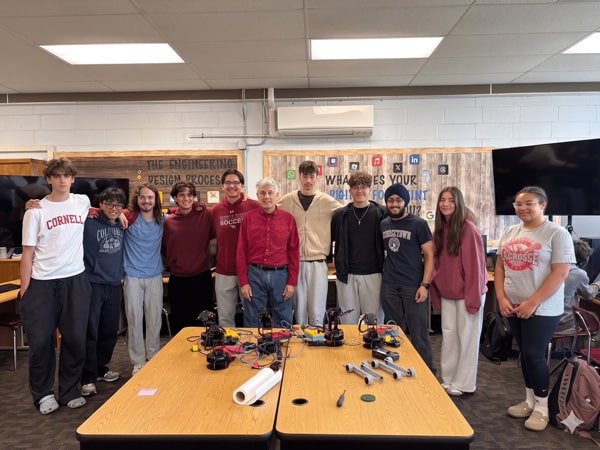
Now an Engineering Teacher at Cabrillo High School, Fisher begins each day long before the bell rings. “I start by getting to school about an hour before class to train students in robotics, rocketry, drones and math. If they need assistance I am here. My classes, whether math or engineering, are hands on and small group focused. Students love interactions and the stories that come with the math and engineering I teach.”
Meeting Challenges with Creativity and Connection
For Fisher, the challenge has always been finding ways to make math and engineering tangible, something students can feel, see, and experience. “My goal has been to give students hands-on applications of math and engineering, so they see them for what they should see them as, tools to develop and learning to think differently,” he explains.
His classroom culture thrives on real-world learning. “We do this by having the students join competition teams and by having students complete what we call Linked Learning projects with professionals. Students love to compete and take what they have learned in the class and compete against others.”
The approach is ambitious, connecting students with professional engineers and mathematicians for authentic experiences. “From learning flight test engineering 8000 ft up in a glider or learning how to navigate mechanisms to repair a human heart valve with biomedical engineers, our students learn hands-on how engineers, mathematicians, and other professionals work.”
But this level of engagement comes with challenges. “The challenge has been to find the time and money to coordinate all these projects and the funding for students to meet with professionals in a setting where all can grow and learn,” Fisher admits. “Another small challenge is finding the funding to have 200 + students competing in different competitions and fund all the projects.”
Finding Solutions and Growth with LocoRobo
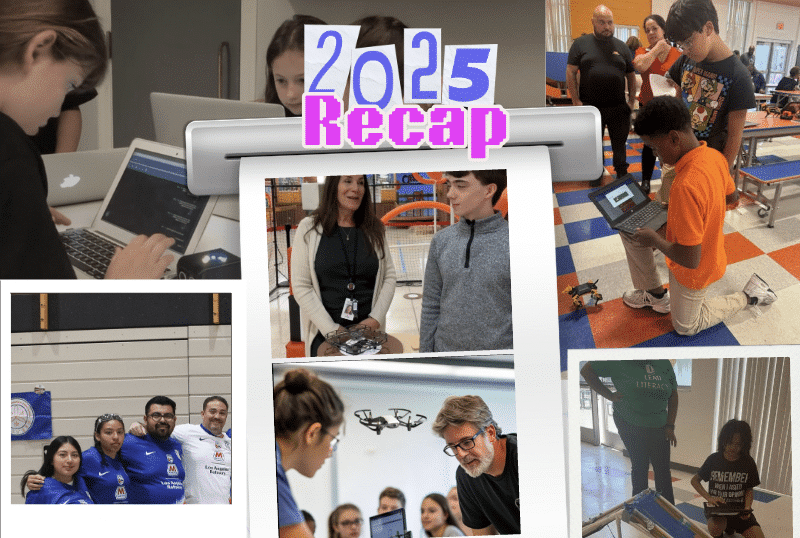
When Fisher’s program began exploring drone education, he found a natural partner in LocoRobo. “The Trydrones program from Locorobo allowed us to incorporate coding, mechanical systems, tool use, and flight systems into our curriculum. Their turnkey program made it easy and simple to incorporate into our engineering pathway. Students love working on and flying drones. It makes it fun to learn about so many different engineering concepts.”
“Using the Locorobo curriculum, students used the program to learn to build, program, fly and repair drones”
That hands-on learning led to an extraordinary milestone. “Within 14 months we won the United States National Championship and represented the United States in Aalen Germany for the International Drone Cup. What an incredible experience that was supported by Locorobo too.”
The Impact: Skills, Confidence, and Flight
Through LocoRobo’s drone curriculum, Fisher has seen firsthand how hands-on learning changes student confidence and outcomes. “We’ve seen incredible growth in both skills and enthusiasm for STEM through our LocoRobo drone programs. In our Digital Technology and Robotics course is where we use the LocoRobo program. Students gain real engineering experience by coding, analyzing flight data, and solving design challenges.”
Compared to traditional classes, the difference is visible. “Compared to our non-LocoRobo classes, the LocoRobo students have a higher interest in robotic and drone systems. Watching their drones take flight truly transforms how they see themselves, as future engineers and innovators.”
In another project, students applied those same principles to real flight. “In our Glider Flight Program, students collect and analyze real flight data, from velocity, acceleration, time and altitude, to perform authentic flight test engineering. Learning how to adjust and monitor their flight system using the configurator in the LocoRobo system, students then can determine the effects of flight in terms of Roll, Pitch and Yaw to determine how to fly a glider 8000 ft in the air to collect data of nine different maneuvers in the glider.”
The results go far beyond technical mastery. “Over time, we’ve seen a significant increase in students’ ability to interpret data, apply mathematical models, and communicate technical findings. Many of these students have since chosen to pursue aerospace and mechanical engineering pathways, showing the long-term impact of these experiences.”
Outcomes: A Culture of Innovation
“The LocoRobo curriculum has had a transformative impact on our students and school. It’s made STEM learning hands-on, exciting, and relevant, helping students see themselves as real engineers and problem-solvers,” Fisher says.
He’s seen LocoRobo’s impact ripple across his program. “Engagement in drone-based projects and clubs has boosted the confidence, the collaboration, and the technical skills of all of our Cabrillo engineering students. The program has not only elevated our Cabrillo Engineering and Design pathway but also inspired a school-wide culture of innovation, teamwork, and curiosity about the future of flight and drones.”
Aha! Moments That Take Flight
Every year, Fisher witnesses “Aha!” moments that remind him why hands-on learning matters most. One in particular stands out. “Ace E. was the first student of mine to build and fly the FPV drones by LocoRobo. When learning to fly, he kept having issues with his drone drifting. Ace was interested in flying, but quickly learned about teamwork, when he asked another student to look at his configuration. They determined that his motors were outputting different values on each side. The drone was drifting to the right, so they modified the motors and made it drift to the left, they actually played with the settings to see the effect on the flight.”
What started as troubleshooting became a lesson in engineering collaboration. “They learned about teamwork, settings and data analysis all by playing with a drone. Both students are now Aerospace engineering majors.”