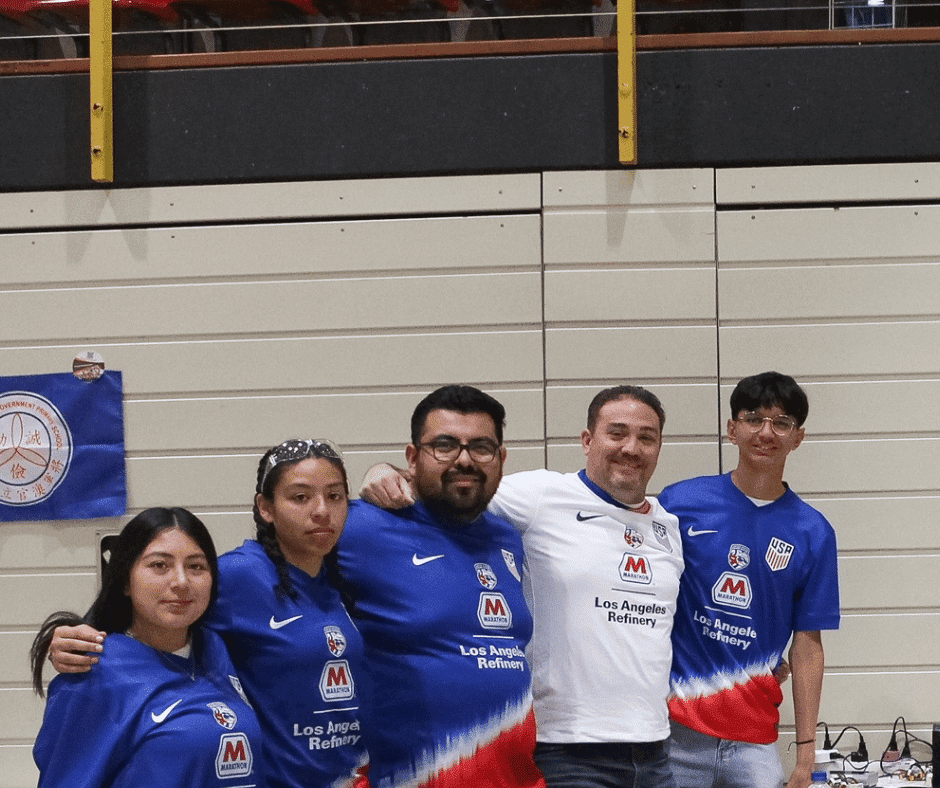


We are proud to recognize our June Educator of the Month, Susan Miller-Hendrix, Science and STEM Supervisor for Public Schools of Robeson County. Through her leadership, STEM education has grown from a single robotics team into a district-wide initiative that gives students meaningful opportunities to explore robotics, engineering, coding, and drones.
Susan’s journey began in the classroom.
“I began my career as a middle and high school science teacher and quickly realized that students learn best when they have opportunities to explore, create, and solve authentic problems.”
When she stepped into a district leadership role, she saw the opportunity to create those experiences on a much larger scale.
“When I became the Science and STEM Supervisor for Public Schools of Robeson County, I saw an opportunity to expand those experiences beyond a single classroom.”
Serving a rural district shaped her mission.
“Our district serves a rural, high-poverty community where many students have limited access to STEM opportunities, so I made it my mission to remove those barriers.”
Today, that vision has become reality.
“Through grant writing, partnerships, and teacher support, we’ve grown from a single robotics team to a district-wide STEM program that includes robotics, drones, coding, engineering, summer camps, STEM labs, and a new Science Center and Planetarium.”
The greatest reward continues to be watching students discover their potential.
“Seeing students discover talents they never knew they had continues to motivate me every day.”
Meeting Challenges Head-On
Creating equitable STEM opportunities required overcoming several barriers.
“One of our greatest challenges was providing equitable access to high-quality STEM experiences.”
Susan explains that many schools simply lacked the necessary resources.
“As a rural district where all students qualify for free or reduced-price meals, many schools lacked robotics equipment, trained teachers, and opportunities to participate in engineering or computer science.”
Teacher readiness was another hurdle.
“Teacher confidence was another challenge because many educators had little or no experience teaching robotics or coding.”
Additional barriers made access even more difficult.
“We also had transportation and funding barriers that limited students’ ability to participate in extracurricular STEM activities.”
Her goal remained clear.
“My goal was to create opportunities that every student could access regardless of their background or school.”
Why LocoRobo
Supporting teachers became the priority during implementation.
“One of the biggest obstacles was helping teachers feel confident teaching robotics and coding for the first time.”
LocoRobo’s STEM curriculum helped simplify that transition.
“LocoRobo’s curriculum provided structured, standards-aligned lessons that made it easy for teachers to get started while still allowing flexibility for creativity and problem-solving.”
Professional development also played a major role.
“The professional development and ongoing technical support helped teachers become comfortable with the technology much more quickly.”
As a result, educators were able to focus on what mattered most.
“Instead of spending time figuring out how to use the equipment, teachers could focus on engaging students in meaningful STEM learning experiences.”
Implementation and Support
LocoRobo became part of STEM learning across the district.
“We integrated LocoRobo into classroom instruction, after-school robotics clubs, STEM enrichment activities, and district competitions.”
The STEM program also extended beyond the school year.
“We also used the platform during summer camps and STEM outreach events to expose more students to coding and engineering.”
Susan credits the professional development model with helping teachers build confidence.
“The most valuable aspect of the rollout was the professional development support, which enabled teachers to experience the lessons as learners before implementing them with students.”
Ongoing support made expansion possible.
“Ongoing technical support and access to ready-to-use curriculum gave teachers confidence and allowed the program to expand across multiple schools.”
Impact on Students
The impact has been evident across classrooms throughout the district.
“The impact has been tremendous.”
Students are building both technical and collaborative skills.
“Students are more engaged, collaborate more effectively, and demonstrate stronger problem-solving and critical-thinking skills.”
Many students have surprised themselves through robotics.
“Many students who were hesitant about STEM quickly become leaders once they begin designing, coding, and troubleshooting their own solutions.”
Susan has also seen participation broaden.
“We’ve also seen increased participation among female students and other groups traditionally underrepresented in STEM.”
Teachers have noticed the difference as well.
“Teachers report that students are more excited about attending STEM classes and more willing to persevere through challenging tasks because robotics makes learning both meaningful and fun.”
Outcomes That Matter
LocoRobo has helped advance the district’s long-term STEM vision.
“LocoRobo has helped us achieve our goal of providing equitable STEM opportunities across the district.”
The program has strengthened STEM pathways while preparing students for future careers.
“It has strengthened our robotics pathway from elementary through high school while supporting our broader vision of preparing students for future STEM careers.”
It has also expanded opportunities beyond the classroom.
“The program has allowed us to expand robotics clubs, district competitions, summer camps, and family STEM events while giving teachers high-quality instructional resources.”
For Susan, the greatest outcome extends beyond robotics itself.
“Most importantly, it has helped students develop collaboration, communication, computational thinking, and engineering design skills that extend well beyond the robotics classroom.”
Memorable Aha Moments
One robotics challenge perfectly captured the value of perseverance.
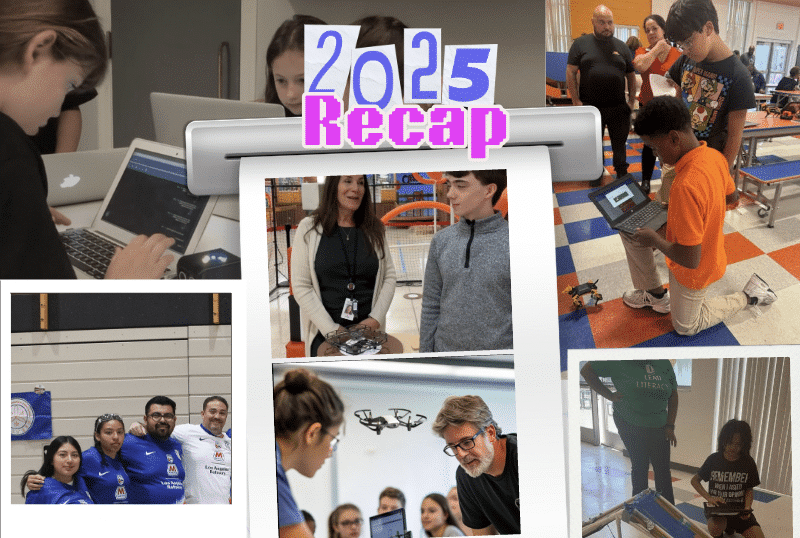
“One of my favorite moments occurred during a robotics challenge when a group of students spent nearly an hour trying to get their drone to complete a course.”
Rather than giving up, the students kept working.
“They experienced setback after setback, but instead of giving up, they continued testing, making adjustments, and working together.”
Their persistence paid off.
“When the drone finally completed the challenge successfully, the excitement in the room was incredible.”
The lesson extended far beyond drone programming.
“The students realized that success in engineering isn’t about getting it right the first time, but instead it’s about persistence, teamwork, and learning from failure.”
Moments like these remind Susan why STEM education matters.
“Watching that confidence grow, especially among students who had never considered themselves successful in STEM, reminded all of us why robotics education is so powerful.”