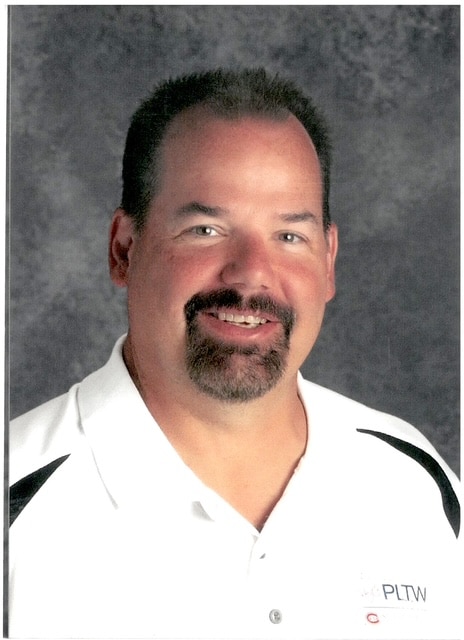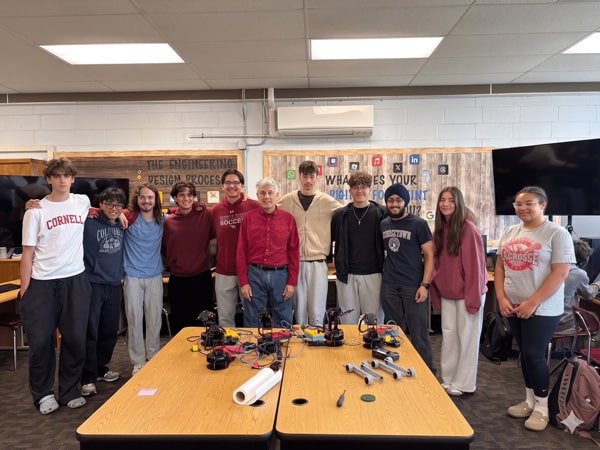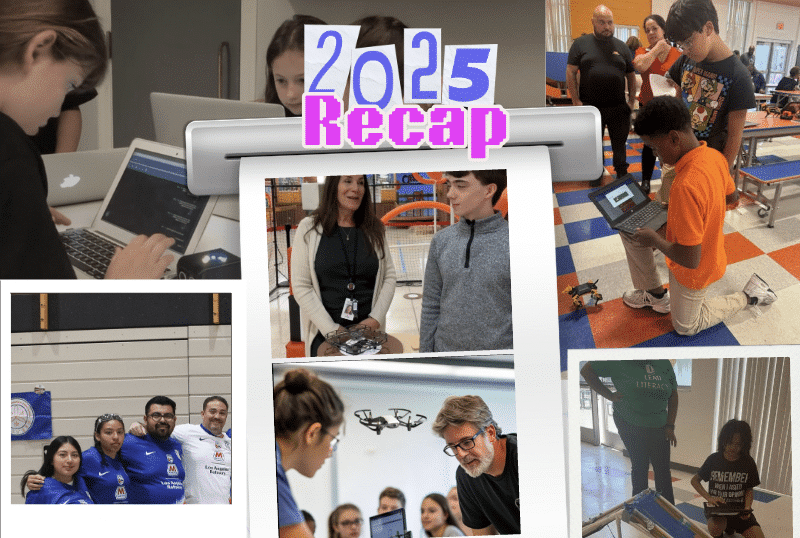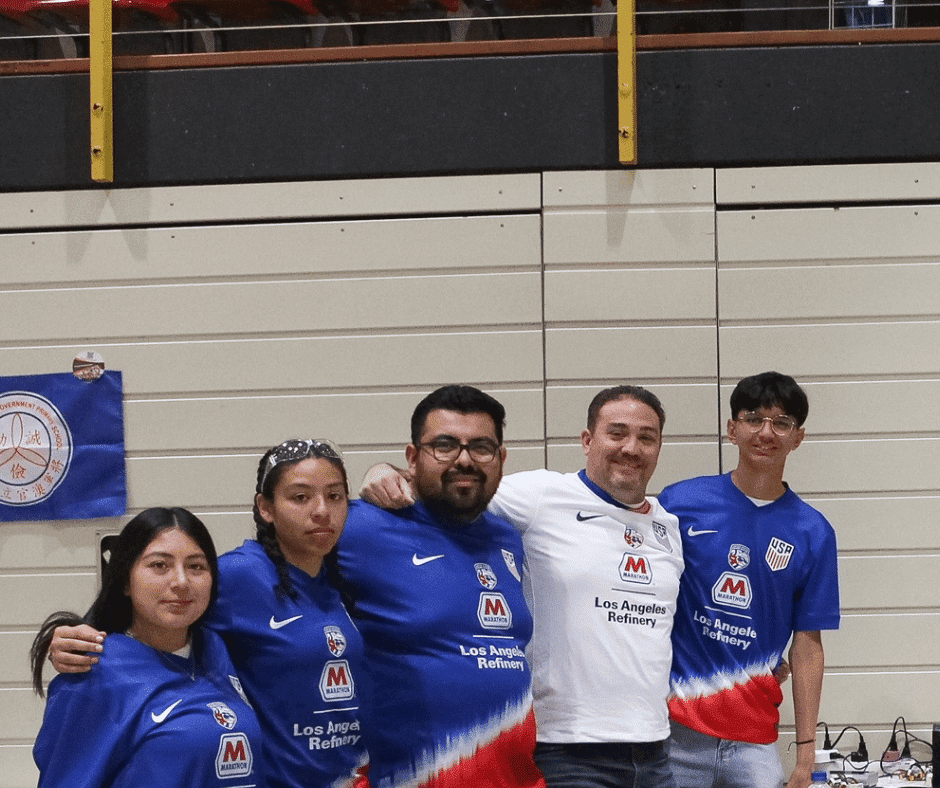

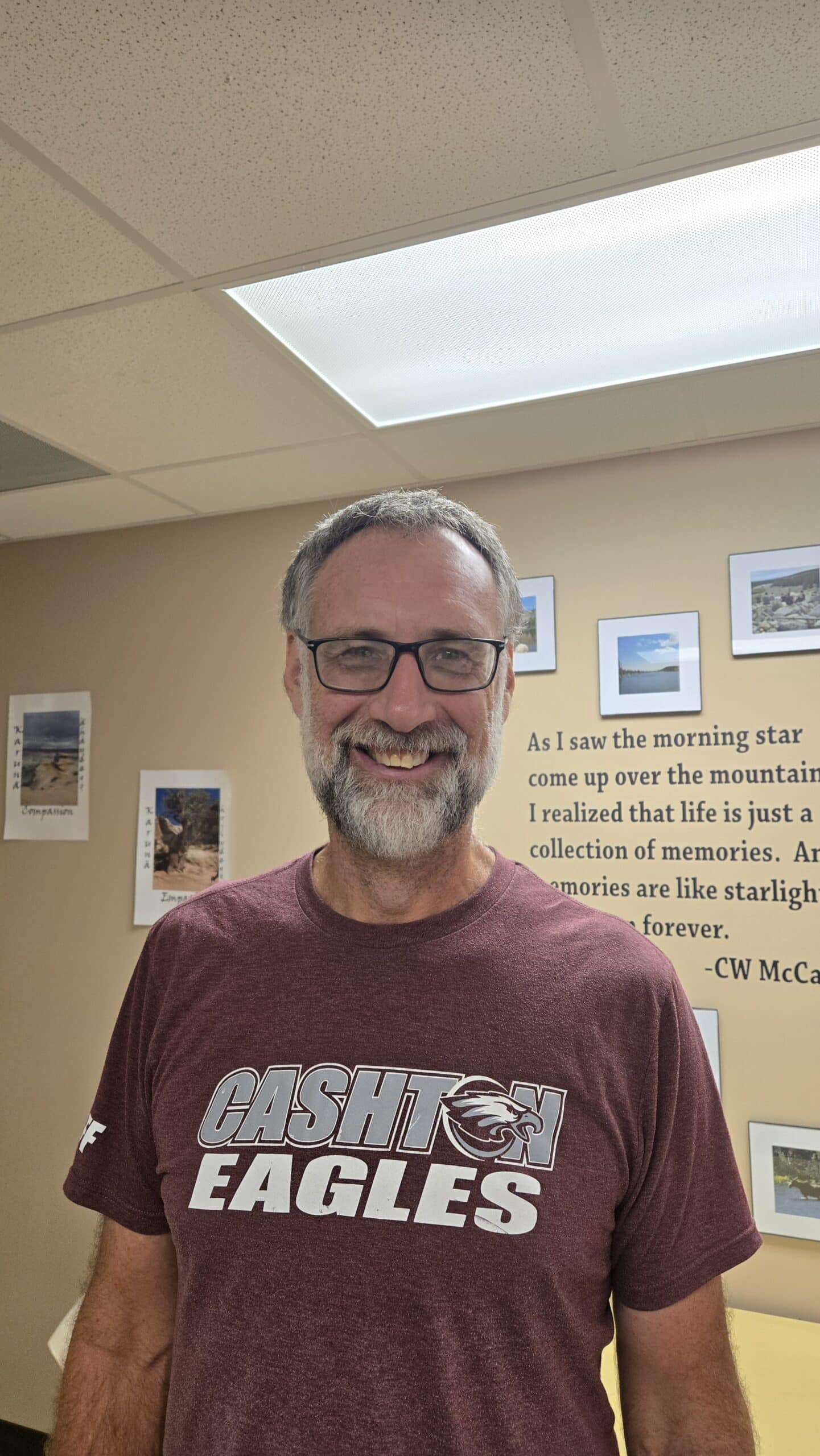
We are proud to highlight our July Educator of the Month, Dan Hanley, an educator at Cashton School District whose unconventional path to teaching has shaped a classroom where computer science, student support, online learning, drones, and robotics all come together.
Dan’s motivation to teach began with the educators who influenced him and a desire to share the excitement that comes with understanding something new.
“I was motivated to be a teacher by having some exceptional teachers in my past as well as a desire to share the aha moments of learning with students.”
His journey to the classroom took him through several different careers and experiences.
“My journey to be a teacher took a long and unconventional path. My first degree in college was in Recreational leadership which resulted in my working at summer camps in New York and Colorado leading kids on hiking and climbing trips.”
From there, his work took him into the National Park Service and Forest Service.
“Next, I transitioned to working for the National Park service doing cave tours and research at Wind Cave National Park, and then to the Forest service back in Colorado as a wilderness ranger, trail crew member, and firefighter.”
Eventually, Dan returned to Wisconsin and found his way into education, first as a bus driver and substitute teacher before earning his teaching license.
“I started driving bus for the Cashton School District, then working as a substitute teacher. I returned to school to earn my teaching license and was hired by the district to teach middle school science.”
His role continued to grow. About a decade ago, he began working with at-risk students and helping create opportunities for students to take dual-credit college courses and online electives. Then came another opportunity.
“Five years ago, I was asked if I would be interested in starting a computer science program at the school, so I started teaching computer science along with continuing my at risk and online duties.”
A Classroom That Is Anything but Typical
For Dan, there really is no standard school day.
“I do not have a typical day nor is my classroom a typical classroom.”
At any given time, students may be working on college courses, computer science, electives, or catching up on other classes.
“Each hour of the day I have students in my room taking online college classes, online electives, working to get on pace in their classes, or in one of my four computer science classes.”
“My computer science classes are hybrid self-paced classes where students work on content, and I provide feedback or additional assistance as needed.”
That makes for a classroom environment where many different kinds of learning can happen simultaneously.
“Some hours I have 20 students in my room for 20 different reasons.”
Meeting Challenges Head-On
Starting a computer science program presented Dan with an unusual challenge. He was building something new for his students while learning much of the subject himself.
“The biggest challenge we faced was the fact that when I started the computer science program, I was not certified to teach computer science, and the district did not have a curriculum or any computer science resources.”
Dan learned alongside his students rather than waiting until everything was in place.
“I applied to the Department of Instruction for an emergency license and over the course of the next three years I learned computer science concepts right alongside my students.”
Why LocoRobo
LocoRobo provided Dan with a starting point for teaching programming concepts while giving students projects they could physically see in action.
“Choosing to use LocoRobo drones and the corresponding curriculum helped provide a working class with high interest activities that I could follow to learn Python coding concepts at the same time my students did.”
The curriculum allowed teacher and students to progress together.
“The students and I were able to work together to complete the lessons and activities even though I had limited knowledge of computer science at first.”
Implementation and Support
Dan divides the LocoDrone Voyager curriculum across two computer science courses, giving students a progression from introductory computing concepts to Python programming.
“I currently divide the LocoRobo LocoDrone Voyager curriculum between two of my classes. I use the first 17 units in my Exploring Computer science class, which is the first of my four classes.”
That first course focuses on foundational concepts and block-based programming.
“This class introduces students to computing concepts and focuses on block-based coding.”
Students can then continue into more advanced programming and physical computing.
“I then use the rest of the units in my Coding in Action class which focusses on using the Python language to code projects using drones, robots, and Raspberry Pi.”
Drones have also become part of Dan’s work with younger students.
“I also use the Drones in a summer school class that I teach for elementary students.”
For those students, the experience begins with learning how to control and fly the drones.
Impact on Students
Dan’s computer science program is built around four skills that extend across his courses.
“All my computer science classes focus on four core concepts: logical thinking, problem solving, troubleshooting, and programming. The LocoRobo LocoDrone Voyager Curriculum covers all four concepts.”
Dan has also watched students become more confident as they work through challenges and see what they are capable of accomplishing.
“Students with doubts about their ability to code, or work through difficult concepts increase their confidence as they successfully complete the tasks of the class.”
The results have been consistent across his drone-based computer science courses.
“Every student who has taken one of my computer science classes which utilize drones has passed the drone units with high scores.”
Outcomes That Matter
For Dan, LocoRobo played an important role in student learning as well as in helping him establish the computer science program itself.
“Using the LocoRobo drones provided me with a place to start teaching computer science when I had no idea what I was doing.”
It also gave students a different way to experience computer science.
“It provided a project-based hands-on learning experience for my students.”
The visibility of the drones has even helped attract students who might otherwise have overlooked computer science.
“The drones also have helped recruit students to take my elective computer science classes because their interest is piqued when they see drones flying in my room or the hallway near my room.”
Memorable Aha Moments
For Dan, there is satisfaction in watching students successfully solve a programming challenge and see their work take flight.
“It is always fun when my students are able to successfully have their drone successfully navigate the obstacle course they have created, but my most memorable moments are the looks on the elementary school student faces when they start their drone and it flies for the first time.”